


abschlagen
to refuse
To reject or turn down a request, offer, or wish.
EXAMPLE
Er konnte ihr diese Bitte unmöglich abschlagen.
He simply could not refuse her this request.
to refuse / chop off
Loading your saved state.
to refuse
To reject or turn down a request, offer, or wish.
Er konnte ihr diese Bitte unmöglich abschlagen.
He simply could not refuse her this request.

to chop off
To separate something with one or more forceful blows, for example with an axe or a sword.
Der Gärtner schlug die trockenen Äste vom Baum ab.
The gardener chopped the dry branches off the tree.

to tee off
In golf, to make the first stroke on a hole from the teeing area.
Morgen früh um acht Uhr schlagen wir am ersten Loch ab.
Tomorrow morning at eight o'clock, we'll tee off at the first hole.

to chip off
To remove something from a surface by striking it, for example plaster from a wall.
Die Bauarbeiter mussten den alten Putz von der Fassade abschlagen.
The construction workers had to chip the old plaster off the facade.
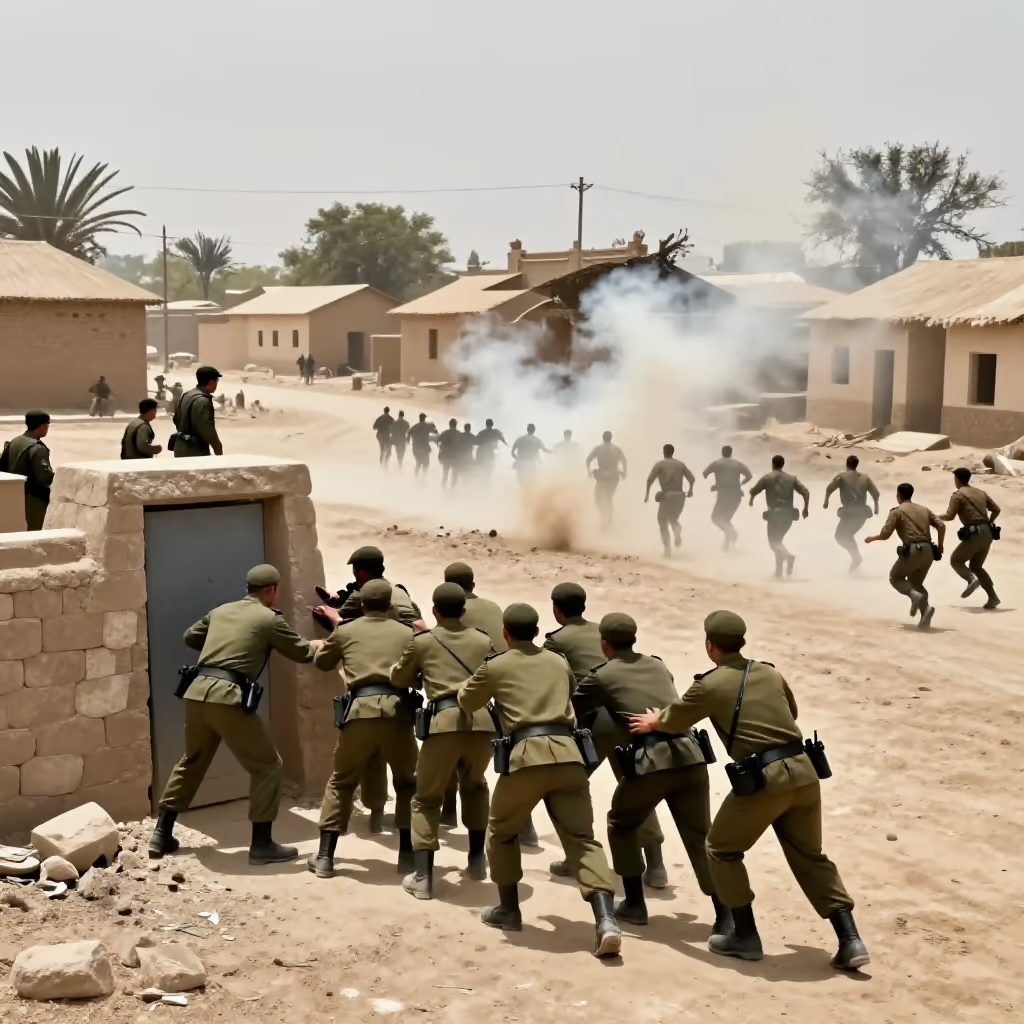
to repel
To successfully fend off and push back an enemy attack.
Die Verteidiger konnten den Angriff der Belagerer erfolgreich abschlagen.
The defenders were able to successfully repel the besiegers' attack.
'Abschlagen' (to refuse/chop off) is a separable verb. In main clauses, the prefix 'ab' comes at the end of the sentence. In subordinate clauses or in the infinitive with 'zu', the verb stays together.
Der Ritter schlug dem Drachen den Kopf ab.
The knight chopped off the dragon's head.
The verb consists of 'ab' (away, down/off) and 'schlagen' (to hit/strike). The literal meaning 'to strike something away' or 'to knock something down/off' is the basis for almost all uses, including the figurative meaning 'ablehnen' (to refuse/reject).
Bevor die Wand neu gestrichen wird, müssen wir die alte Farbe abschlagen.
Before the wall is repainted, we have to chip off the old paint.
When refusing a request, the person whose wish is being refused is often in the dative. The pattern is: jemandem (dative) etwas (accusative) abschlagen (to refuse someone something).
Die Bank hat ihm den Kredit leider abgeschlagen.
Unfortunately, the bank refused him the loan.
In this meaning, 'abschlagen' (to tee off) is a technical term from golf. It refers to the first stroke from a special starting point (the teeing area) and is used almost only in this context.
Die Spieler warten darauf, am nächsten Loch abschlagen zu können.
The players are waiting to be able to tee off at the next hole.
The meaning 'abwehren' (to repel/fend off) is typically used in a military or combat context. Common objects are 'der Angriff' (the attack), 'der Feind' (the enemy), or 'die Attacke' (the attack).
Die Armee konnte den nächtlichen Angriff erfolgreich abschlagen.
The army was able to successfully repel the nighttime attack.
to reject
Both words can mean saying no to a request or a wish. Ablehnen is neutral and is also common with offers and suggestions. Abschlagen refers especially to requests and wishes and often sounds somewhat more formal; with a person, the dative is frequently used: jemandem eine Bitte abschlagen.

Ich musste ihm seine Bitte höflich abschlagen.
I had to politely turn down his request.
Ich musste seine Bitte höflich ablehnen.
I had to politely reject his request.