
The process by which something (e.g., a level, a price, a temperature) is moved downward or reduced.
example
Die Absenkung des Bordsteins erleichtert Rollstuhlfahrern den Zugang.
The lowering of the curb makes access easier for wheelchair users.
Usage tips
Word formation
'Die Absenkung' (the lowering / subsidence) is a noun derived from the verb 'absenken' (to lower). The ending '-ung' turns the action of lowering into a feminine noun that describes the process or the result.
EXAMPLE
Die Absenkung des Wasserspiegels dauerte mehrere Tage.
The lowering of the water level took several days.
Sentence structure and use
To say what is being lowered, you usually use the genitive or the preposition 'von' with the dative. Both constructions are correct.
EXAMPLE
Die Regierung plant eine Absenkung der Steuern.
The government is planning a lowering of taxes.
Context clue
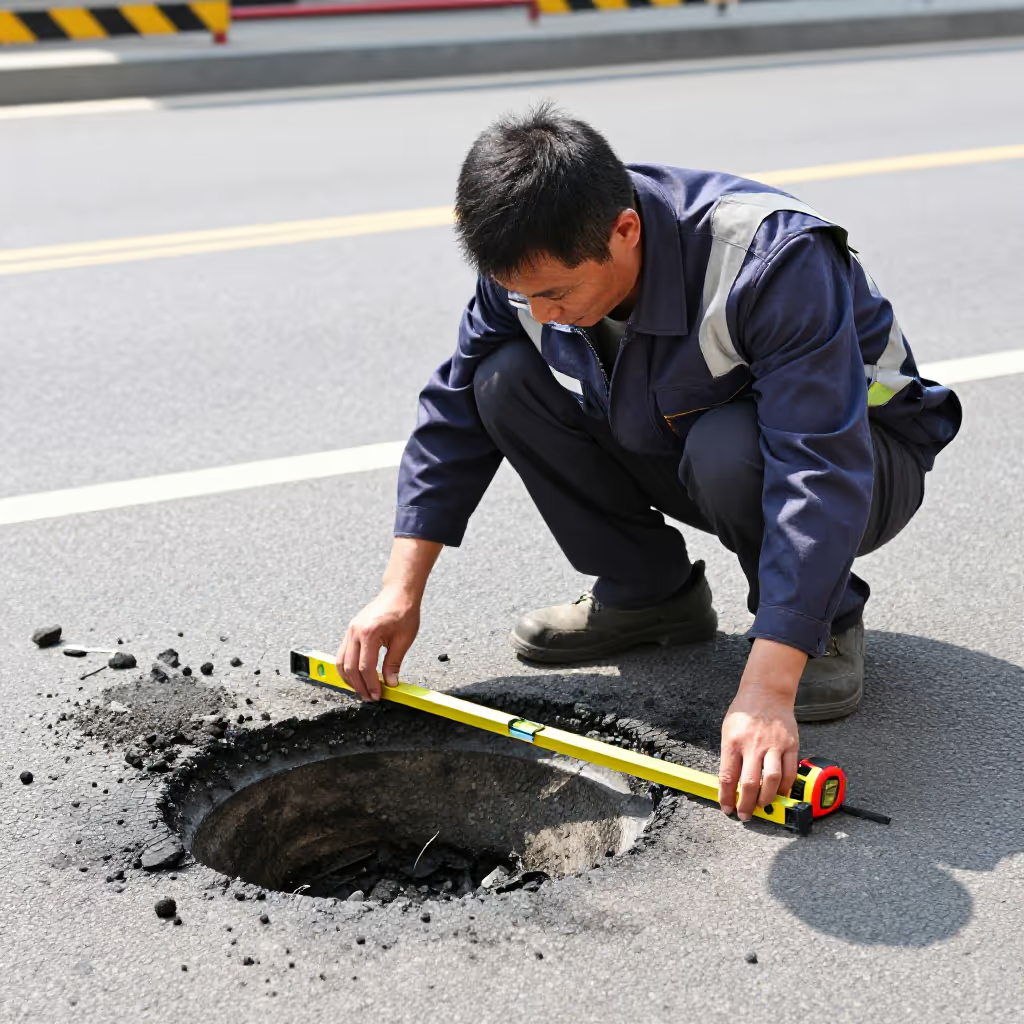
The meaning of the word depends heavily on context. If you are talking about prices, temperatures, or levels, a reduction is meant. If you are talking about ground or terrain, a physical depression is meant.
EXAMPLE
Die Absenkung der Leitzinsen soll die Wirtschaft beleben.
The lowering of key interest rates is intended to stimulate the economy.
Compare with
antonym
Absenkung vs Erhöhung
increase / rise
'die Erhöhung' and 'die Absenkung' form a contrast when something goes up or down. 'Die Erhöhung' means that a value, amount, or level rises. It can also refer to a higher place in the terrain. 'Die Absenkung' means that a level, a price, or a temperature becomes lower. It can also be a depression in the ground. With numbers or levels, the simple guide is: 'Erhöhung' goes upward, 'Absenkung' goes downward.
Absenkung
Zu Hause bemerkt sie eine kleine Absenkung im Boden neben der Tür.
At home, she notices a small depression in the floor next to the door.
Erhöhung
Zur Vorbereitung auf den Termin sammle ich alle Informationen zur Erhöhung der Gebühren.
To prepare for the appointment, I am gathering all the information about the increase in fees.