


der Act
act
An individual artistic performance or program item as part of a larger event, especially in the music or show business.
EXAMPLE
Der letzte Act des Abends war ein weltberühmter DJ.
The last act of the evening was a world-famous DJ.
act
Loading your saved state.
act
An individual artistic performance or program item as part of a larger event, especially in the music or show business.
Der letzte Act des Abends war ein weltberühmter DJ.
The last act of the evening was a world-famous DJ.
act
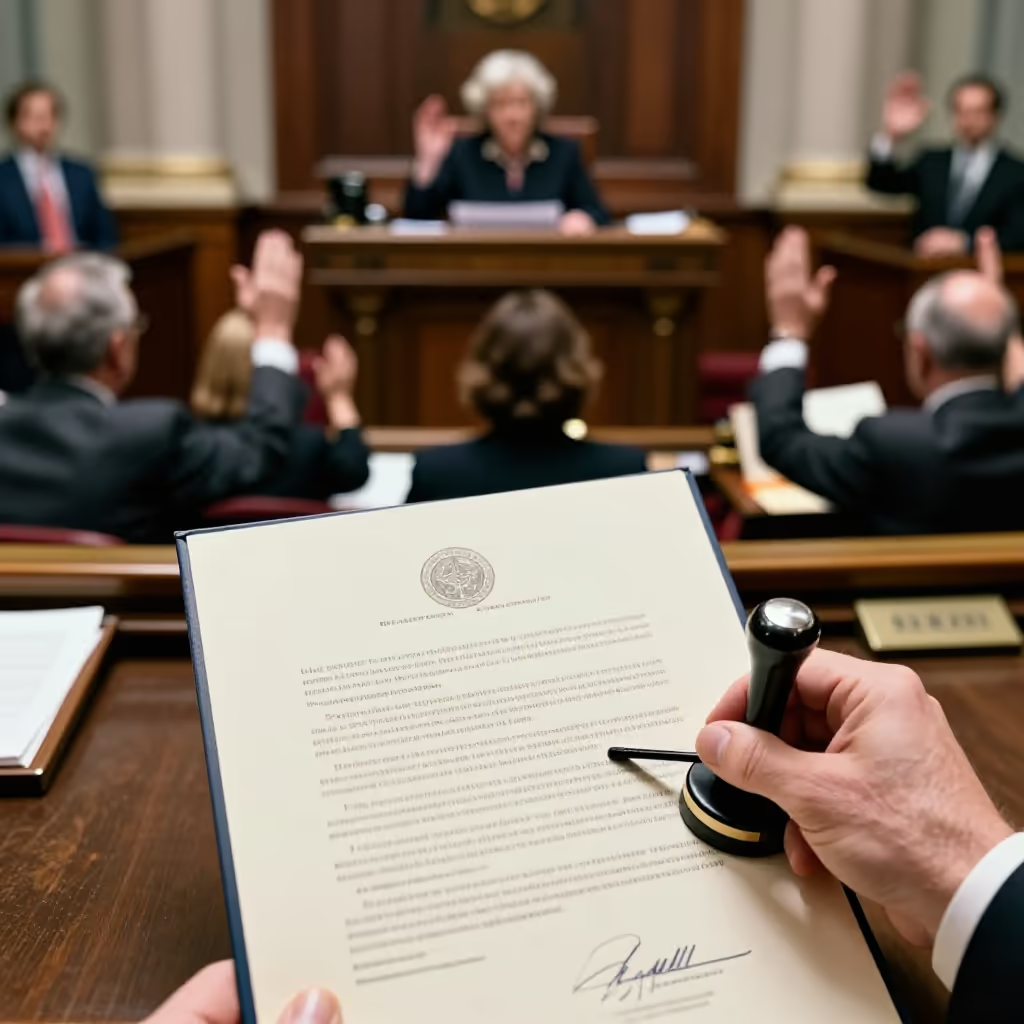
A law passed by a parliament, especially in the Anglo-American world.
Der 'Clean Air Act' ist ein wichtiges Umweltschutzgesetz in den USA.
The 'Clean Air Act' is an important environmental protection law in the US.
act
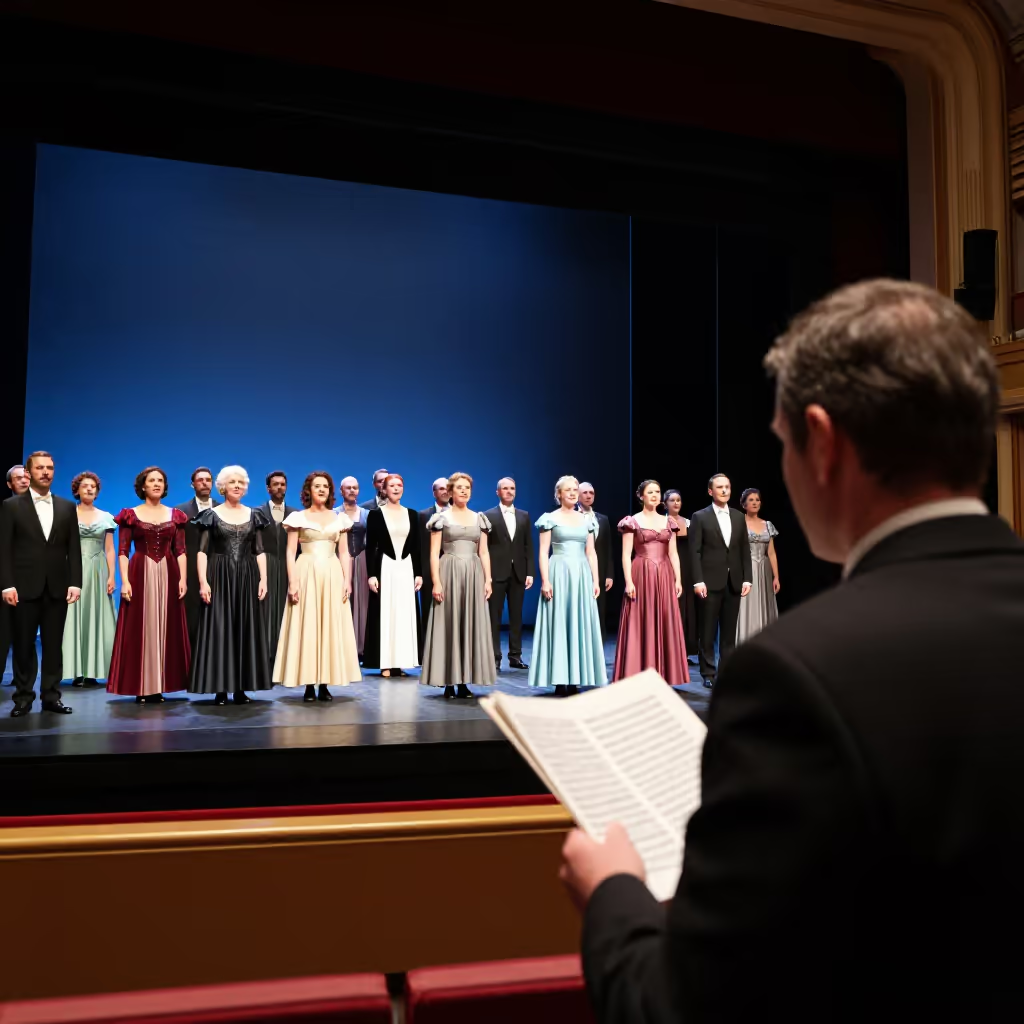
A main section of a play or an opera. In German, the word 'Akt' is more commonly used for this.
Die entscheidende Wendung der Geschichte passiert erst im dritten Act.
The decisive turn in the story does not happen until the third act.
'Act' is a word that was taken directly from English. It is therefore also pronounced in the English way ([ækt]).
Der nächste Act auf der Bühne ist eine junge Band aus Berlin.
The next act on stage is a young band from Berlin.
You can recognize the meaning of 'Act' from the context. In connection with music, festivals, or shows, it means a performance. In a political or historical context, it means a law.
Der Headliner-Act des Festivals war sehr beeindruckend.
The headliner act of the festival was very impressive.
In show business, 'Act' is often combined with adjectives, for example 'ein musikalischer Act' (a musical act), 'der Haupt-Act' (the main act/headliner), or 'ein internationaler Act' (an international act).
Als letzter Act des Abends trat ein berühmter Comedian auf.
A famous comedian performed as the last act of the evening.
In the meaning 'Gesetz' (law), 'Act' is almost always part of a proper name, especially for laws from the English-speaking world. It is then often placed in quotation marks or italics.
Der „Civil Rights Act“ von 1964 war ein Meilenstein in der US-Geschichte.
The 'Civil Rights Act' of 1964 was a milestone in US history.
performance / appearance
Der Auftritt refers to an artist's specific performance in front of an audience. Der Act is a single artistic number within a larger show or event. Both words can apply to an individual number, but Act emphasizes its place and function within the overall program.

Der Act des Komikers war die dritte Nummer der Show.
The comedian's act was the third number in the show.
Der Auftritt des Komikers begeisterte das Publikum.
The comedian's performance thrilled the audience.