

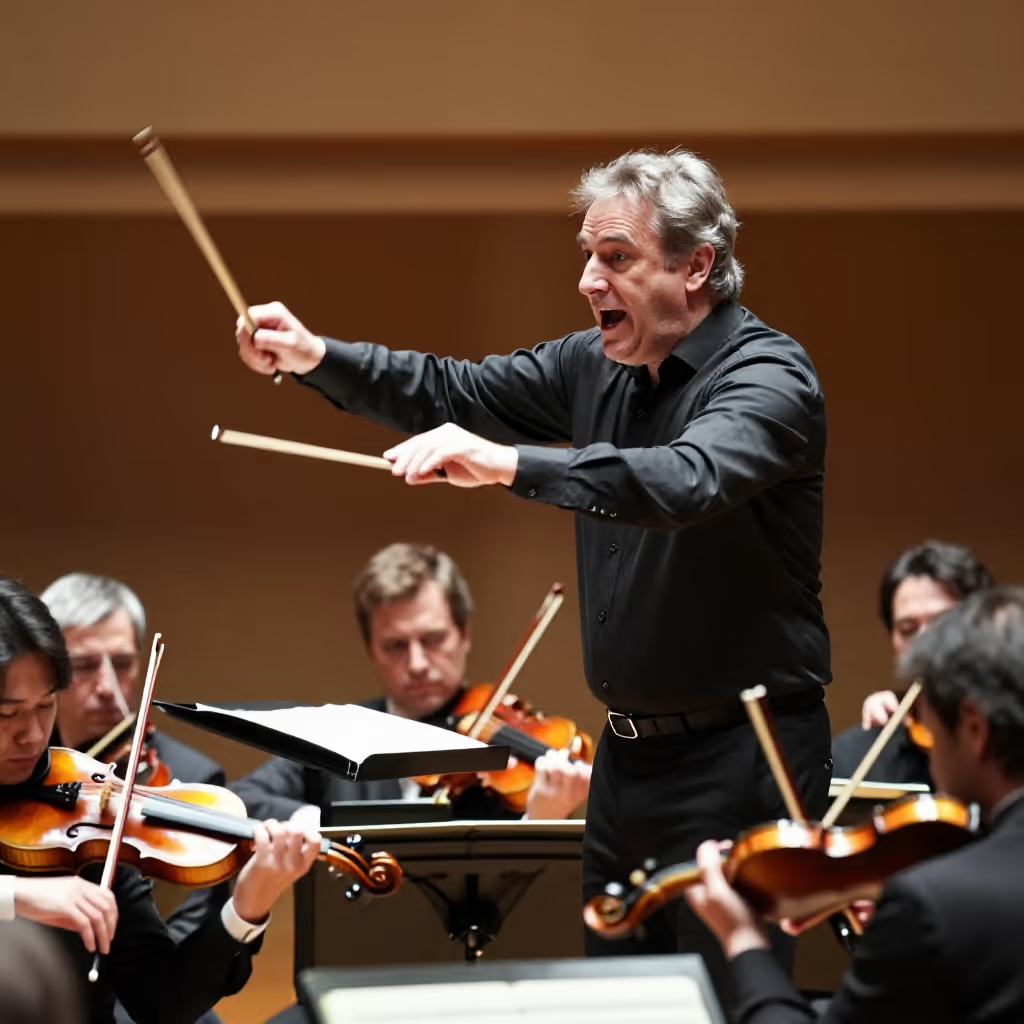
A musical tempo marking that means a piece or movement should be played quickly, lively, and cheerfully.
example
Der letzte Satz der Sonate muss allegro, also in einem heiteren und schnellen Tempo, gespielt werden.
The last movement of the sonata must be played allegro, that is, in a bright and fast tempo.
Usage tips
Music terminology
'Allegro' is a technical term from music and is used almost exclusively in this context. It is an instruction for musicians indicating how fast a piece should be played.
EXAMPLE
In den Noten steht, dass dieser Teil allegro gespielt werden soll.
The sheet music says that this part should be played allegro.
Grammatical feature
As an Italian loanword, 'allegro' is not declined in German. It always keeps its basic form, even when it comes before a noun.
EXAMPLE
Der erste Satz ist ein Allegro.
The first movement is an Allegro.
Use as a noun
The word can also be used as a noun: 'das Allegro' (the Allegro). It then refers to an entire movement or piece of music composed in this fast tempo.
EXAMPLE
Das Allegro dieser Symphonie ist weltberühmt.
The Allegro of this symphony is world-famous.
Compare with
near_synonym
allegro vs schnell
fast / quick
'schnell' and 'allegro' both have to do with a high tempo. 'schnell' is the general word for movements, actions, and processes. 'allegro' is used almost only in music. It describes how a piece should be played: fast, lively, and often with a cheerful character. So in normal everyday situations, you say 'schnell', not 'allegro'. 'allegro' is more precise when you are talking about sheet music, a piece of music, or an instruction for playing.
allegro
Der zweite Teil des Stücks wird allegro gespielt.
The second part of the piece is played allegro.
schnell
Nach dem Unterricht läuft sie schnell zur Bushaltestelle.