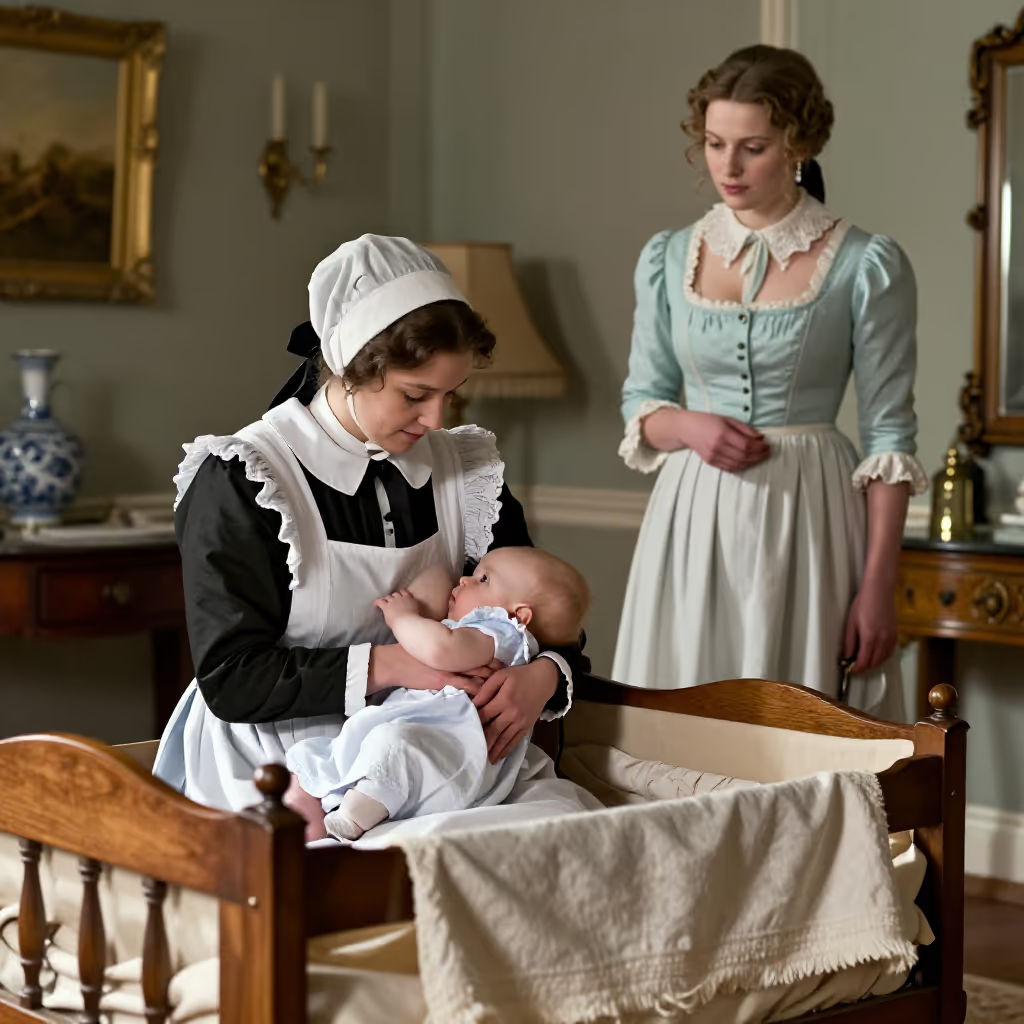
A woman who, for payment, breastfeeds and cares for another woman's child. This profession was especially common in earlier times.
example
Da die Königin keine Milch hatte, wurde eine Amme für den Prinzen gesucht.
Since the queen had no milk, a wet nurse was sought for the prince.

Usage tips
Word family
A very common word derived from 'Amme' (wet nurse) is 'das Ammenmärchen' (old wives' tale). It refers to a widespread but false belief or an unbelievable story.
EXAMPLE
Die Idee, dass man von kalten Füßen eine Erkältung bekommt, ist ein Ammenmärchen.
The idea that you get a cold from having cold feet is an old wives' tale.
Context clue
You can recognize the meaning from the context: in historical texts about families or nobility, it refers to the breastfeeding woman. In everyday language, it is usually a negative description of an overprotective person. In biological texts, it refers to animals.
EXAMPLE
Im 18. Jahrhundert war es üblich, dass wohlhabende Familien eine Amme beschäftigten.
In the 18th century, it was common for wealthy families to employ a wet nurse.
Register and style
When 'Amme' (nanny) is used for a person who takes care of another adult, it is always meant figuratively and negatively. The expression criticizes the care as exaggerated and inappropriate.
EXAMPLE
Er ist 30 und seine Mutter wäscht immer noch seine Wäsche – sie ist seine persönliche Amme.
He is 30, and his mother still washes his clothes — she is his personal nanny.
Historical context
The original meaning is now almost only historical. The profession of the wet nurse has disappeared in many cultures. You therefore find the word mainly in books, films, or texts set in the past.
EXAMPLE
In der Biografie der Königin wurde auch ihre Amme erwähnt.
The queen's wet nurse was also mentioned in the biography.
Compare with
confusable
Amme vs Hebamme
midwife
'Hebamme' and 'Amme' both have to do with birth, babies, and care, but they do not mean the same thing. A 'Hebamme' is a medically trained professional who supports women before, during, and after birth. An 'Amme' is a woman who, especially in the past, breastfed and cared for someone else's child, often for payment. Learners may confuse the words because both occur in the context of mother and child. Today, in normal contexts around pregnancy and birth, 'Hebamme' is almost always the right word.
Amme
In alten Geschichten gibt es oft eine Amme, die das Kind einer reichen Familie stillt.
In old stories, there is often a wet nurse who breastfeeds the child of a rich family.
Hebamme
Die Hebamme kommt morgen zu uns nach Hause und schaut nach dem Baby.
The midwife is coming to our home tomorrow to check on the baby.