

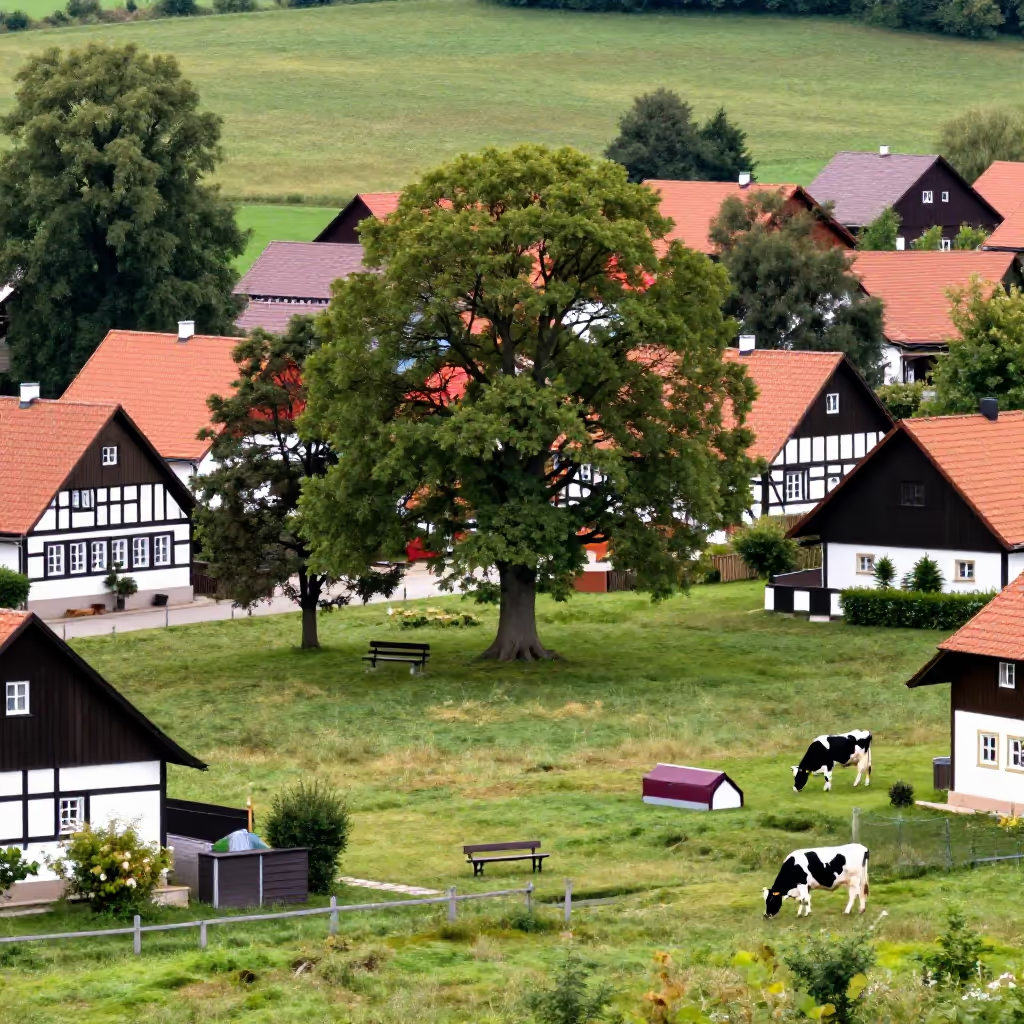
A grassy open area, often with trees, in the center of a village, which was formerly used communally, for example as pasture.
example
Das Dorffest findet traditionell auf dem alten Anger neben der Kirche statt.
The village festival traditionally takes place on the old village green next to the church.
Usage tips
Register and context
'Der Anger' (village green) is a rather historical term for a communal meadow in a village. It is not used for a modern city park; instead, it has a rural, traditional meaning.
EXAMPLE
Früher weideten die Kühe des Dorfes auf dem Anger.
In the past, the village cows grazed on the village green.
Use in names
Although the word is rare in everyday speech, 'Anger' is very often found in street and place names, especially in southern Germany. The form is often 'Am Anger' (at/on the village green).
EXAMPLE
Ich wohne in der Straße „Am Anger“.
I live on the street 'Am Anger'.
Correct preposition
When you are located on the area itself, you use the preposition 'auf'. So you sit 'auf dem Anger' (on the village green).
EXAMPLE
Die Kinder spielten auf dem großen Anger hinter dem Rathaus.
The children played on the large village green behind the town hall.
Compare with
near_synonym · confusable
Anger vs Wiese
meadow
'Wiese' and 'Anger' both refer to a grassy open area. 'Wiese' is the normal, general word and can be in the countryside or on the edge of a town or village. 'Anger' is much more specific: it refers to an open area in a village, often in the center and sometimes with trees. The word sounds more traditional and appears especially in descriptions of places or in names. The words can be confused because an 'Anger' can look like a 'Wiese'. If you simply mean a grassy area, use 'Wiese'. If you are talking about the old grassy village square, 'Anger' fits.
Anger
Am Sonntag findet das Dorffest auf dem Anger statt.
On Sunday, the village festival takes place on the village green.