


auf Anhieb
on the first try
Immediately on the first attempt; without difficulty or delay.
EXAMPLE
Sie hat die schwierige Prüfung auf Anhieb bestanden.
She passed the difficult exam on the first try.
first try
Loading your saved state.
on the first try
Immediately on the first attempt; without difficulty or delay.
Sie hat die schwierige Prüfung auf Anhieb bestanden.
She passed the difficult exam on the first try.
The noun 'Anhieb' is used almost exclusively in the fixed expression 'auf Anhieb' (on the first try/right away). It is not used on its own with an article like 'der Anhieb'.
Es hat nicht auf Anhieb geklappt, aber beim zweiten Mal schon.
It didn't work on the first try, but it did the second time.
The expression can be derived from its parts: 'der Hieb' means 'the blow/strike'. So 'auf Anhieb' literally means 'on the first strike' and figuratively 'on the first attempt'.
Der Sportler schaffte den Rekord gleich auf Anhieb.
The athlete achieved the record right on the first try.
The expression 'auf Anhieb' (on the first try/right away) is often combined with verbs of succeeding or understanding. Typical examples are: 'etwas auf Anhieb schaffen' (to manage something on the first try), 'verstehen' (to understand), 'finden' (to find), or 'klappen' (to work out).
Ich habe die neue Software auf Anhieb verstanden.
I understood the new software right away.
attempt / run-up
„Auf Anhieb“ emphasizes that something succeeds immediately on the first try and without difficulty. „Der Anlauf,“ by contrast, refers to the individual attempt itself and often suggests that further attempts may follow, but it can also be successful. Use „auf Anhieb“ for immediate success and „beim ersten Anlauf“ when focusing on the attempt.
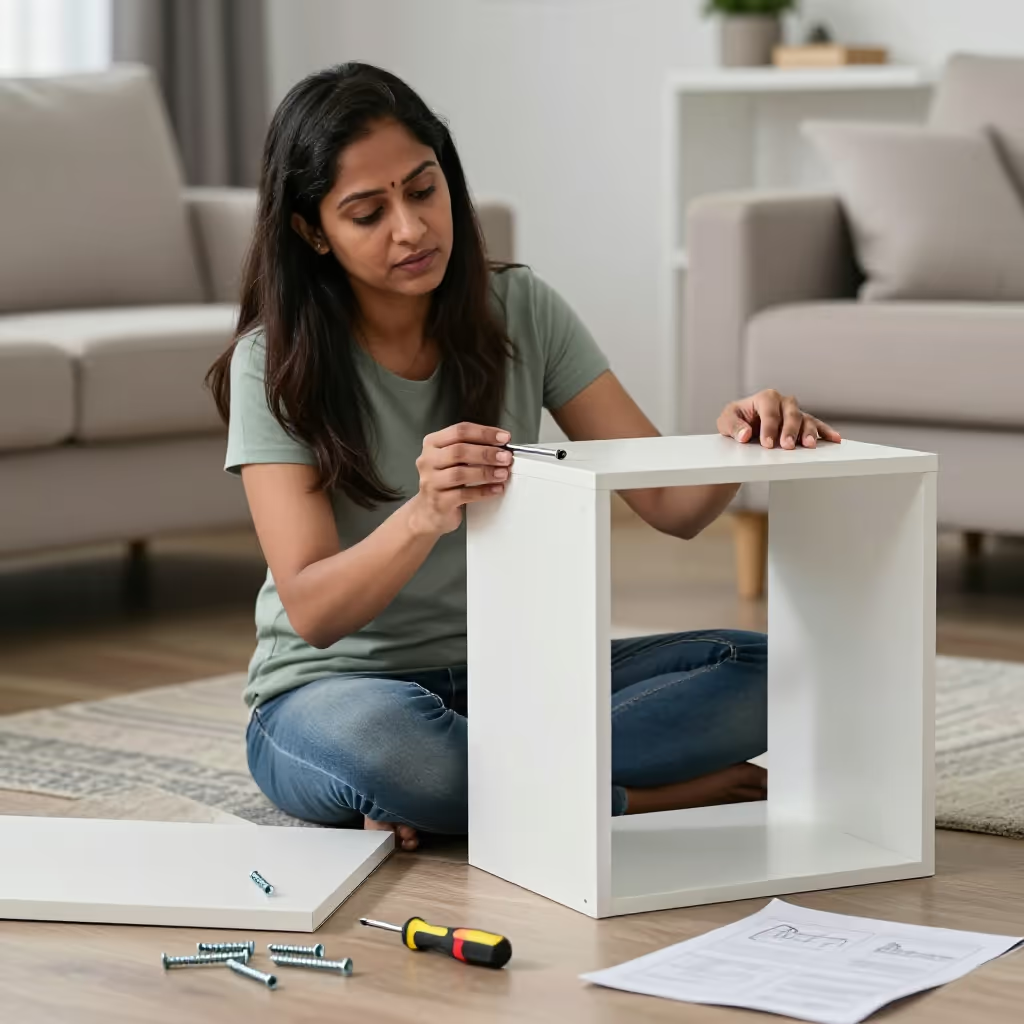
Die Schülerin löste die schwierige Aufgabe auf Anhieb.
The student solved the difficult problem on the first try.
Die Schülerin löste die schwierige Aufgabe beim ersten Anlauf.
The student solved the difficult problem on her first attempt.