

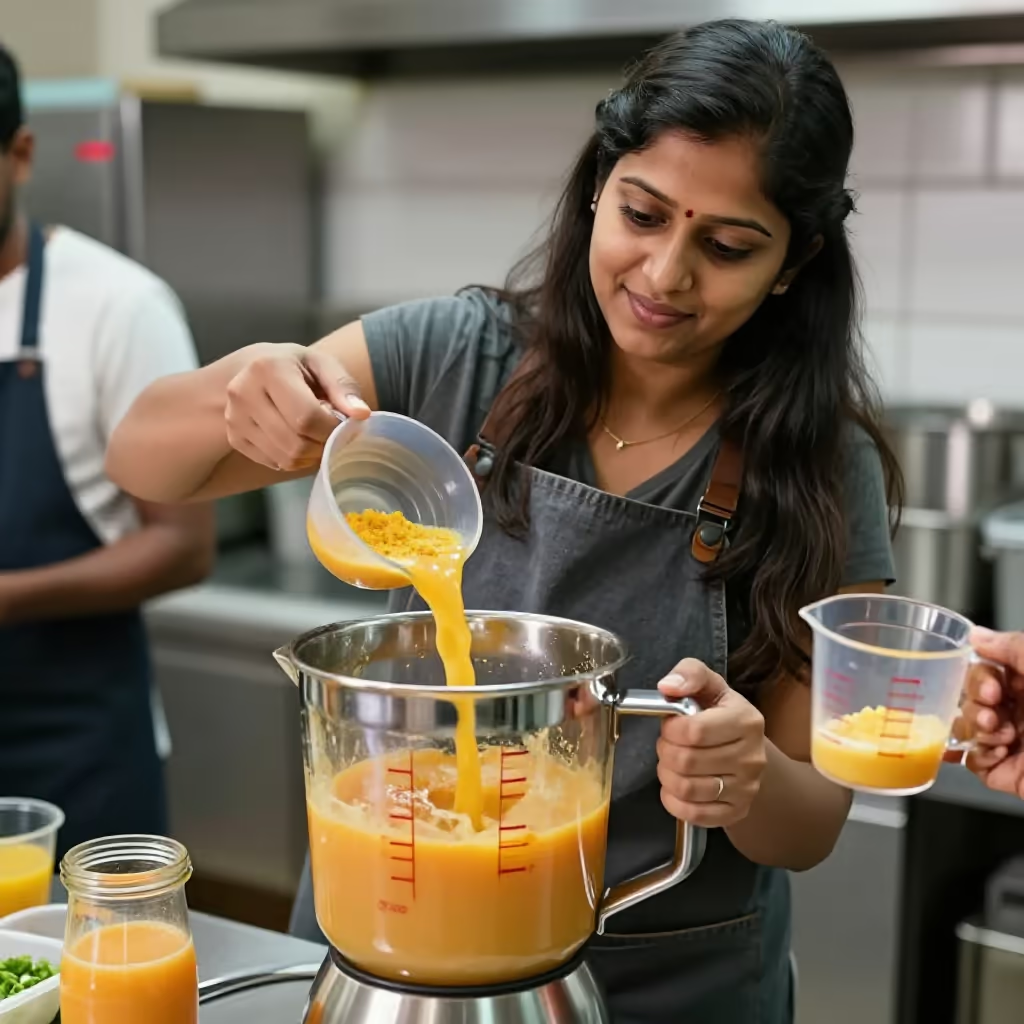
anreichern
to enrich
To increase the value, quality, or variety of something by adding substances or elements.
EXAMPLE
Man kann den Salat mit Nüssen und Kernen anreichern.
You can enrich the salad with nuts and seeds.
to enrich
Loading your saved state.
to enrich
To increase the value, quality, or variety of something by adding substances or elements.
Man kann den Salat mit Nüssen und Kernen anreichern.
You can enrich the salad with nuts and seeds.
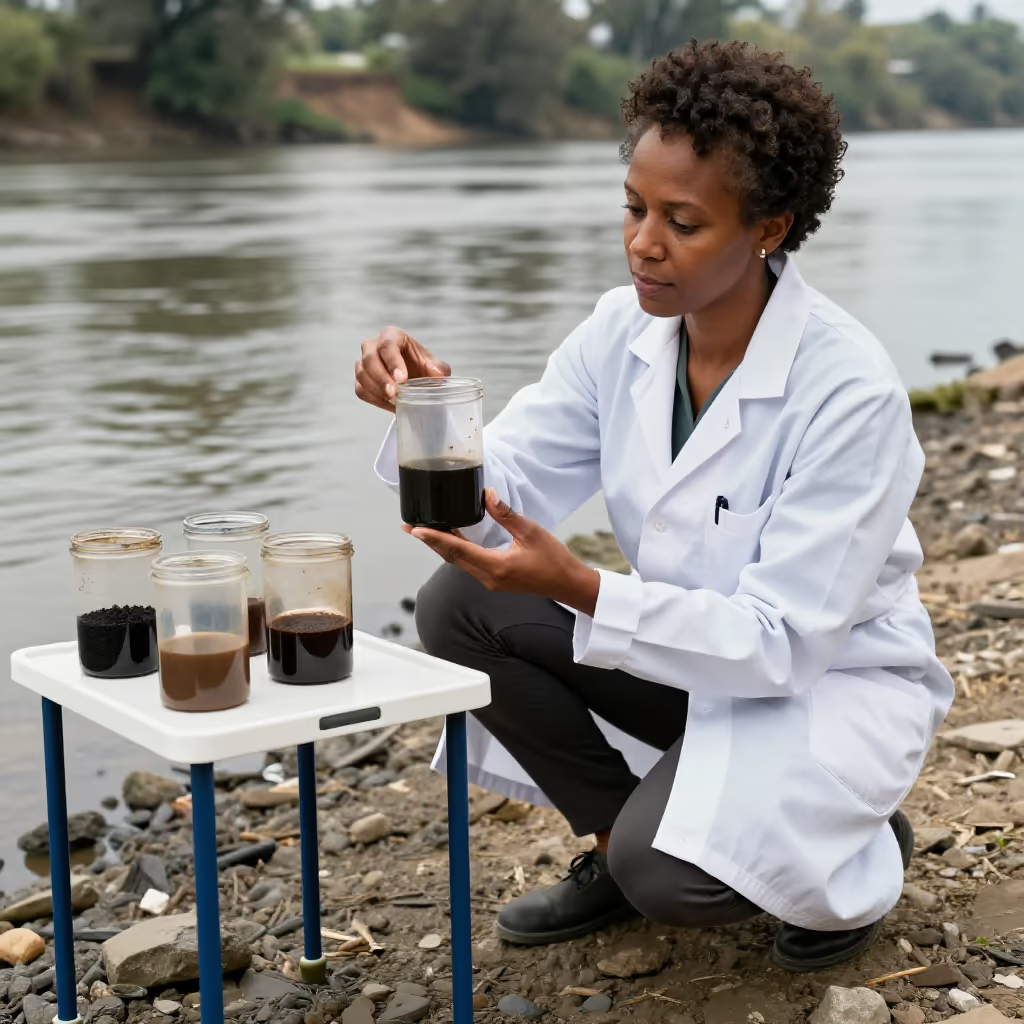
to accumulate
To build up over time in a system, organism, or material and increase in concentration.
Schadstoffe aus der Industrie können sich in der Nahrungskette anreichern.
Pollutants from industry can accumulate in the food chain.
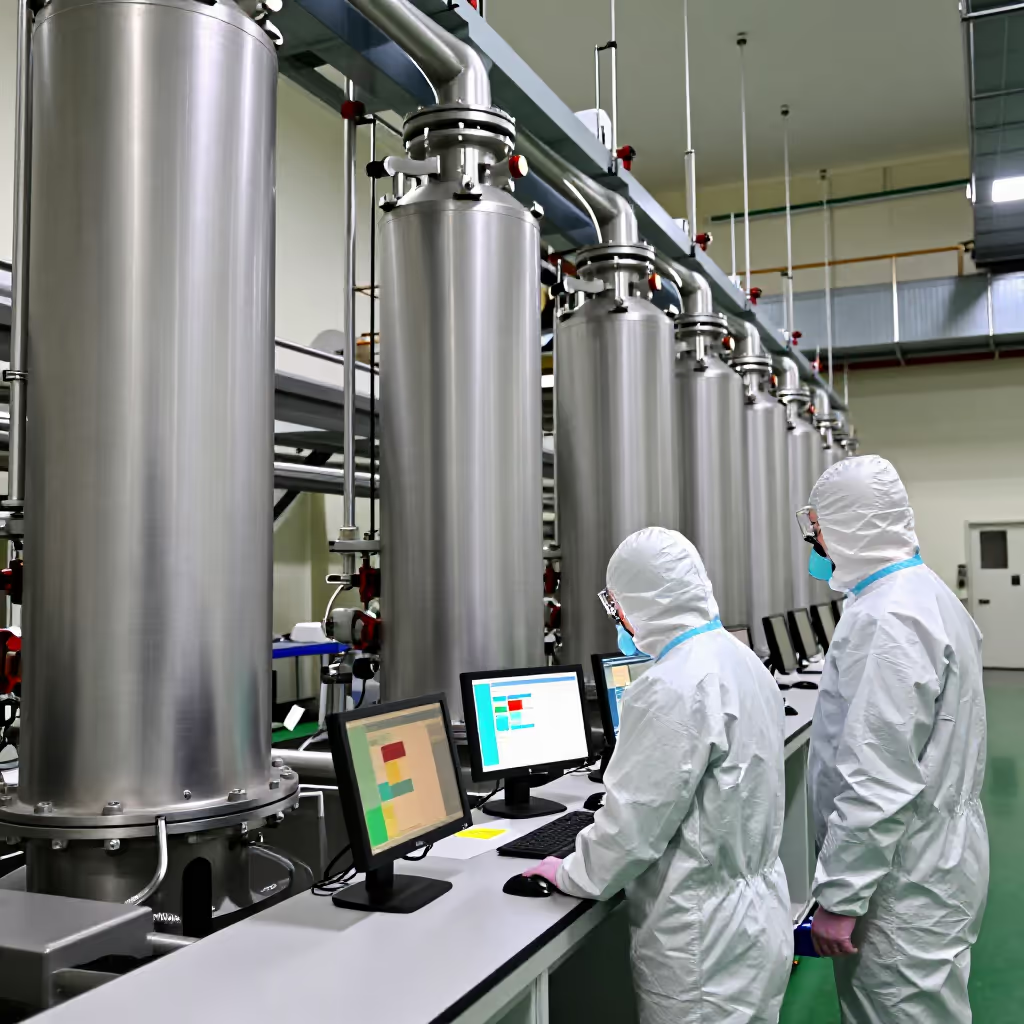
to enrich
In nuclear physics, to increase the proportion of a particular isotope in an element, especially uranium.
Für den Betrieb eines Kernkraftwerks muss das natürliche Uran angereichert werden.
To operate a nuclear power plant, natural uranium has to be enriched.
'Anreichern' (to enrich) is a separable verb. The prefix 'an-' goes to the end in a main clause. In subordinate clauses and in the infinitive, the verb stays together.
Der Koch reichert die Soße mit frischen Kräutern an.
The cook enriches the sauce with fresh herbs.
The verb consists of the prefix 'an-' and the word 'reichern', which comes from 'reich' (rich). So the literal meaning is to make something 'richer' by adding something.
Sie reicherte ihre Präsentation mit interessanten Fakten an.
She enriched her presentation with interesting facts.
When you add something in order to improve it, the structure is: etwas (accusative) mit etwas (dative) anreichern.
Man kann Joghurt mit Früchten anreichern.
You can enrich yogurt with fruit.
In the meaning 'sich ansammeln' (to accumulate), the verb is always used reflexively: 'sich anreichern'. It describes a process that takes place over time. The preposition 'in' (+ dative) is often used to name the place where something accumulates.
Das Gift reichert sich im Fettgewebe der Tiere an.
The poison accumulates in the animals’ fatty tissue.
The meaning related to isotopes is highly technical. You find it almost exclusively in texts about nuclear physics, chemistry, or weapons technology.
In der Anlage wird Uran für die Nutzung in Kraftwerken angereichert.
Uranium is enriched in the facility for use in power plants.
to enrich
Bereichern and anreichern can both refer to improving something by adding content. Bereichern emphasizes the value gained or greater variety. Anreichern places more emphasis on specific elements or substances being added and often sounds somewhat more formal when used with abstract content.
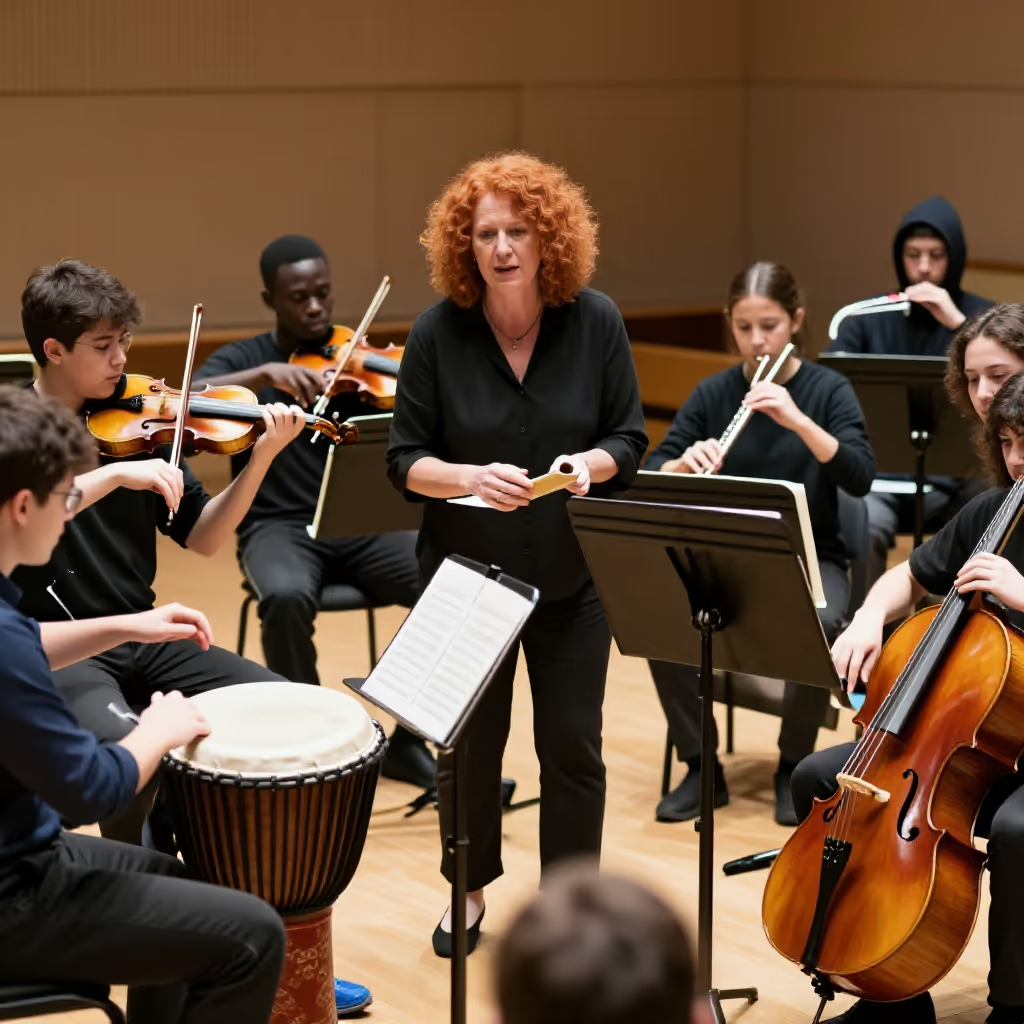
Die Rednerin reichert den Vortrag mit aktuellen Zahlen an.
The speaker enriches the presentation with current figures.
Persönliche Geschichten bereichern den Vortrag und machen ihn lebendiger.
Personal stories enrich the presentation and make it more lively.