
anschlagen
to take effect
To become effective; to show a positive effect. Often used for therapies, medications, or measures.
Das neue Medikament hat bei dem Patienten sofort angeschlagen.
The new medication took effect immediately in the patient.

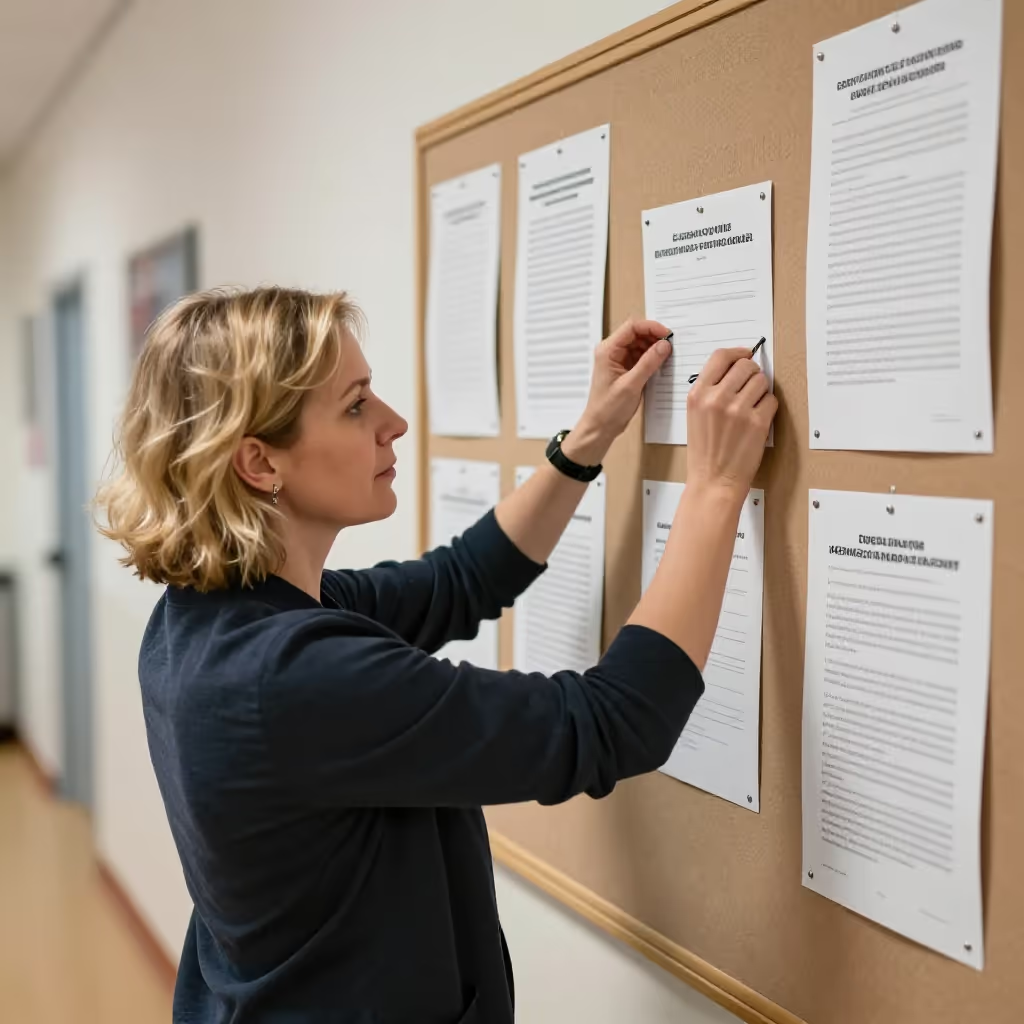
to take effect / bark / post
Loading your saved state.
to take effect
To become effective; to show a positive effect. Often used for therapies, medications, or measures.
Das neue Medikament hat bei dem Patienten sofort angeschlagen.
The new medication took effect immediately in the patient.

'Anschlagen' is a separable verb. The prefix 'an-' comes at the end in a main clause, stays attached to the verb in subordinate clauses, and in an infinitive with 'zu', 'zu' comes between the prefix and the verb.
Der Hund schlägt bei jedem Geräusch an.
The dog barks at every noise.
The meaning of 'anschlagen' depends strongly on the context. A medication 'schlägt an' (takes effect), a dog 'schlägt an' (barks), a note is 'angeschlagen' (posted), and a piano key is 'angeschlagen' (struck/played).
Die neue Diät schlägt bei mir gut an.
The new diet is working well for me.
In the meaning 'wirksam werden' (to take effect), 'anschlagen' is almost always used for medical treatments or general measures. The subject is the treatment itself, not the person.
Die Schmerzmittel haben nach 20 Minuten angeschlagen.
The painkillers took effect after 20 minutes.
When 'anschlagen' means barking, the subject is almost always a dog. This meaning is very specifically connected to this animal.
Die Hunde im Dorf schlagen an, wenn ein Auto vorbeifährt.
The dogs in the village bark when a car drives by.
The expression 'einen ... Ton anschlagen' (to adopt a ... tone) is fixed. Between 'einen' and 'Ton', there is usually an adjective that describes the type of communication.
Im Gespräch mit dem Kunden müssen Sie einen professionellen Ton anschlagen.
When speaking with the customer, you must adopt a professional tone.
When estimating costs or values, 'anschlagen' is often used in the passive with the preposition 'mit'. The structure is: 'etwas wird mit [Summe] angeschlagen' (something is estimated at [amount]).
Der Schaden am Auto wurde mit über 5.000 Euro angeschlagen.
The damage to the car was estimated at over 5,000 euros.
to help
'helfen' and 'anschlagen' can both express that something has a positive effect. 'helfen' is the more general word: a medication, a piece of advice, or a measure can help. 'anschlagen' is used mainly when a treatment, medication, or measure starts to show an effect after a certain amount of time. It sounds more specific and often somewhat more medical or factual. For example, you say that a therapy 'anschlägt' when you notice that it is working.

Das neue Medikament schlägt schon nach zwei Tagen an.
The new medication is already taking effect after two days.
Die Salbe hilft gegen den Ausschlag.
The ointment helps with the rash.