

argentinisch
Argentinian
Relates to the country of Argentina, its inhabitants, its culture, or language.
EXAMPLE
Das argentinische Steak ist für seine hohe Qualität bekannt.
Argentinian steak is known for its high quality.
Argentinian
Loading your saved state.
Argentinian
Relates to the country of Argentina, its inhabitants, its culture, or language.
Das argentinische Steak ist für seine hohe Qualität bekannt.
Argentinian steak is known for its high quality.
The adjective 'argentinisch' (Argentinian) is formed from the country name 'Argentinien' (Argentina) with the ending '-isch'. This ending is typical for many adjectives that describe origin or affiliation.
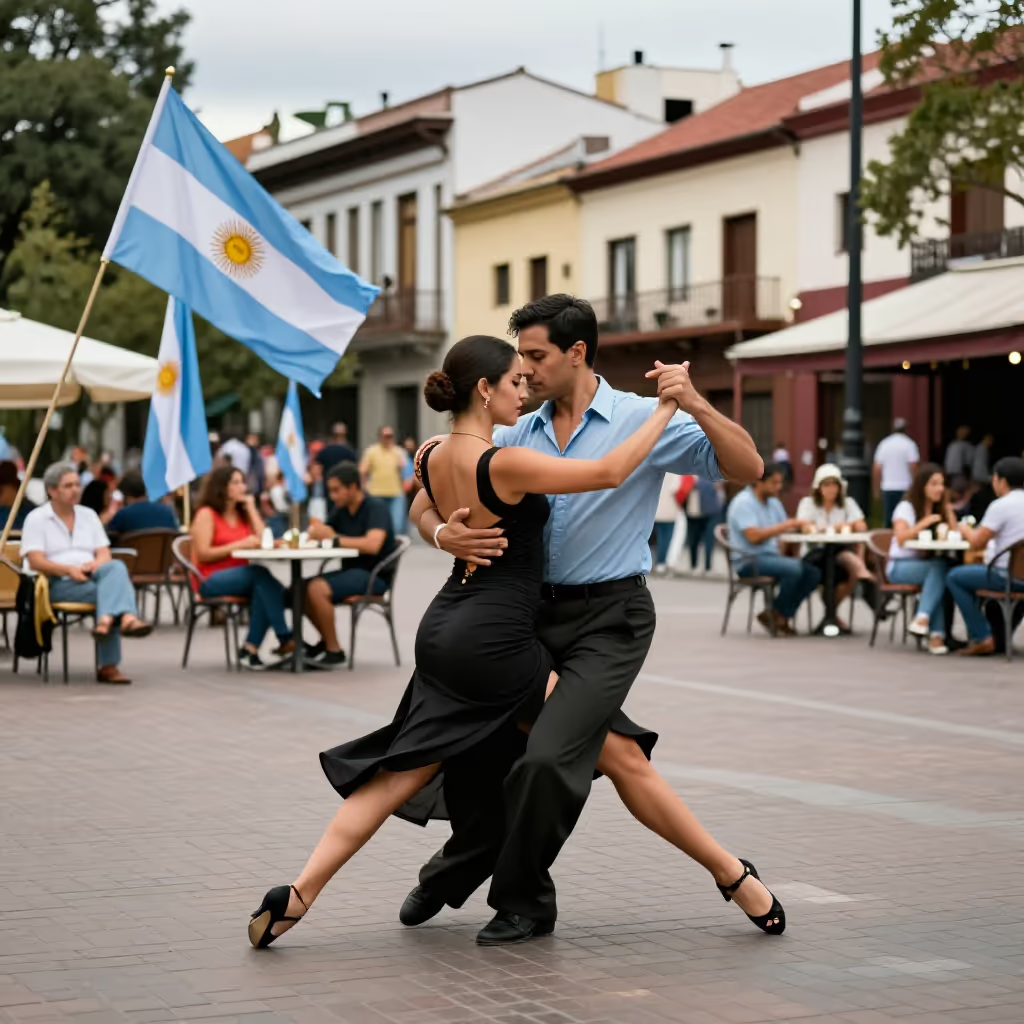
Die argentinische Flagge ist hellblau und weiß.
The Argentinian flag is light blue and white.
Adjectives derived from country names are written in lowercase in German, except at the beginning of a sentence. So you write 'der argentinische Wein' (the Argentinian wine), not 'der Argentinische Wein'.
Wir haben gestern einen sehr guten argentinischen Rotwein getrunken.
Yesterday we drank a very good Argentinian red wine.
'Argentinisch' (Argentinian) is often connected with things the country is known for. Common combinations are: argentinischer Tango (Argentinian tango), argentinisches Steak (Argentinian steak), and argentinischer Fußball (Argentinian football/soccer).
In diesem Restaurant kann man authentischen argentinischen Tango tanzen lernen.
At this restaurant, you can learn to dance authentic Argentinian tango.
Argentinian
„Argentinier“ refers to a person of Argentine nationality or origin. „Argentinisch“, by contrast, mainly describes characteristics, things, culture, or language related to Argentina and usually comes before a noun. When referring to a person’s nationality, „Argentinier“ is therefore the appropriate term.

Die argentinische Sängerin tritt heute Abend in Berlin auf.
The Argentine singer is performing in Berlin tonight.
Der neue Nachbar ist Argentinier und lebt seit zwei Jahren in Deutschland.
The new neighbor is Argentinian and has been living in Germany for two years.