

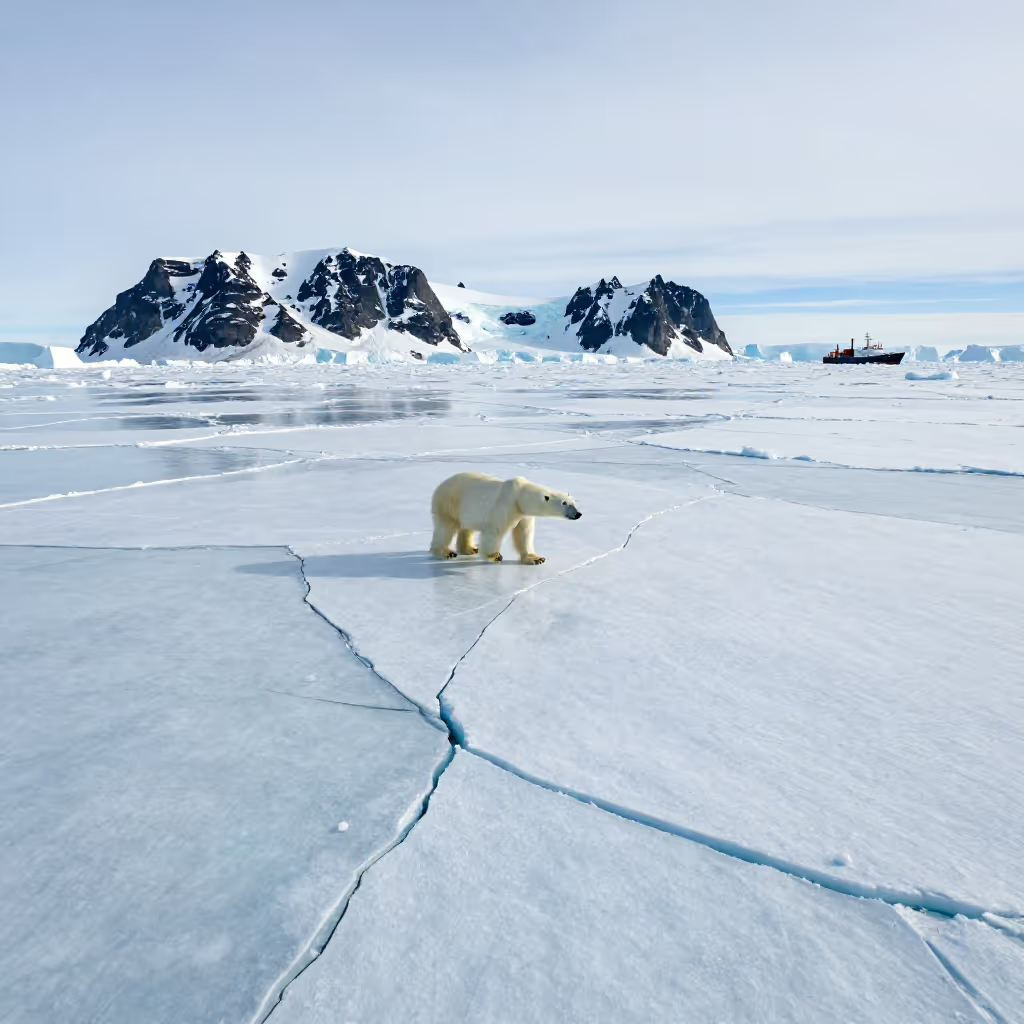
The region of the Earth around the North Pole, including the Arctic Ocean and the northernmost parts of Europe, Asia, and North America.
example
Durch den Klimawandel schmilzt das Eis in der Arktis besorgniserregend schnell.
Because of climate change, the ice in the Arctic is melting at an alarming rate.
Usage tips
Use with article
As a geographic name, 'Arktis' (Arctic) is almost always used with the definite article 'die'. You say 'der Arktis' (of/in the Arctic), not just 'Arktis'.
EXAMPLE
Die Arktis ist eine faszinierende und empfindliche Region.
The Arctic is a fascinating and fragile region.
Location and direction
Pay attention to the difference in prepositions: 'in der Arktis' (in the Arctic, dative) describes a location, while 'in die Arktis' (to/into the Arctic, accusative) expresses movement toward it.
EXAMPLE
Viele Forscher arbeiten in der Arktis.
Many researchers work in the Arctic.
Word family
The related adjective is 'arktisch' (Arctic). It describes everything connected with the Arctic, such as the climate, animals, or landscape.
EXAMPLE
Die Temperaturen sind im arktischen Winter extrem niedrig.
Temperatures are extremely low in the Arctic winter.
Compare with
near_synonym · confusable
Arktis vs Nordpol
North Pole
'die Arktis' and 'der Nordpol' both belong to the far north of the Earth. The most important difference is size: 'die Arktis' is an entire region around the North Pole, with ocean and parts of several continents. 'der Nordpol', on the other hand, is a specific point. Learners easily confuse the words because the North Pole lies in the Arctic. For climate, animals, or landscapes, you usually say 'die Arktis'. For the exact northernmost point on Earth or the magnetic pole, you say 'der Nordpol'.
Arktis
In der Arktis leben Tiere, die an große Kälte angepasst sind.
Animals that are adapted to extreme cold live in the Arctic.
Nordpol
Der Nordpol ist kein Land, sondern ein Punkt im arktischen Ozean.
The North Pole is not a country, but a point in the Arctic Ocean.