

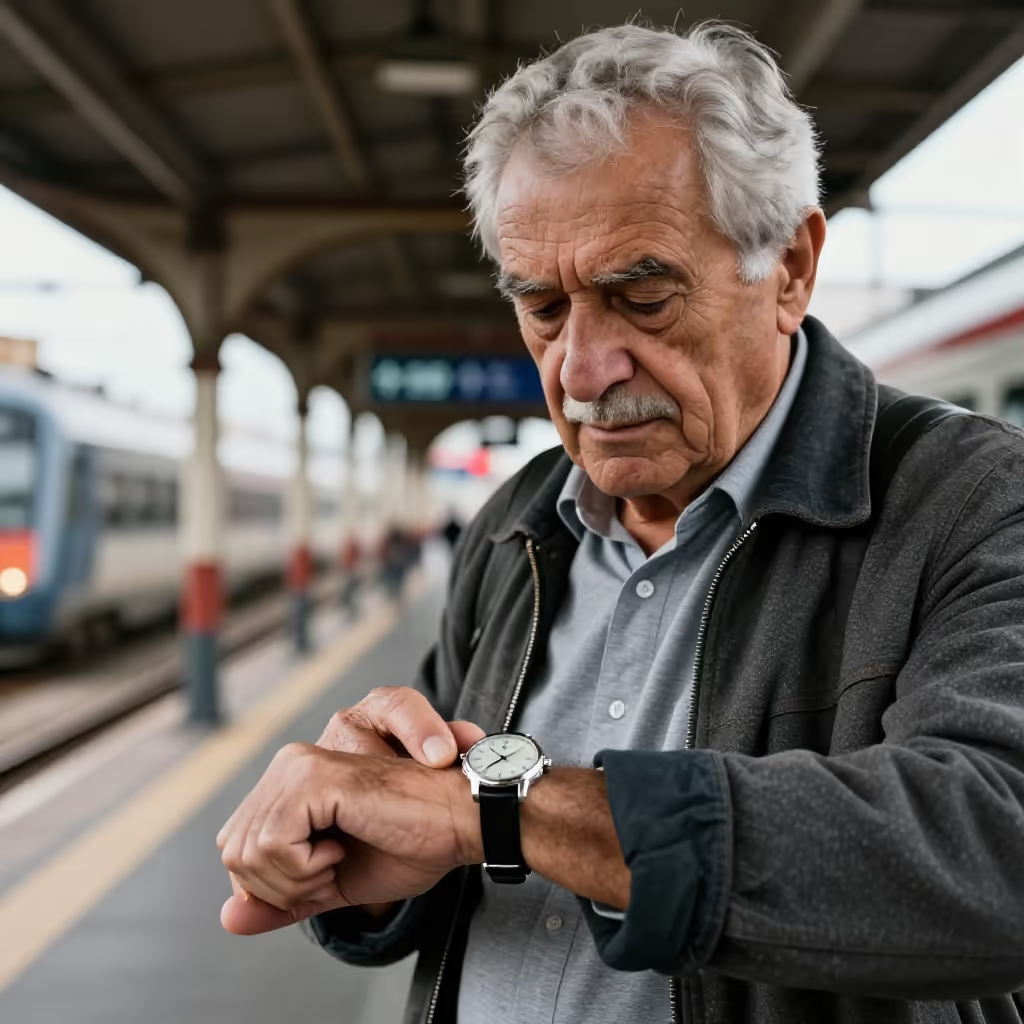
die Armbanduhr
wristwatch
A watch worn on the wrist with the help of a strap in order to show the time.
EXAMPLE
Er hat zum Geburtstag eine neue Armbanduhr bekommen.
He got a new wristwatch for his birthday.
wristwatch
Loading your saved state.
wristwatch
A watch worn on the wrist with the help of a strap in order to show the time.
Er hat zum Geburtstag eine neue Armbanduhr bekommen.
He got a new wristwatch for his birthday.
'Armbanduhr' (wristwatch) is a typical German compound. It is made up of 'das Armband' (the bracelet/strap) and 'die Uhr' (the clock/watch). So it is literally a watch attached to a strap.
Meine alte Armbanduhr ist leider kaputtgegangen.
Unfortunately, my old wristwatch broke.
Typical verbs connected with an 'Armbanduhr' (wristwatch) are 'tragen' (to wear), 'anlegen' (to put on), or 'umlegen' (to put on/strap on), and 'abnehmen' (to take off) or 'ablegen' (to take off/put down).
Vor dem Schwimmen lege ich meine Armbanduhr immer ab.
Before swimming, I always take off my wristwatch.
When checking the time on the watch, you say 'auf die Armbanduhr schauen' (to look at the wristwatch) or 'einen Blick auf die Armbanduhr werfen' (to cast a glance at the wristwatch). The preposition 'auf' with the accusative is important here.
Er schaute nervös auf seine Armbanduhr.
He looked nervously at his wristwatch.