

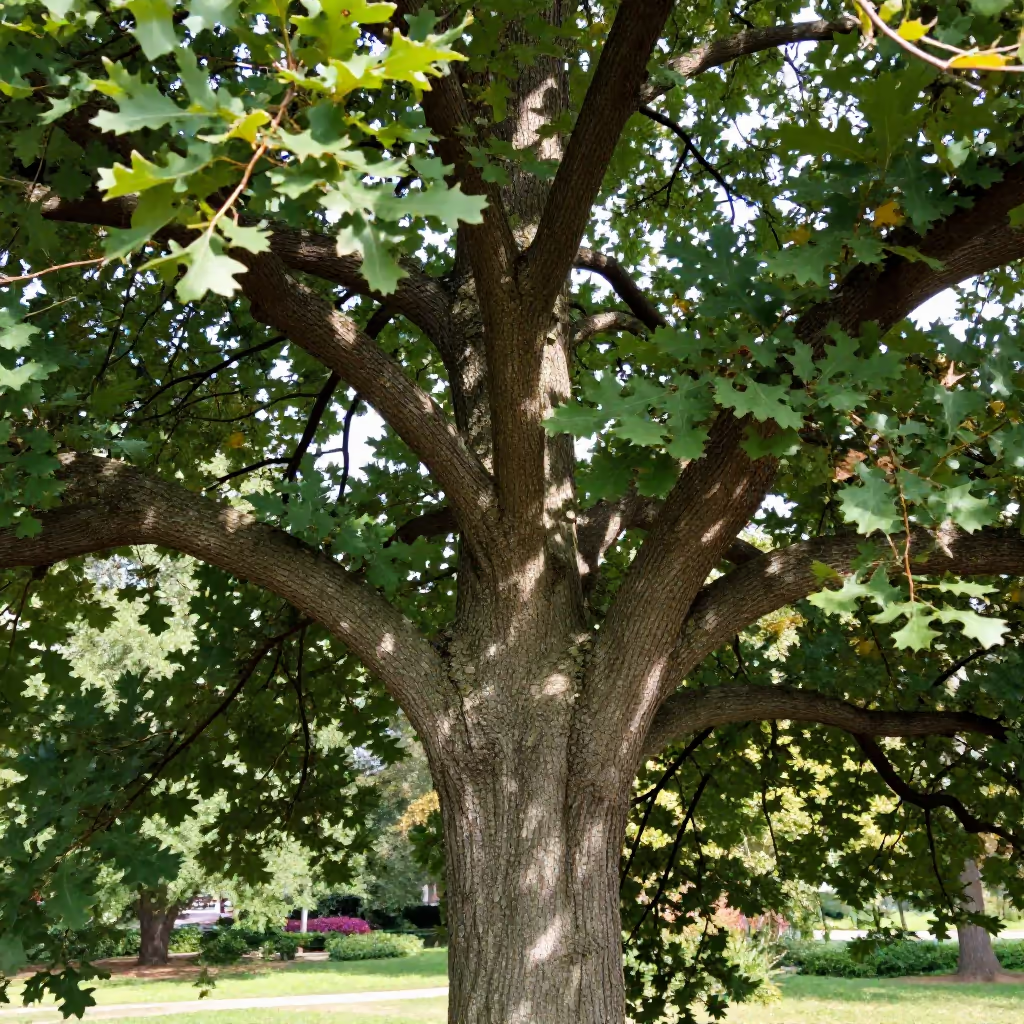
der Ast
branch
One of the main offshoots that extend directly from the trunk of a tree or from a thicker branch.
EXAMPLE
Ein starker Ast ist im Sturm vom Baum abgebrochen.
A strong branch broke off the tree in the storm.
branch
Loading your saved state.
branch
One of the main offshoots that extend directly from the trunk of a tree or from a thicker branch.
Ein starker Ast ist im Sturm vom Baum abgebrochen.
A strong branch broke off the tree in the storm.
branch
In a figurative sense, a subsection or offshoot of a larger system, e.g. a family or a field of science.
Die Genealogie verfolgt jeden Ast des Familienstammbaums.
Genealogy traces every branch of the family tree.

to laugh one's head off
A colloquial idiom meaning to laugh very hard and for a long time.
Bei der Komödie gestern haben wir uns wirklich einen Ast gelacht.
At the comedy yesterday, we really laughed our heads off.
The verb 'sich verästeln' (to branch out) is derived from the noun 'der Ast' (the branch). It means that something divides into many smaller branches or paths, like the branches of a tree.
Das Wegenetz im Wald verästelt sich immer mehr.
The network of paths in the forest branches out more and more.
In its literal meaning, 'Ast' is often combined with verbs that describe an action: 'einen Ast absägen' (to saw off a branch), 'auf einen Ast klettern' (to climb onto a branch), or 'von einem Ast fallen' (to fall from a branch).
Die Kinder kletterten auf einen dicken Ast des Apfelbaums.
The children climbed onto a thick branch of the apple tree.
The figurative meaning of 'Ast' is often found in connection with family structures. Signal words here are 'Stammbaum' (family tree), 'Familie' (family), or 'Abstammung' (descent/ancestry).
Die Forschung zu ihrem Stammbaum zeigte, dass ein Ast der Familie nach Amerika ausgewandert war.
The research into her family tree showed that one branch of the family had emigrated to America.
The expression 'sich einen Ast lachen' (to laugh one's head off) is a fixed idiom. The verb is reflexive ('sich lachen'), and 'einen Ast' is a fixed component in the accusative.
Als er die Geschichte erzählte, hat sich die ganze Gruppe einen Ast gelacht.
When he told the story, the whole group laughed their heads off.
branch
Ast and Zweig both refer to woody divisions of a tree. An Ast is usually thicker and grows directly from the trunk or from a larger branch; a Zweig is normally thinner and grows from a branch. The distinction is not always sharp, but size and the level of branching help determine which word to use.
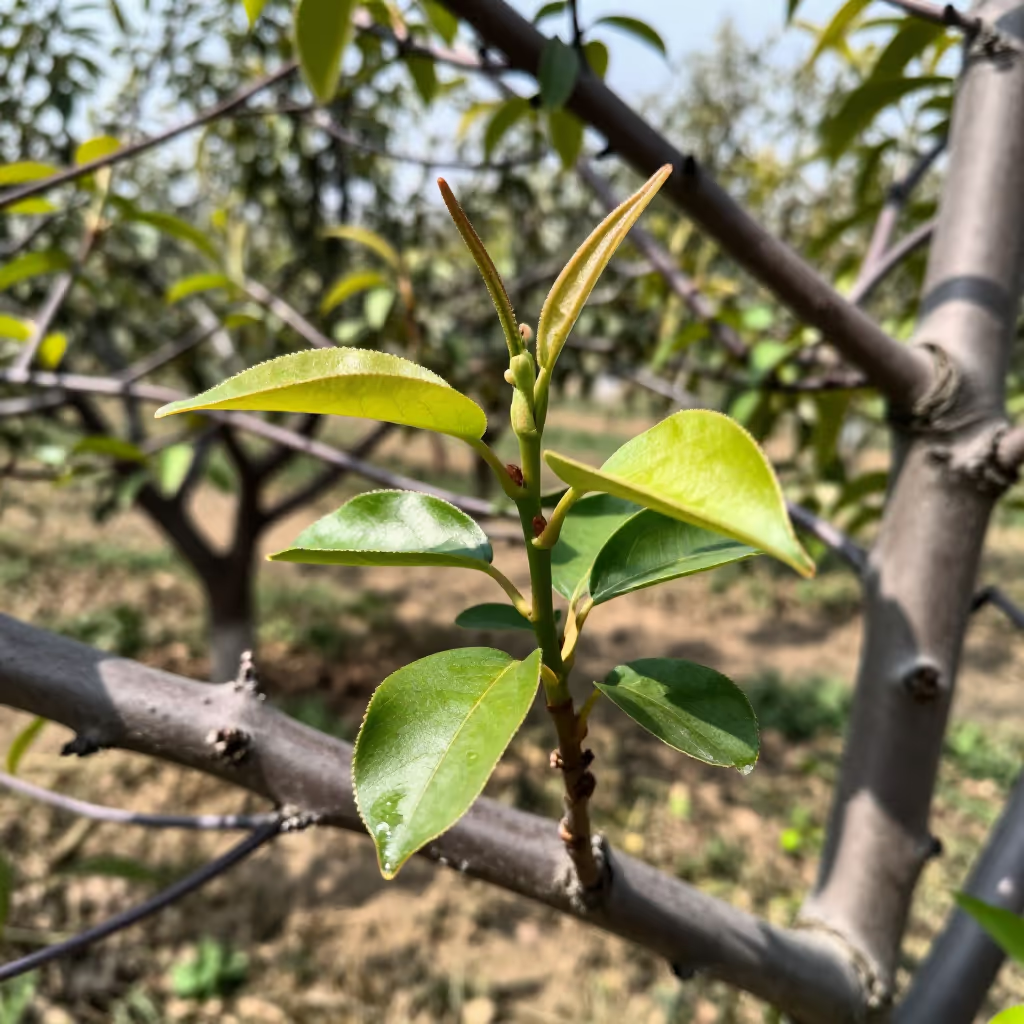
Ein dicker Ast wächst seitlich aus dem Stamm.
A thick branch grows sideways from the trunk.
Ein dünner Zweig wächst seitlich aus dem großen Ast.
A thin twig grows sideways from the large branch.