

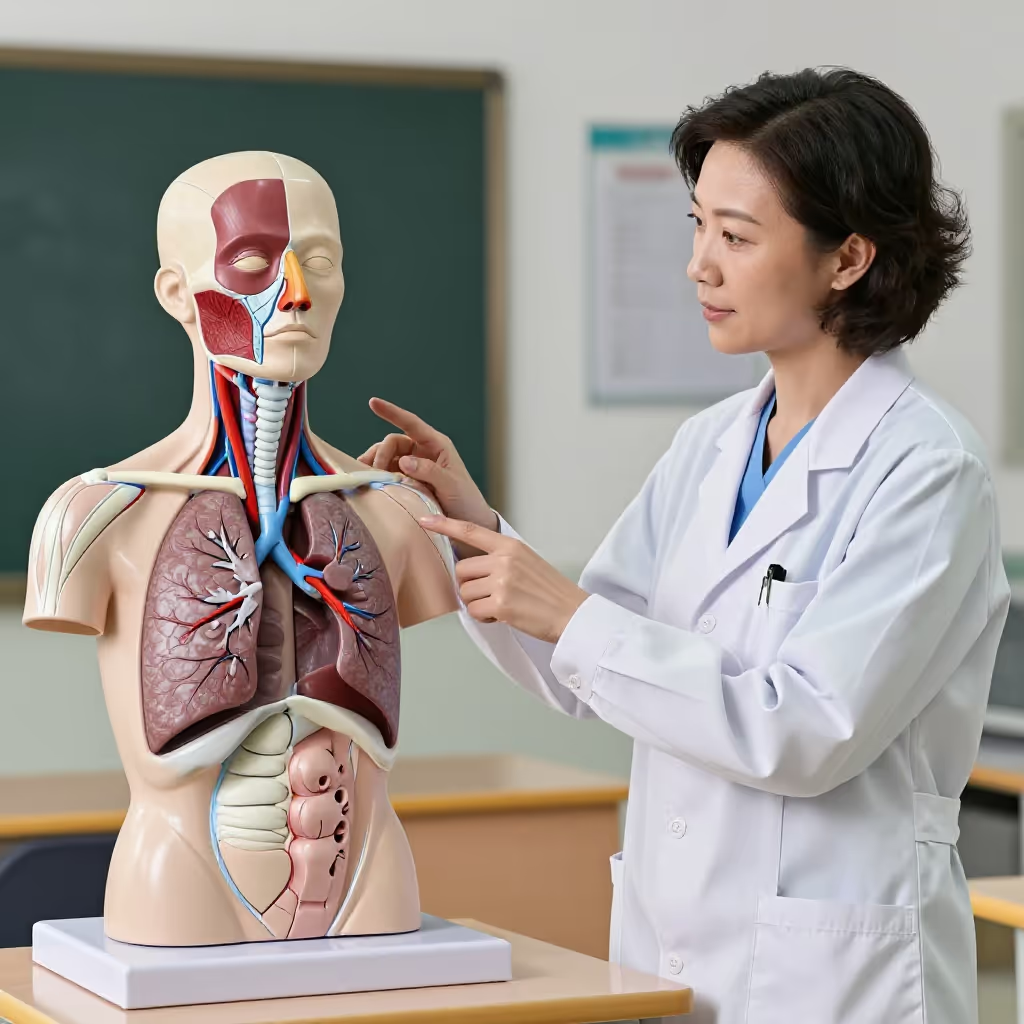
The path that air takes through the body when breathing, from the nose and mouth into the lungs. Usually used in the plural, 'die Atemwege' (the airways).
example
Bei einer Erkältung sind oft die oberen Atemwege entzündet.
With a cold, the upper airways are often inflamed.
Usage tips
Compound word
The word is made up of 'Atem' (breath) and 'Weg' (way/path). Its meaning is therefore literally the 'path of breath' through the body, which makes the word very logical and easy to remember.
EXAMPLE
Rauch reizt die empfindlichen Atemwege.
Smoke irritates the sensitive airways.
Use in the plural
Although there is a singular form, the word is almost always used in the plural, 'die Atemwege' (the airways). People rarely speak of a single 'Atemweg' (airway), but rather of the entire system.
EXAMPLE
Der Arzt prüfte, ob die Atemwege des Patienten frei sind.
The doctor checked whether the patient's airways were clear.
Typical collocations
In a medical context, a distinction is often made between the 'oberen Atemwegen' (upper airways: nose, throat) and the 'unteren Atemwegen' (lower airways: windpipe, lungs). Common verbs are 'freimachen' (to clear), 'blockieren' (to block), or 'entzünden' (to inflame).
EXAMPLE
Eine Erkältung ist eine Infektion der oberen Atemwege.