

aufbrauchen
to use up
To use something completely so that none of it is left.
EXAMPLE
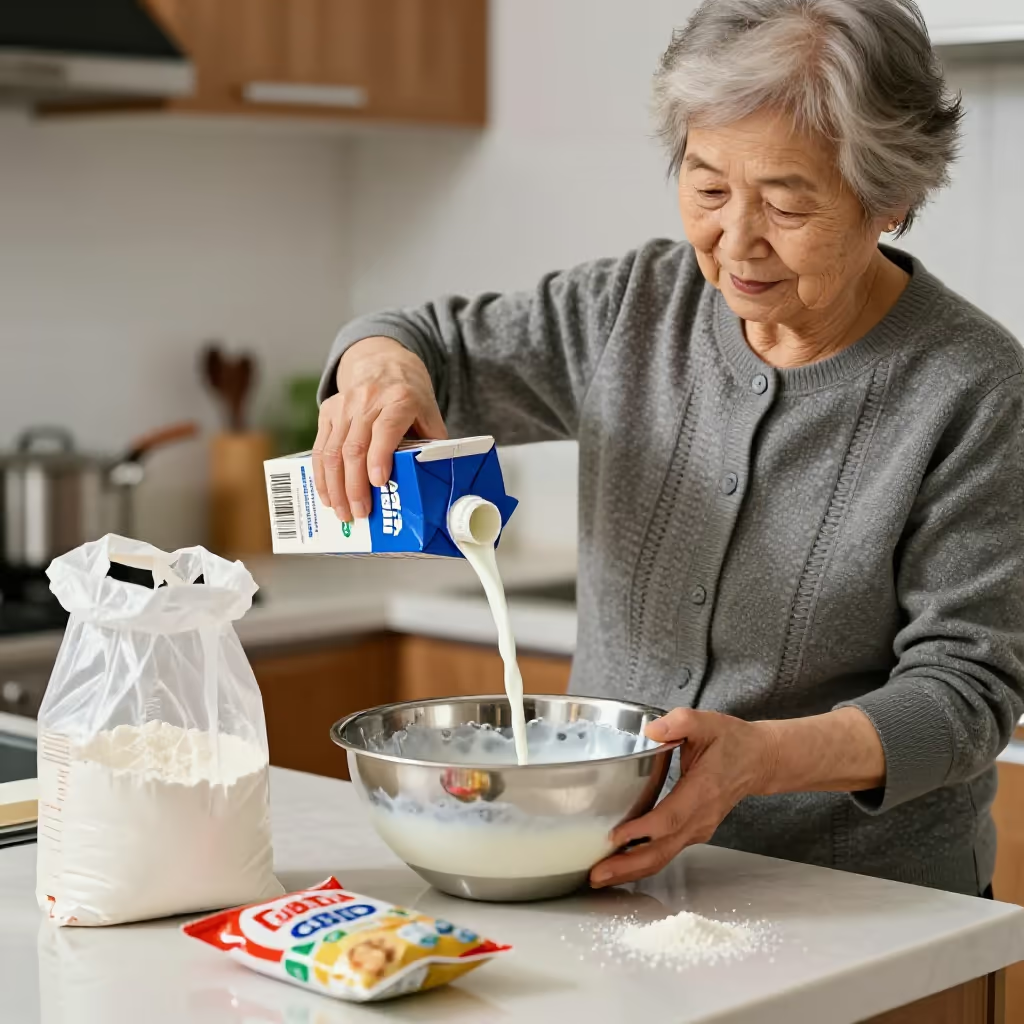
Wir sollten erst die alte Milch aufbrauchen, bevor wir eine neue Packung öffnen.
We should use up the old milk before we open a new carton.
to use up
Loading your saved state.
to use up
To use something completely so that none of it is left.
Wir sollten erst die alte Milch aufbrauchen, bevor wir eine neue Packung öffnen.
We should use up the old milk before we open a new carton.

to wear oneself out
To use up all of one's physical or emotional strength; to completely exhaust oneself.
Er hat sich in seinem anstrengenden Beruf völlig aufgebraucht und braucht dringend eine Pause.
He has completely worn himself out in his demanding job and urgently needs a break.
'Aufbrauchen' (to use up) is a separable verb. The prefix 'auf-' goes at the end in a main clause. It intensifies the verb and here means 'completely' or 'to the end.'
Ich brauche heute den ganzen Zucker für den Kuchen auf.
I'm using up all the sugar today for the cake.
The difference between the meanings lies in the reflexive pronoun 'sich' (oneself). Without 'sich', it means to use up an object. With 'sich', it means to use up one's own energy or strength.
Wir haben den ganzen Saft aufgebracht.
We used up all the juice.
Typically, things that are consumed or stored in everyday life are 'aufgebraucht' (used up). These include 'Vorräte aufbrauchen' (to use up supplies), 'Geld aufbrauchen' (to use up money), or 'Lebensmittel aufbrauchen' (to use up food).
Vor dem Urlaub sollten wir alle Reste im Kühlschrank aufbrauchen.
Before the vacation, we should use up all the leftovers in the fridge.
to exhaust / deplete
Erschöpfen and aufbrauchen can both mean that nothing is left. Aufbrauchen usually sounds more natural for concrete everyday items, while erschöpfen is more often used with larger resources, supplies, or capacities and sounds more formal.
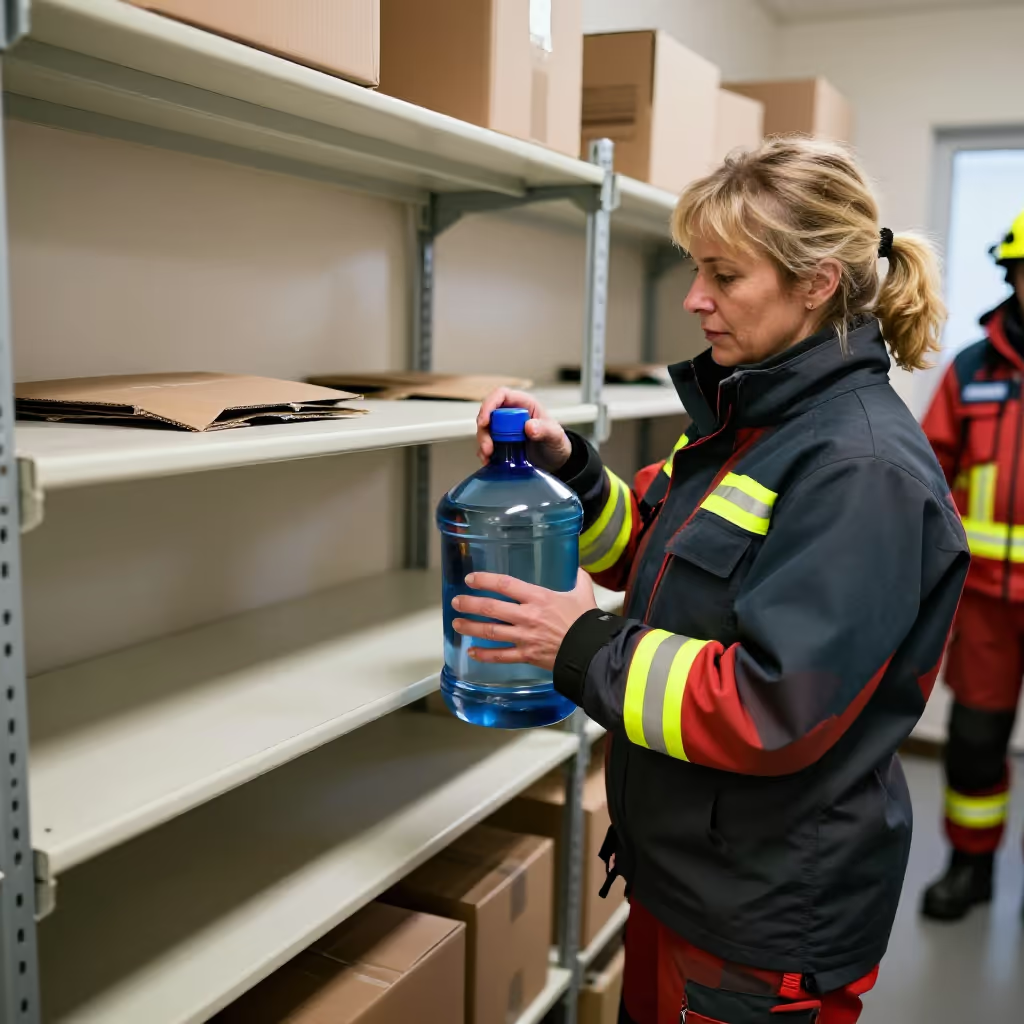
Vor der Abreise brauchen wir den restlichen Wasservorrat auf.
We need to use up the rest of the water supply before we leave.
Die lange Dürre erschöpft die Wasserreserven der Region.
The prolonged drought depletes the region's water reserves.