

ausgeben
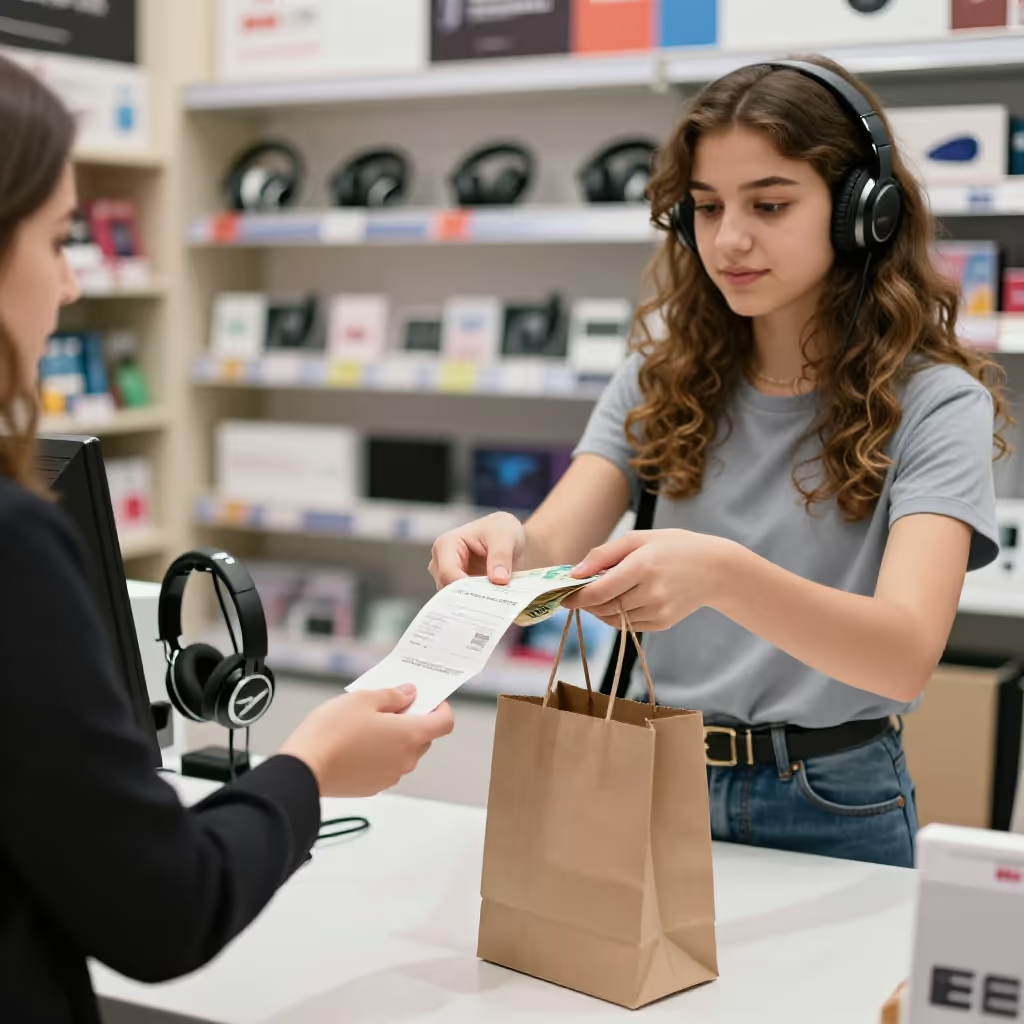
to spend
To use money to buy goods or services.
EXAMPLE
Im Urlaub haben wir viel Geld für gutes Essen ausgegeben.
On vacation, we spent a lot of money on good food.
to spend / to distribute
Loading your saved state.
to spend
To use money to buy goods or services.
Im Urlaub haben wir viel Geld für gutes Essen ausgegeben.
On vacation, we spent a lot of money on good food.

to distribute
To distribute or hand something out to a group of people.
Am Ende des Seminars werden die Zertifikate ausgegeben.
At the end of the seminar, the certificates will be distributed.

to pass oneself off as
To pretend to be another person or something else in order to deceive someone.
Der Betrüger hat sich am Telefon als Bankmitarbeiter ausgegeben.
The scammer passed himself off as a bank employee on the phone.
'Ausgeben' (to spend / to distribute) is a separable verb. The prefix 'aus' stands at the end in a main clause. In subordinate clauses, the verb stays together.
Er gibt sein ganzes Taschengeld für Videospiele aus.
He spends all his pocket money on video games.
When you use money for something specific, you use the preposition 'für' (for) followed by the accusative.
Wie viel Geld möchtest du für das Geschenk ausgeben?
How much money do you want to spend on the gift?
In the meaning 'vortäuschen' (to pretend), the verb is always reflexive ('sich ausgeben' — to pass oneself off) and is combined with the preposition 'als' (as). The person who is deceiving others is the subject.
Der Dieb gab sich als Polizist aus.
The thief passed himself off as a police officer.
In the meaning 'verteilen' (to distribute), 'ausgeben' is often used in official or organized contexts. Typical objects are food and drinks, documents, tickets, or warnings.
Die Helfer geben warmes Essen an die Bedürftigen aus.
The helpers distribute warm food to those in need.
to pay
When buying something, both verbs can describe the same payment situation. Bezahlen focuses on the goods, the bill, or the service, while ausgeben emphasizes the amount of money you spend. Say bezahlen when the object of payment is important, and ausgeben when you want to highlight the amount as an expense.

Für das Fahrrad gebe ich höchstens fünfhundert Euro aus.
I spend no more than five hundred euros on the bicycle.
Für das Fahrrad bezahle ich den Preis direkt im Geschäft.
I pay for the bicycle directly at the store.