der Ausläufer
foothill
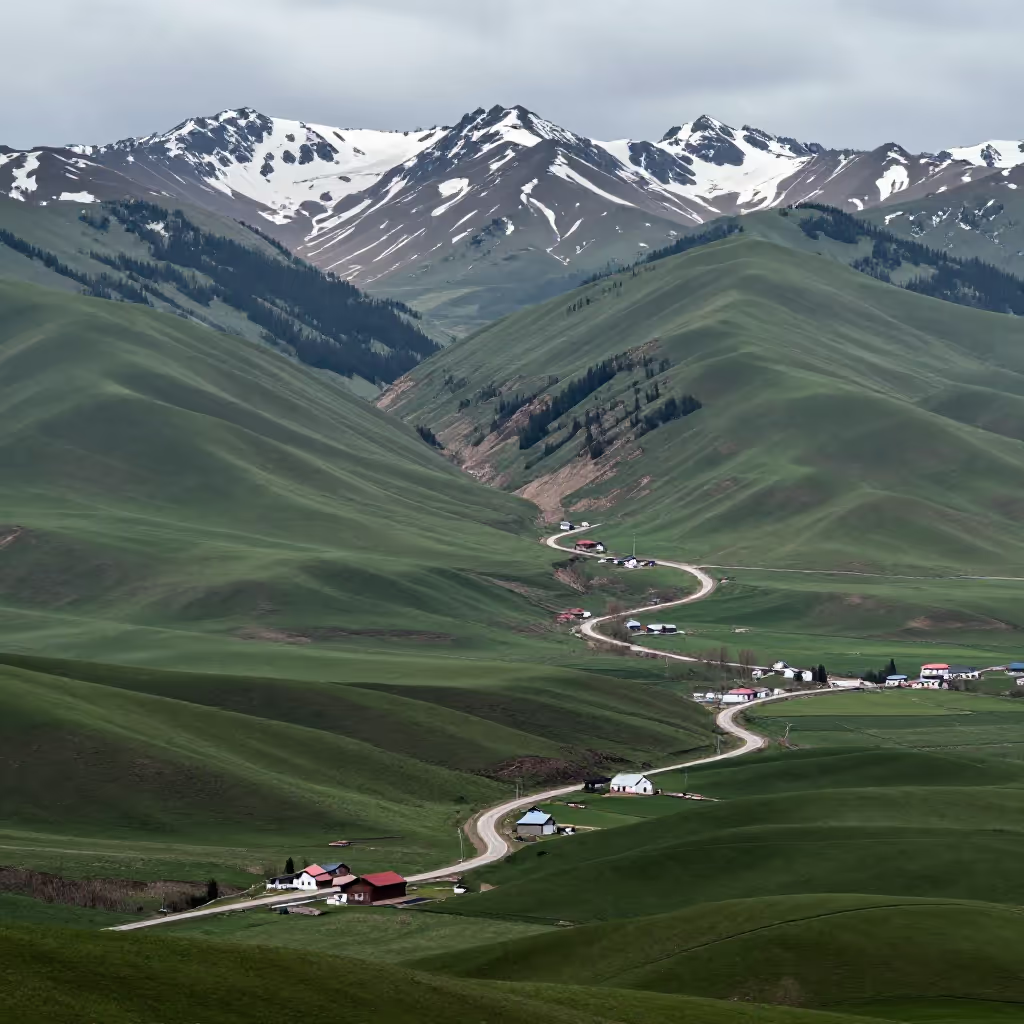
In a geographical sense, the gradually flattening, hilly areas at the edge of a mountain range.
Wir machten eine Wanderung in den sanften Ausläufern des Harzes.
We went for a hike in the gentle foothills of the Harz Mountains.

foothill / offshoot
Loading your saved state.
foothill
In a geographical sense, the gradually flattening, hilly areas at the edge of a mountain range.
Wir machten eine Wanderung in den sanften Ausläufern des Harzes.
We went for a hike in the gentle foothills of the Harz Mountains.

The word derives from the verb 'auslaufen' (to run out / to extend outward). An 'Ausläufer' is therefore literally something that 'runs out' from a center or moves away from it. This basic idea connects all meanings, from mountains to storms to plants.
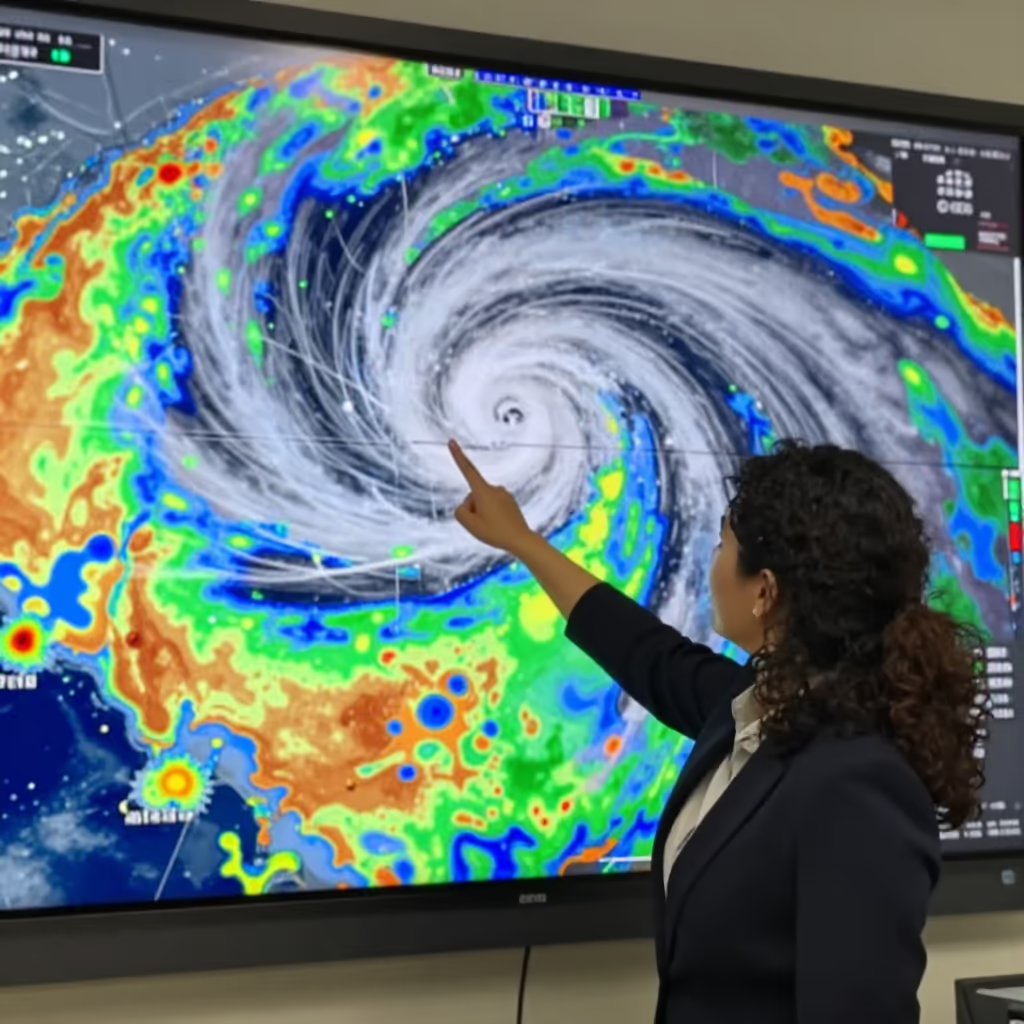
Die Ausläufer des Sturms brachten starken Wind in die Region.
The outer edges of the storm brought strong winds to the region.
The meaning can almost always be inferred from context: in geography, it refers to hills at the edge of a mountain range; in meteorology, to the edge of a weather system; in botany, to a plant shoot; and figuratively, to the aftereffects of an event.
Wir wanderten in den Ausläufern der Alpen.
We hiked in the foothills of the Alps.
Especially in the geographical, meteorological, and figurative meanings, the word is very often used in the plural, 'die Ausläufer' (the foothills / outer edges / aftereffects). This is because it usually describes an indefinite zone or several effects, not just a single point.
Die Ausläufer des Hochdruckgebiets sorgen für sonniges Wetter.
The outer edges of the high-pressure system are bringing sunny weather.
In the figurative sense, 'Ausläufer' (aftereffects) is often combined with adjectives such as 'wirtschaftlich' (economic), 'politisch' (political), or 'letzte' (last). It then describes the consequences of crises, reforms, or other important events.
Die politischen Ausläufer dieser Entscheidung sind noch nicht absehbar.
The political aftereffects of this decision cannot yet be predicted.
consequence / episode
'die Folge' and 'der Ausläufer' can both describe something that is still noticeable after an event. 'die Folge' is general and can be any consequence, including a direct and important one. 'der Ausläufer' means more the last, weaker effects that remain. The words can be confused when talking about later effects. For the result of an action, people usually use 'Folge'. For remnants or lingering aftereffects of a larger event, 'Ausläufer' is more precise.

Am Montag spürten wir noch die Ausläufer des Sturms.
On Monday, we could still feel the aftereffects of the storm.
Die Folge des Unfalls war ein langer Stau auf der Autobahn.
The consequence of the accident was a long traffic jam on the highway.