

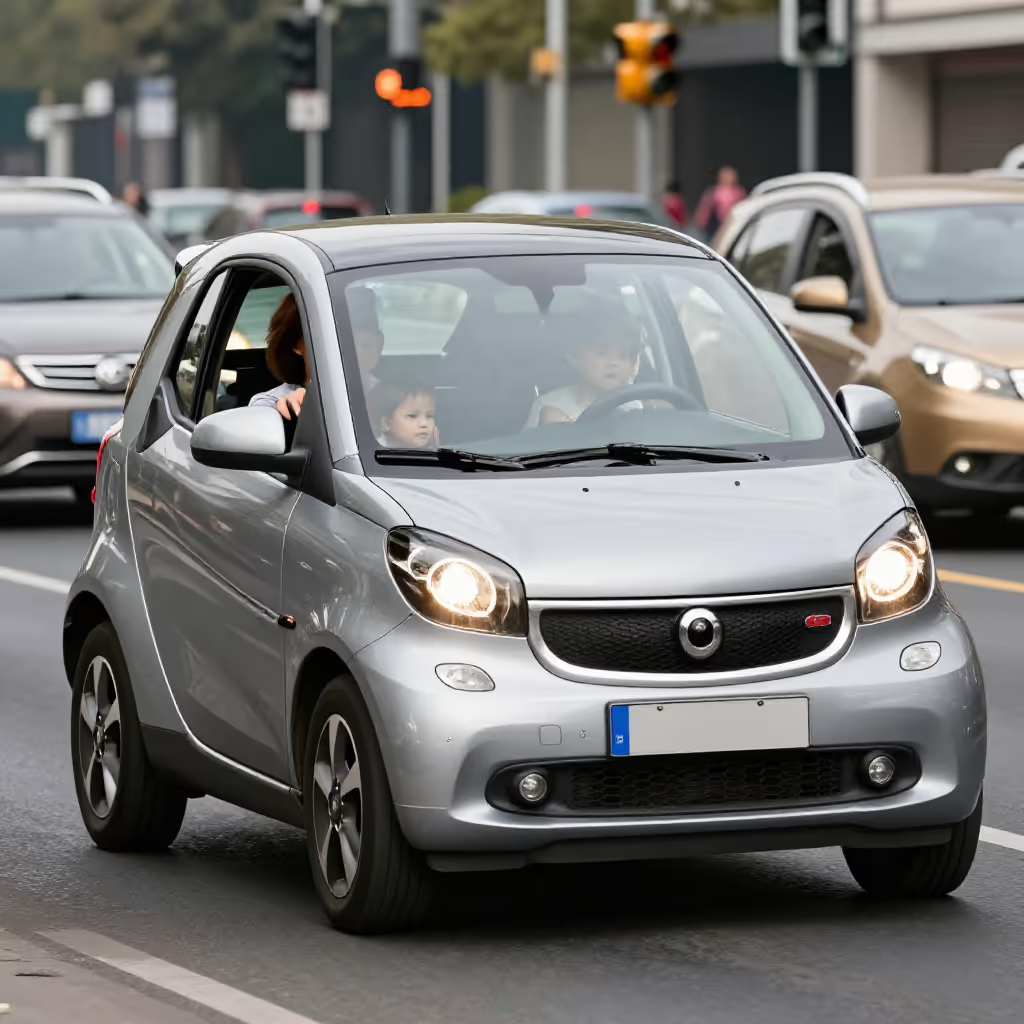
das Auto
car
A multi-track motor vehicle that is mainly used to transport people and is powered by an engine. Short form of Automobil.
EXAMPLE
Morgen fahre ich mit dem Auto zur Arbeit.
Tomorrow I'm going to work by car.
car
Loading your saved state.
car
A multi-track motor vehicle that is mainly used to transport people and is powered by an engine. Short form of Automobil.
Morgen fahre ich mit dem Auto zur Arbeit.
Tomorrow I'm going to work by car.
'Auto' is a short form of the word 'Automobil' (automobile). This is made up of 'auto' (Greek for 'self') and 'mobil' (Latin for 'movable'), so it describes something that moves by itself.
Die Geschichte des Automobils begann im 19. Jahrhundert.
The history of the automobile began in the 19th century.
The word 'Auto' (car) is the first part of many compound nouns in German. These often describe things related to driving.
Ich habe meinen Autoschlüssel verloren.
I lost my car key.
To use 'Auto' (car) correctly, the prepositions are important. You travel 'mit dem Auto' (by car), you get 'ins Auto' (into the car) (direction), and you sit 'im Auto' (in the car) (location).
Fahren wir mit dem Auto oder mit dem Zug?
Are we going by car or by train?
Common verbs used in connection with 'Auto' (car) are 'Auto fahren' (to drive), 'ein Auto parken' (to park a car), 'ein Auto waschen' (to wash a car), or 'ein Auto reparieren' (to repair a car).
Ich muss lernen, wie man richtig Auto fährt.
I have to learn how to drive properly.
passenger car
Auto and Pkw can refer to the same passenger car. Auto is the usual term in everyday life, while Pkw, as an abbreviation, is used more often in official, technical, or traffic-related contexts. Auto is usually appropriate in conversation, while Pkw is often used on a form.
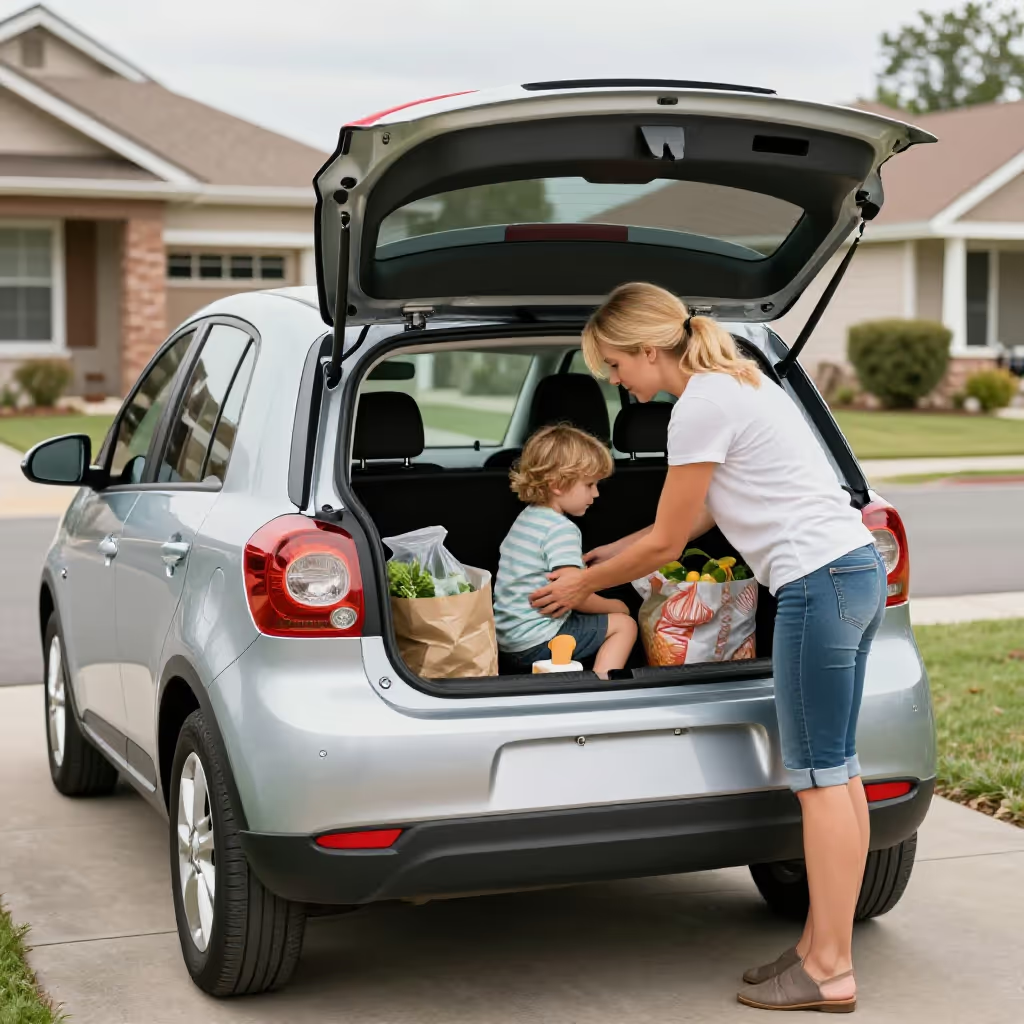
Mia fährt jeden Morgen mit dem Auto zur Arbeit.
Mia drives to work by car every morning.
Im amtlichen Formular gibt Mia ihren Wagen als Pkw an.
On the official form, Mia lists her vehicle as a passenger car.