

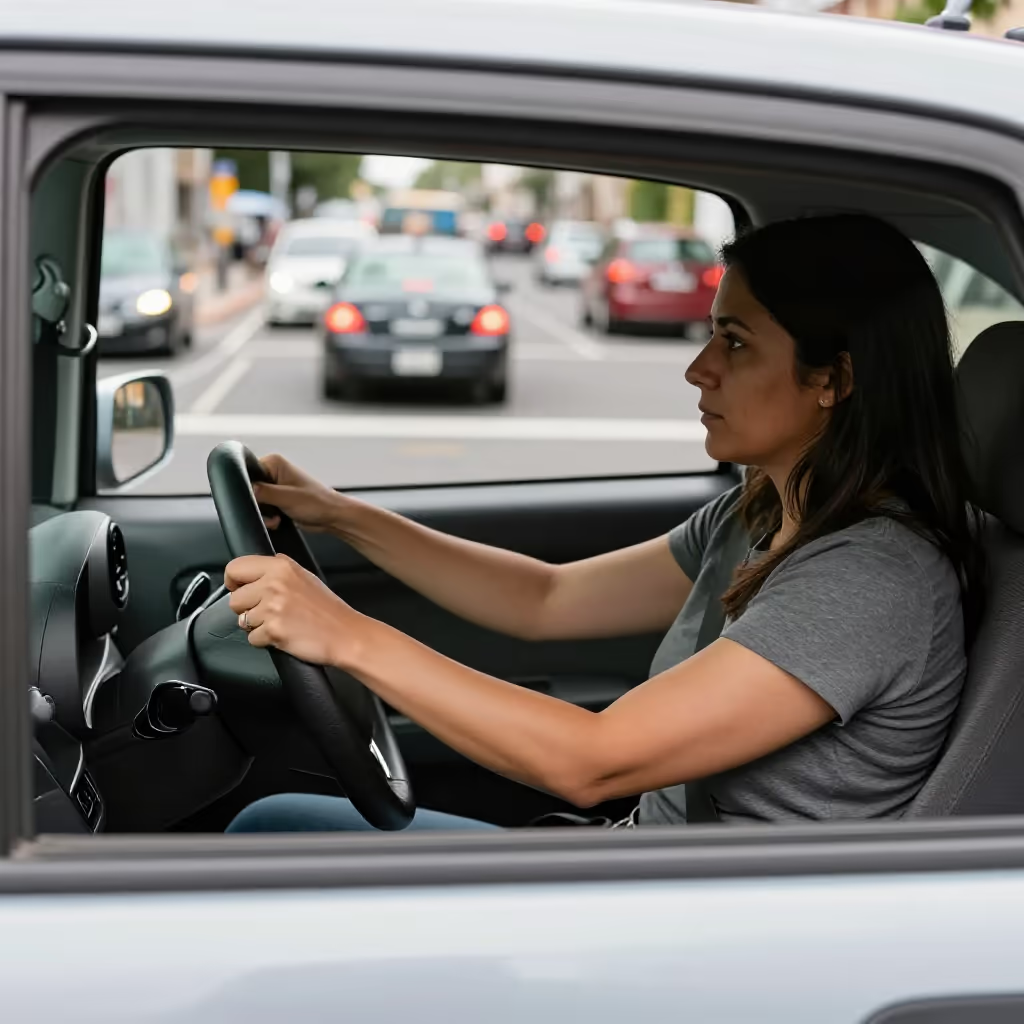
der Autofahrer
driver
A person who drives a car.
EXAMPLE
Die Polizei kontrollierte die Geschwindigkeit der Autofahrer auf der Autobahn.
The police checked the speed of the drivers on the highway.
driver
Loading your saved state.
driver
A person who drives a car.
Die Polizei kontrollierte die Geschwindigkeit der Autofahrer auf der Autobahn.
The police checked the speed of the drivers on the highway.
The word is made up of 'Auto' (car) and 'Fahrer' (driver). 'Fahrer' is derived from the verb 'fahren' (to drive / travel). An 'Autofahrer' is therefore literally a person who drives a car.
Ein guter Autofahrer bleibt auch im Stau gelassen.
A good driver stays calm even in a traffic jam.
The combination '[vehicle] + Fahrer' is a very common pattern in German for naming drivers of different vehicles. Other examples are 'Radfahrer' (cyclist), 'Busfahrer' (bus driver), or 'LKW-Fahrer' (truck driver).
Auf dieser Strecke müssen sich Autofahrer und Radfahrer die Straße teilen.
On this route, drivers and cyclists have to share the road.
The word 'Autofahrer' (driver) is used very often in news and reports about traffic, accidents, traffic jams, and traffic rules.
Wegen Glatteis warnt die Polizei alle Autofahrer zur Vorsicht.
Because of black ice, the police are warning all drivers to be careful.
driver
Fahrer and Autofahrer can both refer to a person who operates a vehicle. Fahrer is the more general term and can also refer to people driving buses, trucks, or trains; Autofahrer specifically means a person at the wheel of a car. Use Autofahrer when the type of vehicle is important.
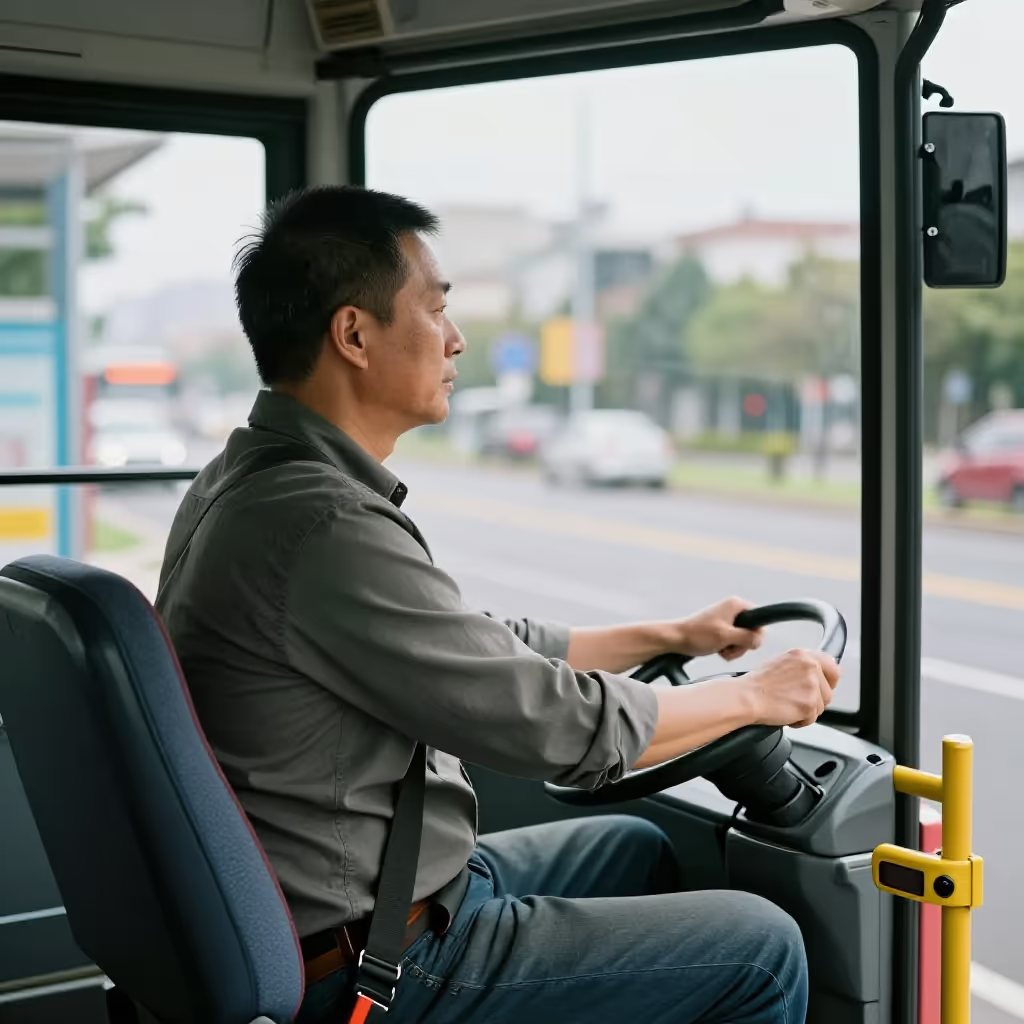
Der Autofahrer wartete mit seinem Auto vor dem Eingang.
The driver waited with his car in front of the entrance.
Der Fahrer wartete mit dem Fahrzeug vor dem Eingang.
The driver waited with the vehicle in front of the entrance.