

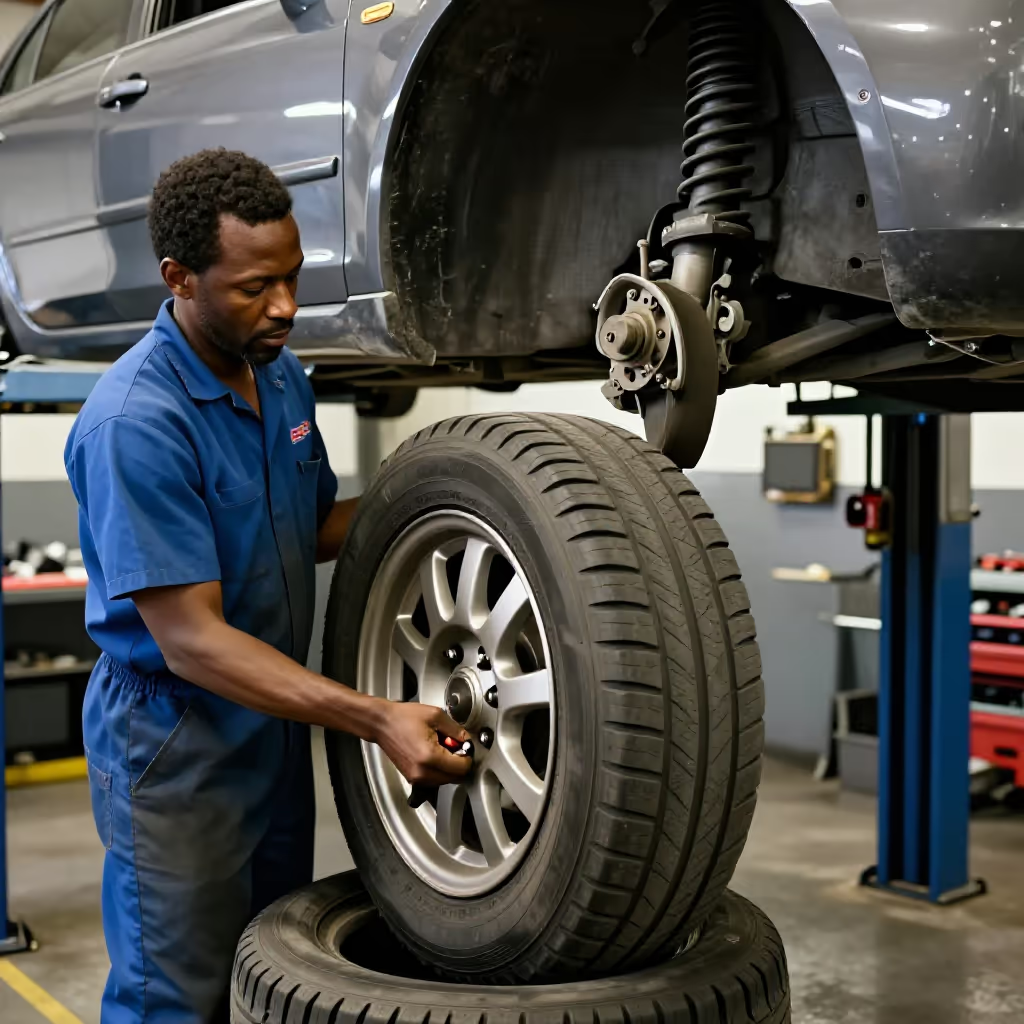
A ring-shaped component made of rubber that is mounted on the rim of a car wheel and provides contact with the road surface.
example
Nach der Reifenpanne musste ich den Autoreifen wechseln.
After the flat tire, I had to change the car tire.
Usage tips
Word composition
The word is made up of 'Auto' (car) and 'Reifen' (tire). So it literally refers to a tire intended for a car.
EXAMPLE
Im Winter sind spezielle Autoreifen vorgeschrieben.
In winter, special car tires are required.
Typical verbs
In connection with car tires, the verbs 'wechseln' (to change), 'aufpumpen' (to inflate), and 'montieren' (to mount/install) are often used.
EXAMPLE
Ich muss den Luftdruck meiner Autoreifen prüfen.
I need to check the air pressure in my car tires.
Typical combinations
Common terms in the context of car tires are 'Winterreifen' (winter tires), 'Sommerreifen' (summer tires), 'Reifenpanne' (flat tire/tire puncture), and 'Profiltiefe' (tread depth).
EXAMPLE
Wegen der geringen Profiltiefe brauche ich neue Autoreifen.
Because of the low tread depth, I need new car tires.
Compare with
confusable
Autoreifen vs Rad
wheel / bike
'das Rad' and 'der Autoreifen' both belong to a car and to movement, but they do not mean the same thing. The 'Rad' is the whole rotating part on the vehicle. The 'Autoreifen' is only the rubber ring that sits on the rim and touches the road. Learners may confuse the words because in everyday speech people sometimes talk imprecisely about 'Räder' and 'Reifen'. To be precise: if the rubber is damaged or worn down, you are talking about the 'Autoreifen'. If you mean the whole rotating component, 'Rad' fits.
Autoreifen
Mina lässt am Montag die Autoreifen wechseln, weil der Winter kommt.
Mina is having the car tires changed on Monday because winter is coming.
Rad
Wegen des Unfalls muss das rechte Rad am Auto ersetzt werden.
Because of the accident, the right wheel on the car has to be replaced.