

azur
azure
Describes a bright, sky-blue color.
EXAMPLE
Das Meer leuchtete unter der Mittagssonne beinahe azur.
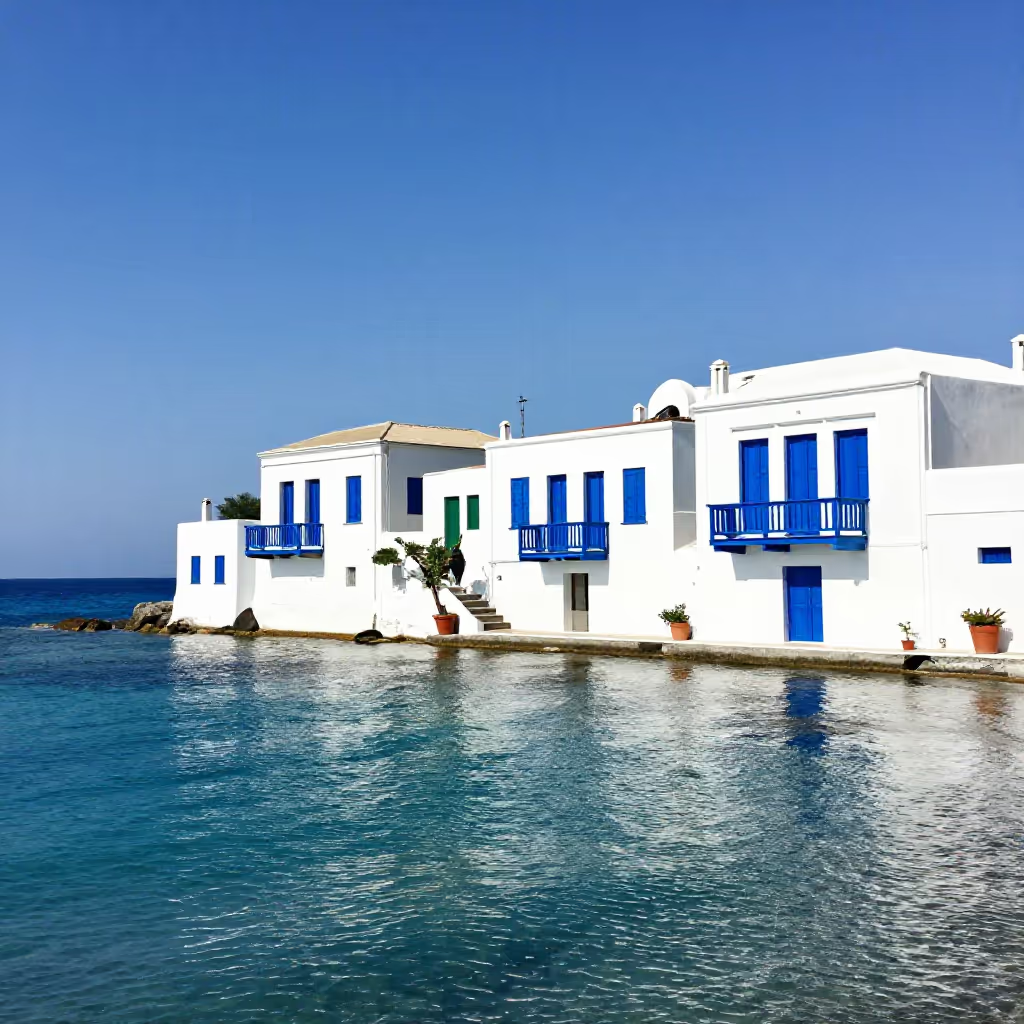
The sea shone almost azure under the midday sun.
azure
Loading your saved state.
azure
Describes a bright, sky-blue color.
Das Meer leuchtete unter der Mittagssonne beinahe azur.
The sea shone almost azure under the midday sun.
'Azur' (azure) is a poetic and elevated word. In normal everyday language, people would more likely say 'himmelblau' (sky-blue) or 'leuchtend blau' (bright blue). You find it mainly in literature or descriptive texts.
Sie träumte von einer Reise an das azurblaue Mittelmeer.
She dreamed of a trip to the azure-blue Mediterranean.
The adjective is often used predicatively (e.g., 'Der Himmel ist azur' — the sky is azure). When it stands before a noun, it is declined: 'der azurne Himmel' (the azure sky). The compound 'azurblau' (azure-blue) is also very common.
Über uns wölbte sich der azurne Himmel.
The azure sky arched above us.
'Azur' (azure) is used almost exclusively to describe the sky or water (the sea, a lake). These combinations are classic and sound very vivid.
Der Himmel über der Karibik war von einem tiefen Azur.
The sky over the Caribbean was a deep azure.
light blue
Azur and hellblau both refer to a light shade of blue. Azur more specifically means a clear, vivid blue reminiscent of a bright sky. Hellblau is the more general term when the main focus is simply on the lightness of the blue.
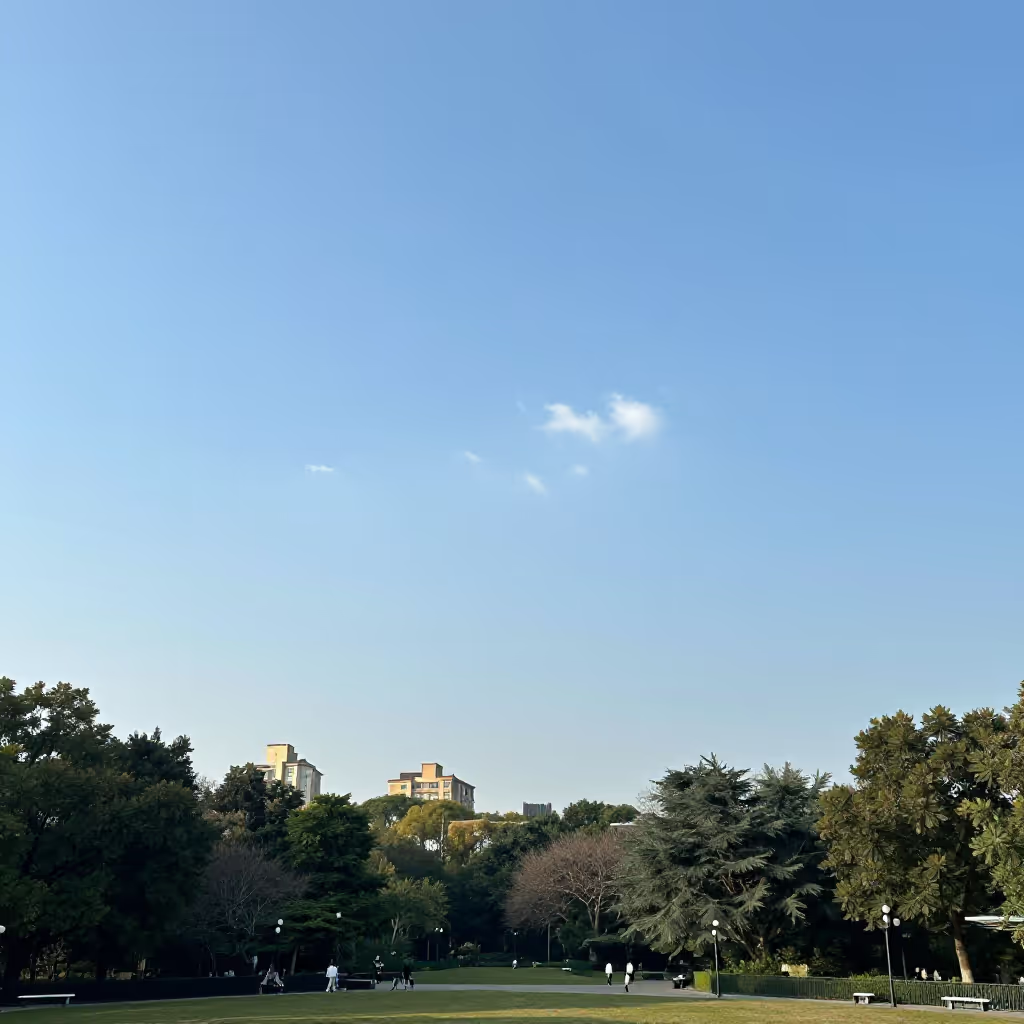
Für das Bild färbt sie den Himmel azur, damit er klar und leuchtend wirkt.
For the painting, she colors the sky azure so that it looks clear and vivid.
Für das Bild färbt sie den Hintergrund hellblau, weil dort nur ein heller Blauton gewünscht ist.
For the painting, she colors the background light blue because only a light shade of blue is wanted there.