

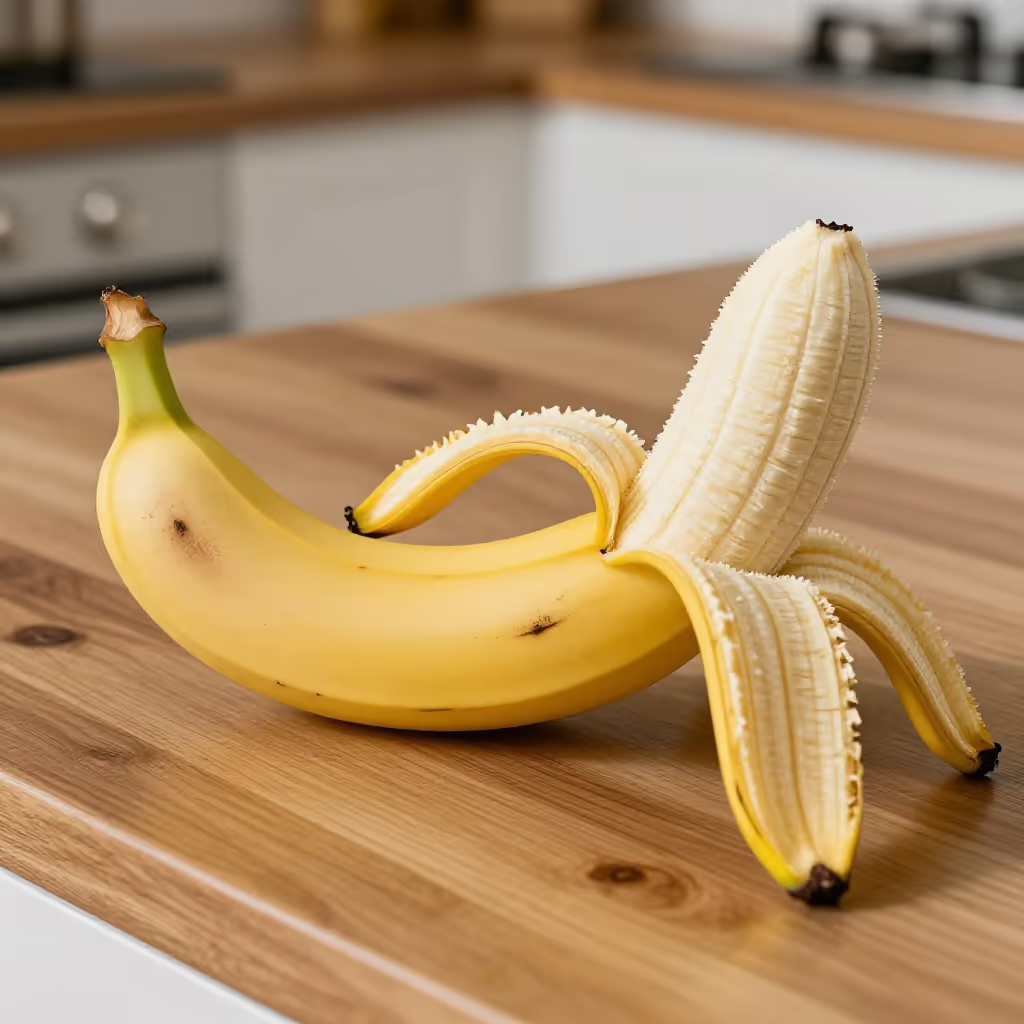
die Banane
banana
A long, curved tropical fruit with a yellow peel and soft, starchy flesh.
EXAMPLE
Zum Frühstück esse ich gerne ein Müsli mit einer geschnittenen Banane.
For breakfast, I like to eat muesli with a sliced banana.
banana
Loading your saved state.
banana
A long, curved tropical fruit with a yellow peel and soft, starchy flesh.
Zum Frühstück esse ich gerne ein Müsli mit einer geschnittenen Banane.
For breakfast, I like to eat muesli with a sliced banana.

crazy / nonsense
Used colloquially to express that something is nonsensical, irrelevant, or crazy.
Ob wir heute oder morgen anfangen, ist doch völlig Banane.
Whether we start today or tomorrow is completely irrelevant.
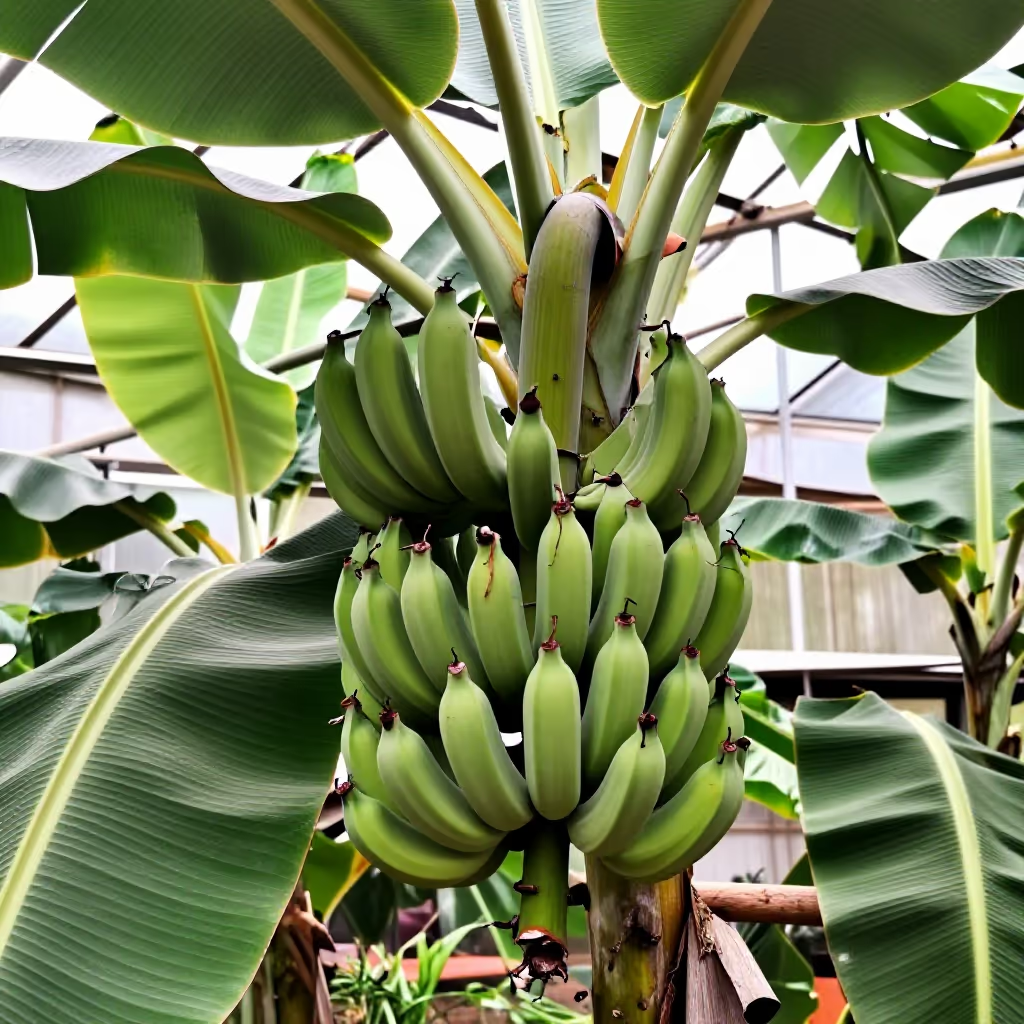
banana plant
The tropical perennial plant on which banana fruits grow.
Im botanischen Garten wächst eine riesige Banane, die gerade Früchte trägt.
In the botanical garden, there is a huge banana plant that is currently bearing fruit.
In the meaning of 'egal' (irrelevant / doesn't matter) or 'unsinnig' (nonsensical), 'Banane' (banana) is purely colloquial. It is used in informal conversations with friends or family, but not in formal or written contexts.
Ach, deine Sorgen sind doch Banane, das wird schon alles gut gehen.
Oh, your worries are nonsense; everything will be fine.
In the colloquial meaning, 'Banane' (crazy / nonsense) is used like an adjective after the verb 'sein' (to be). The typical structure is: 'Etwas ist (völlig/total) Banane.' (Something is completely/totally crazy/irrelevant.)
Ob du das heute oder morgen machst, ist doch völlig Banane.
Whether you do it today or tomorrow is completely irrelevant.
When referring to the fruit, typical verbs are 'eine Banane essen' (to eat a banana), 'eine Banane schälen' (to peel a banana), or 'eine Banane schneiden' (to cut/slice a banana).
Ein Affe im Zoo schält gerade eine Banane.
A monkey at the zoo is peeling a banana right now.