A chemical compound that is able to accept protons and is the opposite of an acid. In an aqueous solution, it forms an alkali.
example
Im Chemieunterricht haben wir gelernt, wie man eine Säure mit einer Base neutralisiert.
In chemistry class, we learned how to neutralize an acid with a base.

Usage tips
Context clue
The three meanings of 'Base' (base / cousin) are very different. The context always makes clear what is meant: chemistry (the opposite of an acid), biology (part of DNA), or an outdated family story (relative).
EXAMPLE
Für diesen Versuch brauchen wir eine starke Base.
For this experiment, we need a strong base.
Register: outdated
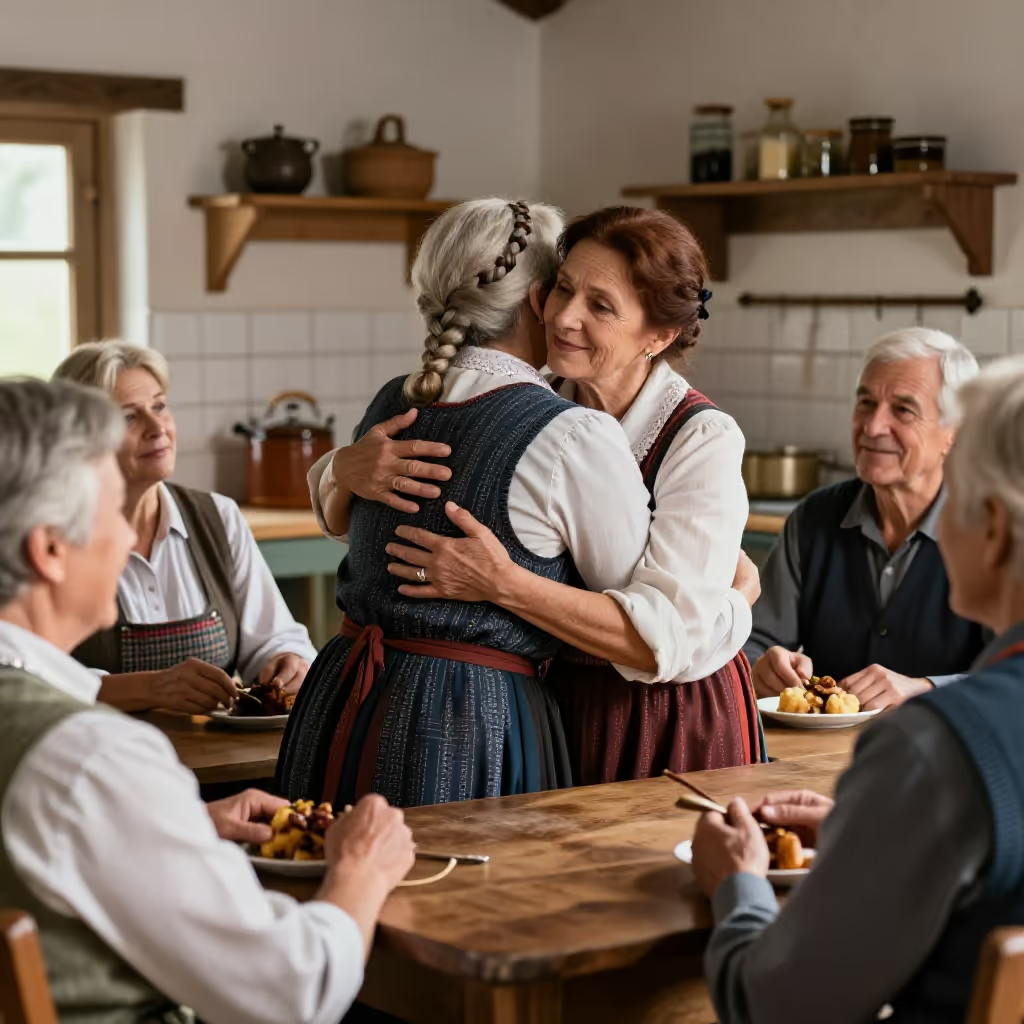
The meaning 'Cousine' (female cousin) or 'Tante' (aunt) is outdated and is no longer used in modern standard German. You find it almost only in old literature or when older people talk about their childhood.
EXAMPLE
Meine Urgroßmutter nannte ihre Cousinen immer ihre Basen.
My great-grandmother always called her female cousins her 'Basen.'
Typical collocations
In a chemical context, 'Base' (base) is often used in fixed combinations. Typical ones are 'Säure und Base' (acid and base) or the process of 'eine Säure mit einer Base zu neutralisieren' (neutralizing an acid with a base).
EXAMPLE
Säuren und Basen sind grundlegende Konzepte in der Chemie.
Acids and bases are fundamental concepts in chemistry.
Typical collocations
In biology, people usually speak of the 'vier Basen der DNA' (four bases of DNA) or of a 'Basenpaar' (base pair). These terms are very specific to the genetic context.
EXAMPLE
Ein Fehler in der Reihenfolge der Basen kann zu Mutationen führen.
An error in the sequence of bases can lead to mutations.
Compare with
near_synonym · confusable
Base vs Tante
aunt
'die Tante' and 'die Base' can both mean a female relative. 'die Tante' is the normal word today for the sister of a parent or the wife of an uncle. 'die Base', on the other hand, is outdated or regional and usually means a female cousin, sometimes also an aunt. Learners may confuse the words because both occur in family contexts in old texts or dialects. In normal present-day German, you almost always say 'Tante' or 'Cousine', not 'Base'.
Base
In dem alten Brief schreibt er liebevoll über seine Base aus dem Nachbardorf.
In the old letter, he writes affectionately about his Base from the neighboring village.
Tante
Meine Tante kommt am Sonntag zum Essen zu uns.
My aunt is coming to our place for dinner on Sunday.