

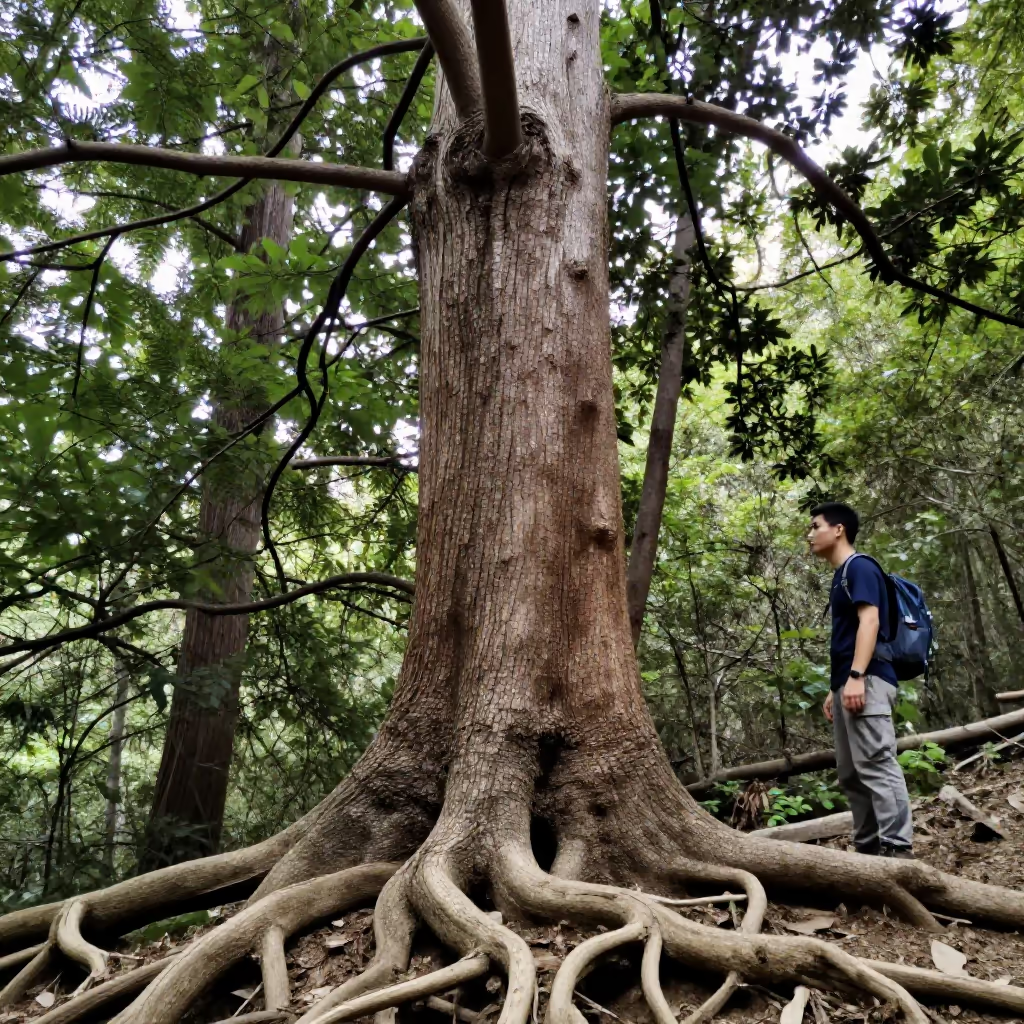
der Baumstamm
tree trunk
The thick, woody main part of a tree, located between the roots and the crown with its branches.
EXAMPLE
Der Specht hämmerte ein Loch in den alten Baumstamm.
The woodpecker hammered a hole into the old tree trunk.
tree trunk
Loading your saved state.
tree trunk
The thick, woody main part of a tree, located between the roots and the crown with its branches.
Der Specht hämmerte ein Loch in den alten Baumstamm.
The woodpecker hammered a hole into the old tree trunk.
The word is made up of 'Baum' (tree) and 'Stamm' (trunk). So it literally describes the trunk of a tree.
Die Kinder kletterten auf den dicken Baumstamm.
The children climbed onto the thick tree trunk.
Common actions connected with a tree trunk are 'einen Baumstamm fällen' (to fell a tree trunk), 'zersägen' (to saw up), or 'sich an einen Baumstamm lehnen' (to lean against a tree trunk).
Der Forstarbeiter muss den alten Baumstamm zersägen.
The forestry worker has to saw up the old tree trunk.
A tree trunk is often described with adjectives such as 'dick' (thick), 'dünn' (thin), 'alt' (old), 'morsch' (rotten), or 'glatt' (smooth).
Vorsicht, der morsche Baumstamm könnte zusammenbrechen.
Careful, the rotten tree trunk could collapse.