

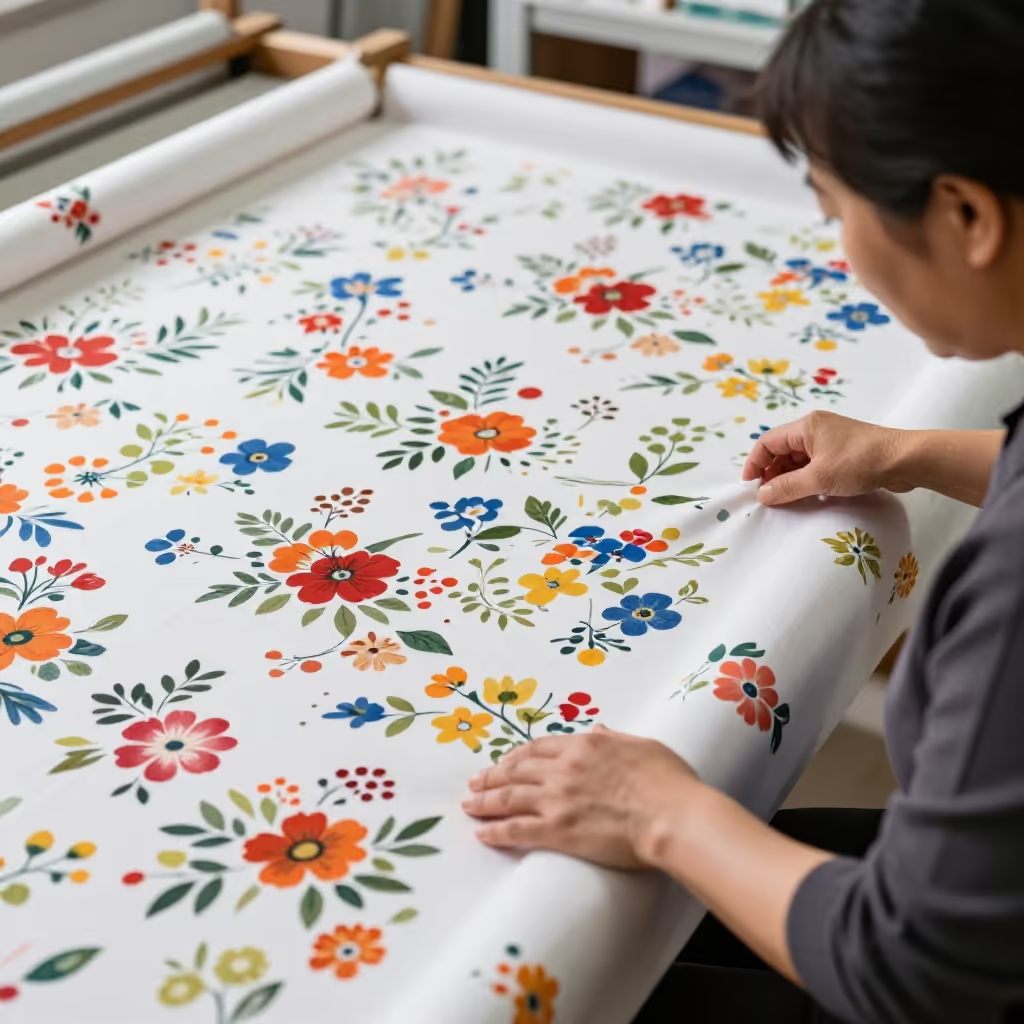
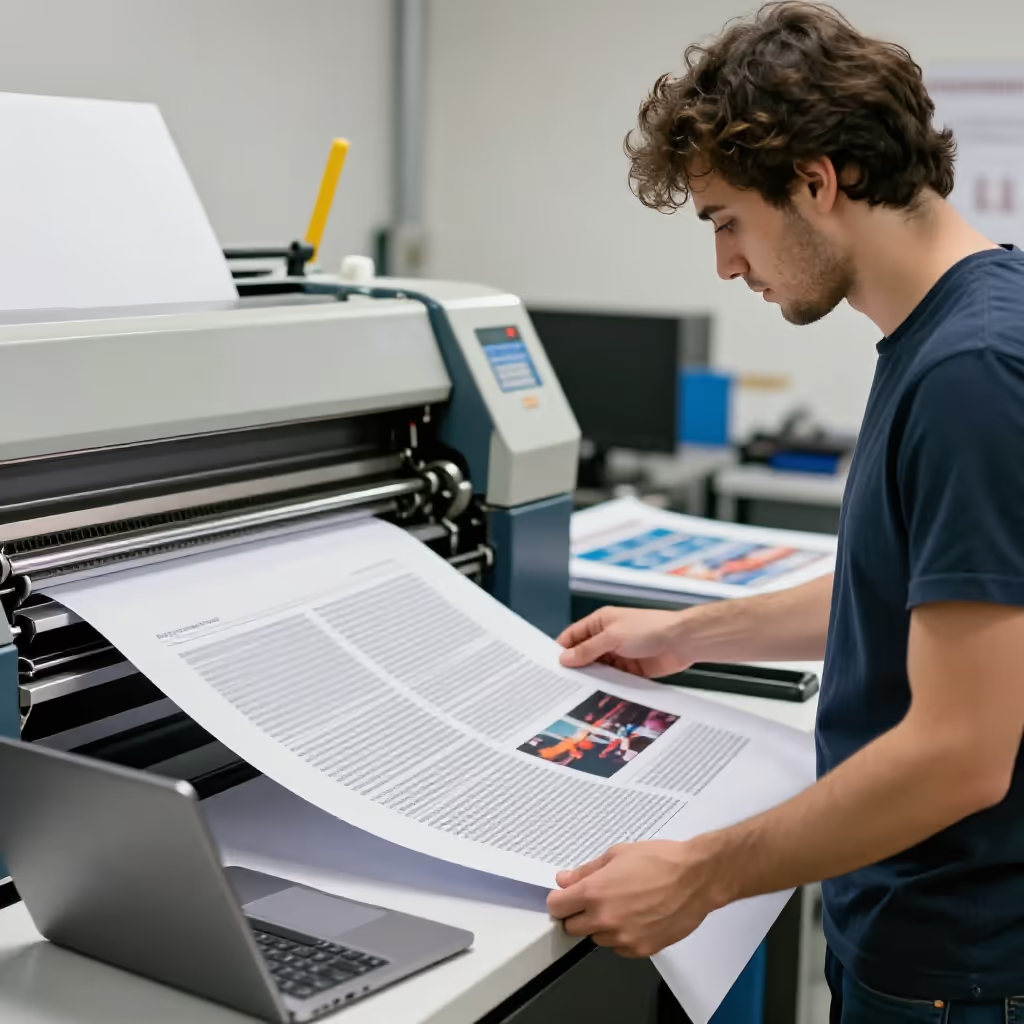
The quality of a surface (such as paper, fabric, or plastic) onto which a pattern, text, or image has been printed.
example
Sie trug ein T-Shirt, das mit einem lustigen Spruch bedruckt war.
She wore a T-shirt that was printed with a funny saying.
Usage tips
Word structure
'Bedruckt' (printed) is the past participle of the verb 'bedrucken' (to print on). The prefix 'be-' means here that a surface is provided with something—in this case, with print.
EXAMPLE
Die Firma hat Servietten mit ihrem Logo bedrucken lassen.
The company had napkins printed with its logo.
Sentence structure with 'mit'
To describe what was printed on the surface, you almost always use the preposition 'mit' (with) followed by the dative.
EXAMPLE
Die Tasche ist mit bunten Blumen bedruckt.
The bag is printed with colorful flowers.
Typical collocations
The adjective typically describes surfaces that can be printed on. Common nouns are 'Papier' (paper), 'Stoff' (fabric), 'T-Shirt' (T-shirt), 'Tasse' (mug), or 'Verpackung' (packaging).
EXAMPLE
Für das Geschenk habe ich bunt bedrucktes Papier verwendet.
For the gift, I used colorfully printed paper.
Compare with
near_synonym · confusable
bedruckt vs beschrieben
written on
'beschrieben' and 'bedruckt' both describe surfaces that have symbols, text, or images on them. The difference lies in how they got there. 'beschrieben' is used when someone has written something on a surface, often by hand. 'bedruckt' is used when text, patterns, or images have been printed, for example on paper, fabric, or plastic. Learners may confuse the words because both can occur with paper. A handwritten note is more likely to be 'beschrieben', while a T-shirt with a logo is 'bedruckt'.
bedruckt
Die bedruckten Taschen mit dem Vereinslogo liegen am Eingang.
The printed bags with the club logo are at the entrance.
beschrieben
Für die Übung gibt die Lehrerin den Kindern bereits beschriebene Karten.
For the exercise, the teacher gives the children cards that have already been written on.