


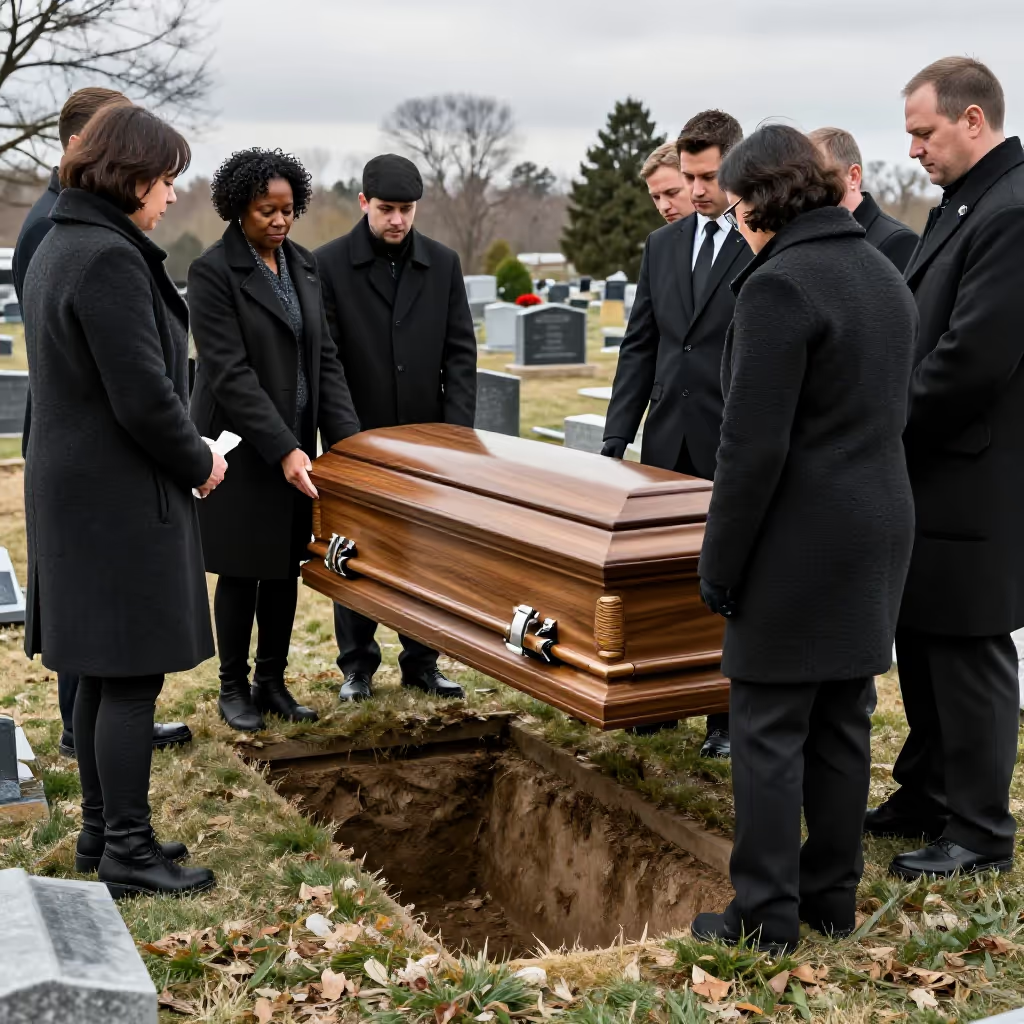
The solemn ceremony at which a deceased person is buried or laid to rest; a burial. The term is considered formal or slightly old-fashioned.
example
Die ganze Familie versammelte sich zum Begräbnis des Großvaters.
The whole family gathered for the grandfather's funeral.
Usage tips
Word structure
The word 'Begräbnis' (funeral/burial) is derived from the verb 'begraben' (to bury). The ending '-nis' turns the verb into a noun that describes the action or event itself.
EXAMPLE
Die Familie musste den Hund im Garten begraben.
The family had to bury the dog in the garden.
Register and style
'Begräbnis' (funeral) belongs to a formal or literary style of language. You often find it in official announcements, in literature, or when you want to sound especially respectful.
EXAMPLE
In der Todesanzeige wurde Ort und Zeit des Begräbnisses bekannt gegeben.
The place and time of the funeral were announced in the obituary.
Sentence structure and usage
Pay attention to the prepositions: you go 'zum Begräbnis' (to the funeral; destination) and take part 'am Begräbnis' (in/at the funeral; participation in the event).
EXAMPLE
Er reiste extra aus dem Ausland an, um am Begräbnis teilzunehmen.
He traveled specially from abroad to attend the funeral.
Compare with
synonym · confusable
Begräbnis vs Beerdigung
burial / funeral
'die Beerdigung' and 'das Begräbnis' mean the same thing in many situations: the ceremony and farewell when a deceased person is buried or laid to rest. 'Beerdigung' is very normal and common in everyday language today. 'Begräbnis' is easy to understand, but it sounds more formal or slightly old-fashioned. For this reason, learners can easily confuse the words, especially because both occur in sad or official situations. For normal conversation, 'Beerdigung' is usually the more natural choice; 'Begräbnis' fits better in formal texts or solemn language.
Begräbnis
Beim Begräbnis hielt die Tochter eine kurze Rede.
At the funeral, the daughter gave a short speech.
Beerdigung
Er konnte nicht zur Beerdigung kommen, weil er krank war.
He could not come to the funeral because he was ill.