

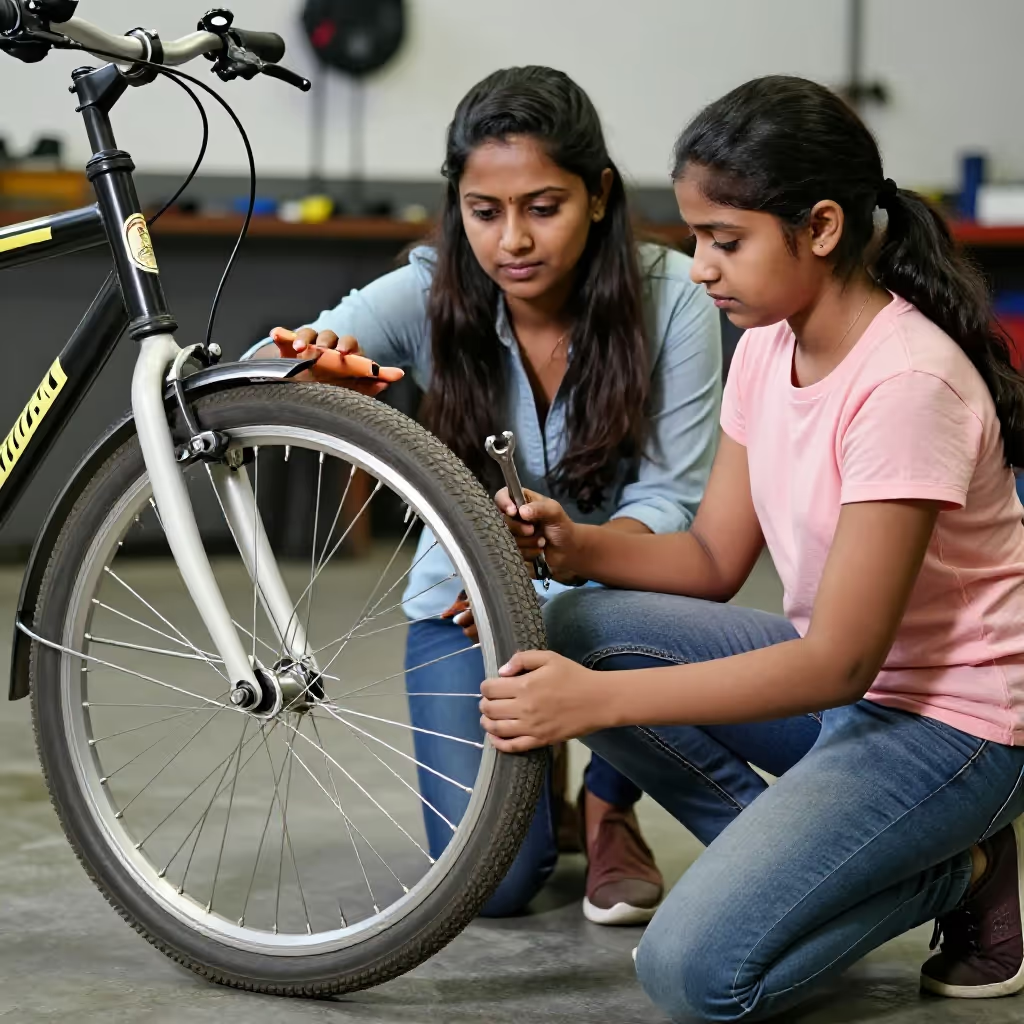
jemandem etwas beibringen
to teach someone something
To teach someone a skill or knowledge, often in a practical way.
EXAMPLE
Meine Mutter hat mir das Backen beigebracht.
My mother taught me how to bake.
to teach / inflict / produce
Loading your saved state.
to teach someone something
To teach someone a skill or knowledge, often in a practical way.
Meine Mutter hat mir das Backen beigebracht.
My mother taught me how to bake.

to inflict something on someone
To cause someone something unpleasant, especially an injury or a defeat.
Im Finale hat uns die gegnerische Mannschaft eine empfindliche Niederlage beigebracht.
In the final, the opposing team inflicted a painful defeat on us.

to produce something
To obtain and present something required, such as a document or piece of evidence.
Der Zeuge konnte wichtige Unterlagen als Beweismittel beibringen.
The witness was able to produce important documents as evidence.
'Beibringen' (to teach/inflict/produce) is a separable verb. The prefix 'bei-' goes at the end in a main clause. In a subordinate clause, the verb stays together, and in the infinitive with 'zu', 'zu' stands in the middle: 'beizubringen'.
Mein Opa bringt mir das Schachspielen bei.
My grandpa teaches me how to play chess.
This verb almost always needs a person in the dative and a thing in the accusative. The structure is: someone (subject) teaches someone (dative) something (accusative).
Der Trainer bringt den Kindern (Dativ) neue Techniken (Akkusativ) bei.
The coach teaches the children (dative) new techniques (accusative).
The accusative object reveals the meaning. If it is a skill (e.g. 'das Schwimmen' — swimming), it means 'to teach.' If it is something negative (e.g. 'eine Niederlage' — a defeat), it means 'to inflict.' If it is documents (e.g. 'Beweise' — evidence), it means 'to produce/present.'
Sie hat sich selbst das Gitarrespielen beigebracht.
She taught herself how to play guitar.
In the meaning 'to inflict,' 'beibringen' is often used with negative things in sports or conflict, for example 'jemandem eine Niederlage beibringen' (to inflict a defeat on someone), 'Verletzungen beibringen' (to inflict injuries), or 'Wunden beibringen' (to inflict wounds).
Die Gastmannschaft hat uns eine klare Niederlage beigebracht.
The visiting team inflicted a clear defeat on us.
The meaning 'to obtain and present' is formal and is mainly used in administrative or legal language. Typical objects are 'Beweise' (evidence), 'Unterlagen' (documents), or 'ein Attest' (a medical certificate).
Der Angeklagte konnte keine Beweise für seine Unschuld beibringen.
The defendant could not produce any evidence of his innocence.
to mediate / arrange / convey
Vermitteln describes passing on knowledge or skills in an understandable way and can also refer to the general content of a course. Beibringen typically targets a specific learner, often with practical skills, and more strongly suggests that they eventually master what they have learned.

Nach mehreren Übungen hat die Trainerin den Kindern das Rückenschwimmen beigebracht.
After several exercises, the coach taught the children how to swim on their backs.
Der Schwimmkurs vermittelt den Kindern die wichtigsten Techniken.
The swimming course teaches the children the most important techniques.