

beichten
to confess
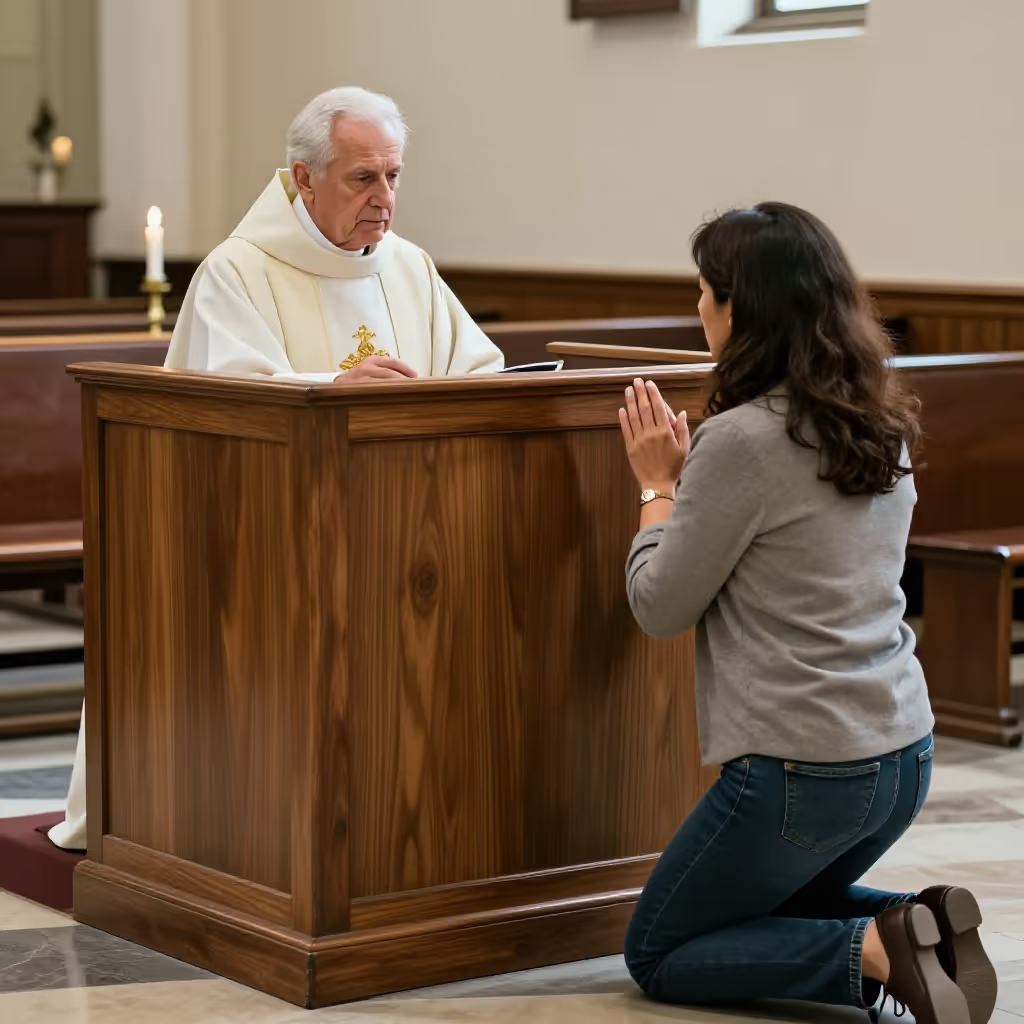
In a religious context, especially in Christianity, to confess one's sins to a priest in order to obtain forgiveness.
EXAMPLE
Sie ging einmal im Monat in die Kirche, um zu beichten.
She went to church once a month to confess.
to confess
Loading your saved state.
to confess
In a religious context, especially in Christianity, to confess one's sins to a priest in order to obtain forgiveness.
Sie ging einmal im Monat in die Kirche, um zu beichten.
She went to church once a month to confess.

to confess
Colloquially and figuratively: to confess a secret, a mistake, or an embarrassing act to someone.
Nach langem Zögern beichtete er seiner Freundin, dass er die teure Vase zerbrochen hatte.
After hesitating for a long time, he confessed to his girlfriend that he had broken the expensive vase.
'Beichten' (to confess) is very often used with a dative object (the person to whom one confesses something) and an accusative object (the confession). The structure is: jemandem (dative) etwas (accusative) beichten.
Er hat seinem besten Freund die Wahrheit gebeichtet.
He confessed the truth to his best friend.
The verb 'beichten' (to confess) is inseparable. The prefix 'be-' remains firmly attached to the verb in all sentence forms, including the past participle ('gebeichtet').
Sie beichtete, dass sie einen Fehler gemacht hatte.
She confessed that she had made a mistake.
You can tell from the context whether the religious or everyday meaning is intended. Words like 'Priester' (priest), 'Kirche' (church), or 'Sünden' (sins) point to the religious meaning. Words like 'Geheimnis' (secret) or 'Fehler' (mistake) point to the colloquial meaning.
Der Gläubige beichtet seine Sünden im Beichtstuhl.
The believer confesses his sins in the confessional.
Using 'beichten' (to confess) for everyday secrets or mistakes is informal and belongs to spoken language. It often has a slightly humorous or dramatic undertone.
Na los, beichte! Wer hat das letzte Stück Schokolade genommen?
Come on, confess! Who took the last piece of chocolate?
to confess
Both words can refer to admitting a mistake or an embarrassing matter with a sense of guilt. „Beichten“ often has a religious or jokingly colloquial connotation, whereas „gestehen“ is more general. Choose „beichten“ when this particular tone is part of the meaning.

Ich musste meiner Schwester beichten, dass ich ihr Geschenk vergessen hatte.
I had to confess to my sister that I had forgotten her gift.
Ich gestand meiner Schwester, dass ich ihr Geschenk vergessen hatte.
I confessed to my sister that I had forgotten her gift.