

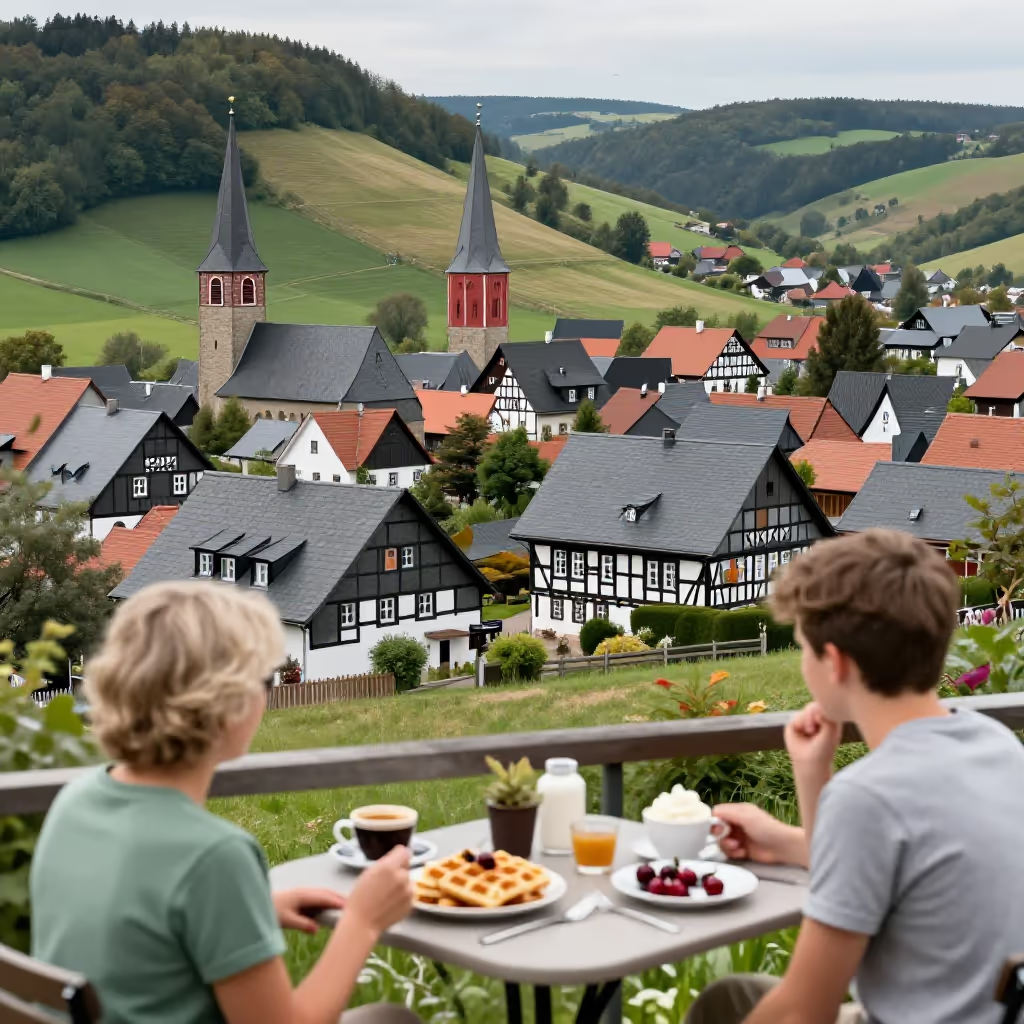
Relating to the Bergisches Land, a region in North Rhine-Westphalia, its inhabitants, or its culture.
example
Die bergische Kaffeetafel ist eine üppige, traditionelle Mahlzeit mit vielen verschiedenen Speisen.
The Bergisch coffee table is a generous, traditional meal with many different dishes.
Usage tips
Word formation with '-isch'
The ending '-isch' is often used to form adjectives from geographical names. So 'Berg' (here as part of a name) becomes 'bergisch', similar to 'bayerisch' (Bavarian, from Bayern) or 'hamburgisch' (Hamburg, from Hamburg).
EXAMPLE
Viele deutsche Regionen haben ihre eigenen -isch Adjektive.
Many German regions have their own -isch adjectives.
Origin of the name
Although 'Berg' appears in it, 'bergisch' does not refer to mountains. The name comes from the historical Duchy of Berg. The region is hilly rather than mountainous.
EXAMPLE
Die Geschichte des Bergischen Landes ist sehr interessant.
The history of the Bergisches Land is very interesting.
Typical collocations
The adjective is almost always used in connection with things from the region. Typical phrases are 'das Bergische Land' (the Bergisches Land), 'bergische Spezialitäten' (Bergisch specialties), or 'bergische Städte' (Bergisch cities) such as Wuppertal and Solingen.
EXAMPLE
Als Nachtisch gab es bergische Waffeln mit heißen Kirschen.
For dessert there were Bergisch waffles with hot cherries.
Capitalization
As part of the proper name of the region, the adjective is capitalized. So you write 'das Bergische Land' (the Bergisches Land).
EXAMPLE
Am Wochenende machen wir einen Ausflug ins Bergische Land.
At the weekend we're taking a trip to the Bergisches Land.