


bescheren
to give
To give someone a gift, traditionally especially at Christmas.
EXAMPLE
Die Großeltern bescheren die Kinder jedes Jahr mit vielen Spielsachen.
The grandparents give the children lots of toys every year.
to give / bring
Loading your saved state.
to give
To give someone a gift, traditionally especially at Christmas.
Die Großeltern bescheren die Kinder jedes Jahr mit vielen Spielsachen.
The grandparents give the children lots of toys every year.
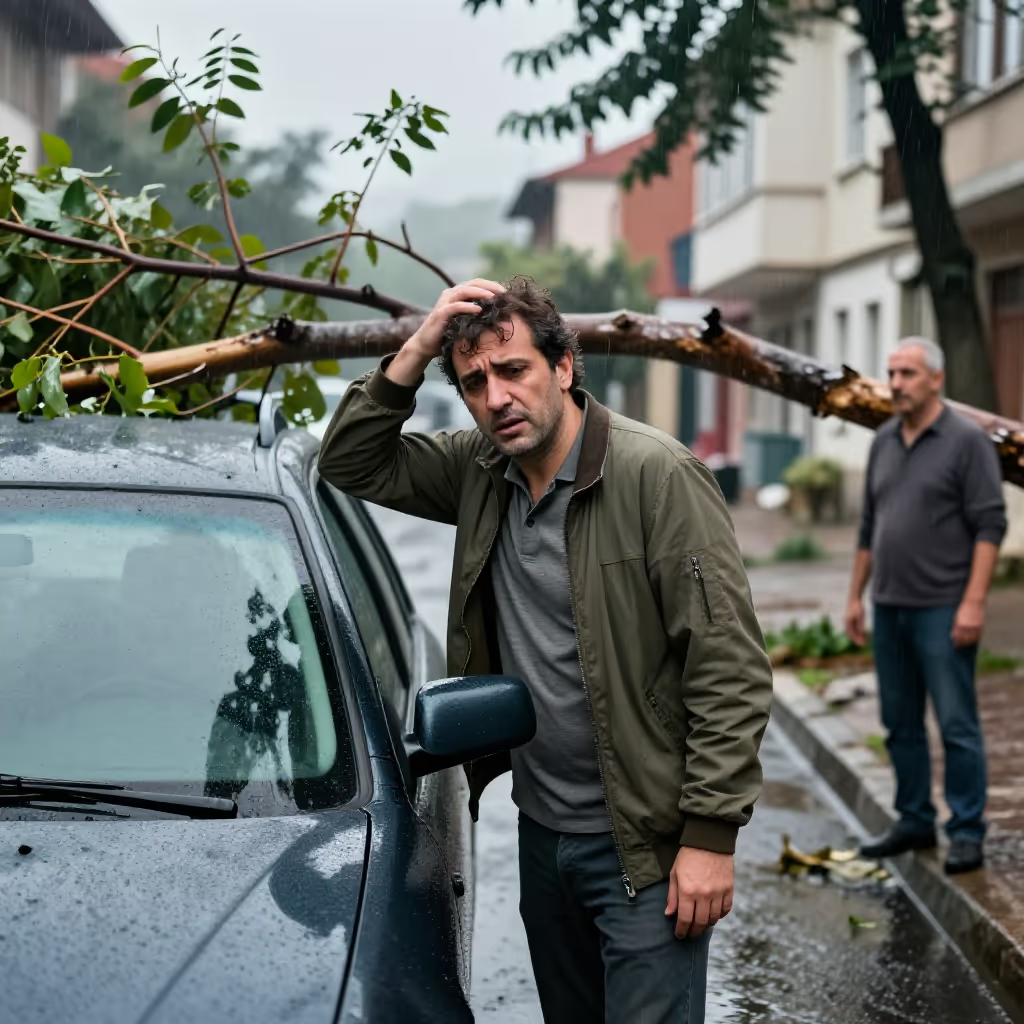
to bring
To cause someone to receive or experience something, often something unpleasant or unexpected.
Der unerwartete Schneesturm hat uns ein Verkehrschaos beschert.
The unexpected snowstorm brought us traffic chaos.
'Bescheren' (to give/bring) is an inseparable verb. The prefix 'be-' remains firmly attached to the verb stem in all tenses and sentence constructions.
Was hat dir der Weihnachtsmann beschert?
What did Santa Claus bring you?
This verb almost always requires a person in the dative (the person to whom something is given/brought) and a thing in the accusative (what is given/brought). The structure is: subject + beschert + dative object + accusative object.
Der Lottogewinn bescherte ihm ein sorgenfreies Leben.
The lottery win brought him a carefree life.
The meaning depends heavily on the context. In connection with Christmas or gifts, it is positive. In other contexts, it is often used ironically for unexpected, usually negative events.
Der frühe Wintereinbruch bescherte uns weiße Weihnachten.
The early onset of winter brought us a white Christmas.
The positive meaning of 'bescheren' (to give) is very closely connected with Christmas. The noun 'die Bescherung' specifically refers to the moment when gifts are given on Christmas Eve.
Die Kinder konnten die Bescherung kaum erwarten.
The children could hardly wait for the gift-giving.
In the negative or unexpected meaning, 'bescheren' (to bring) is often combined with abstract nouns such as 'Probleme' (problems), 'Ärger' (trouble), 'ein Chaos' (chaos), 'eine Niederlage' (a defeat), or 'eine Überraschung' (a surprise).
Der Computerabsturz hat mir viel zusätzliche Arbeit beschert.
The computer crash brought me a lot of extra work.
to give / pour
Schenken is the neutral term for giving someone a gift without expecting anything in return, including at Christmas. Bescheren refers to the same thing in a traditionally Christmas-related and more festive context. Schenken fits a matter-of-fact statement, while bescheren fits the ceremonial opening of Christmas presents.
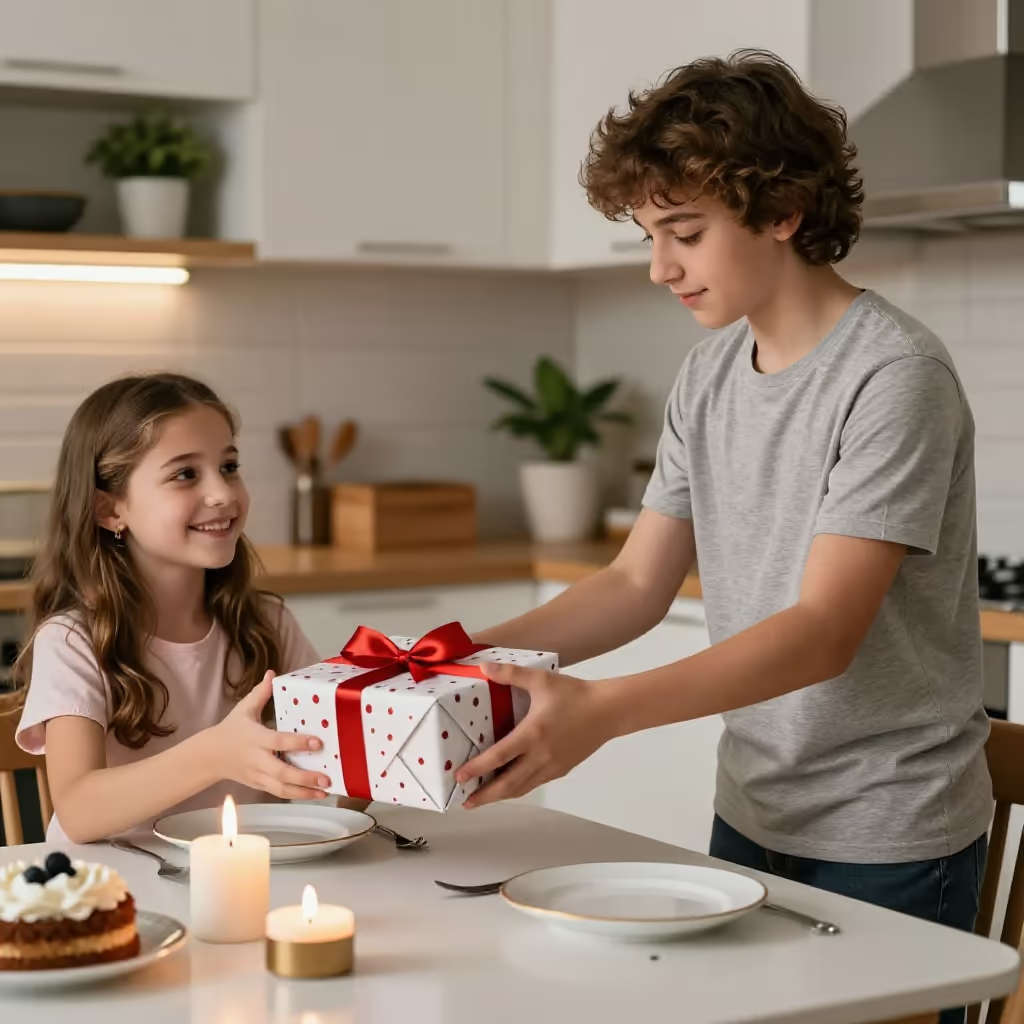
Am Heiligabend bescheren die Großeltern den Kindern mehrere schöne Geschenke.
On Christmas Eve, the grandparents are giving the children several lovely presents.
Die Großeltern schenken den Kindern zu Weihnachten mehrere Bücher.
The grandparents are giving the children several books for Christmas.