

bewaffnet
armed
Carrying one or more weapons.
EXAMPLE
Der Bankräuber war maskiert und bewaffnet.
The bank robber was masked and armed.
armed
Loading your saved state.
armed
Carrying one or more weapons.
Der Bankräuber war maskiert und bewaffnet.
The bank robber was masked and armed.

armed / equipped
In a figurative sense: equipped or provided with something in order to handle a task.
Bewaffnet mit einer Kamera und einem Notizblock machte sich der Reporter auf den Weg.
Armed with a camera and a notepad, the reporter set off.
'Bewaffnet' (armed) is the past participle of the verb 'bewaffnen' (to arm). This derives from the noun 'die Waffe' (weapon). The prefix 'be-' here has the function of equipping someone with something.
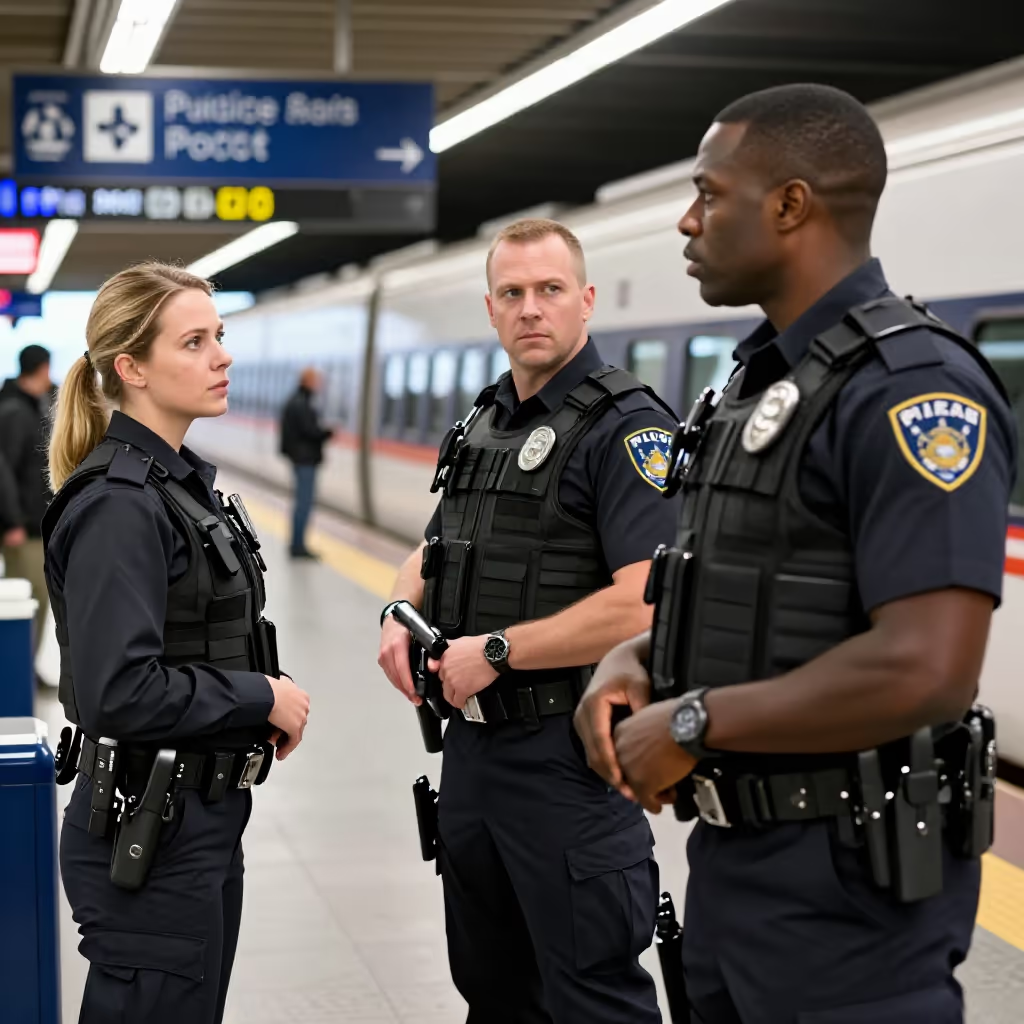
Die Polizei war schwer bewaffnet.
The police were heavily armed.
The adjective 'bewaffnet' (armed) is almost always used with the preposition 'mit' (with) and the dative to indicate what someone is equipped with. This applies to both the literal and the figurative meaning.
Der Täter war mit einem Messer bewaffnet.
The perpetrator was armed with a knife.
Whether the literal or figurative meaning is intended can be recognized from the noun after 'mit' (with). If it is a weapon (pistol, knife), the meaning is literal. With other things (camera, patience, knowledge), it is figurative.
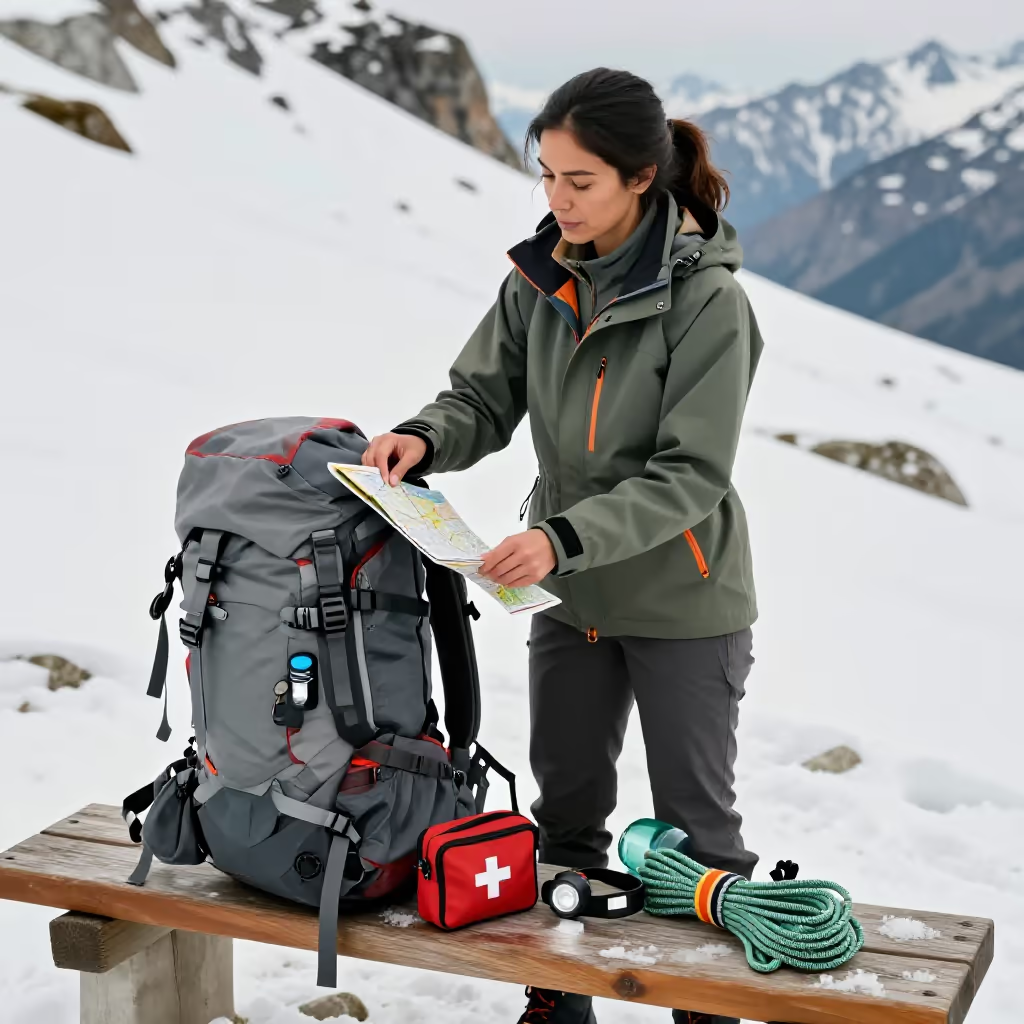
Die Wanderer waren mit Karte und Kompass bewaffnet.
The hikers were armed with a map and compass.
prepared / armed
Both words can, figuratively, express that someone has what is needed for a task. bewaffnet presents this equipment in a figurative and often combative way, while gerüstet neutrally emphasizes preparation and appropriate equipment. Use bewaffnet for a strong image and gerüstet for a matter-of-fact statement.
Mit guten Argumenten bewaffnet ging sie in die schwierige Diskussion.
Armed with good arguments, she entered the difficult discussion.
Mit guten Argumenten war sie für die schwierige Diskussion gut gerüstet.
She was well prepared for the difficult discussion, with good arguments at her disposal.