


bezahlt
paid
Describes that money has already been given for goods, a service, or a bill, and no debt remains.
EXAMPLE
Das Praktikum war zwar anstrengend, aber immerhin bezahlt.
The internship was exhausting, but at least it was paid.
paid
Loading your saved state.
paid
Describes that money has already been given for goods, a service, or a bill, and no debt remains.
Das Praktikum war zwar anstrengend, aber immerhin bezahlt.
The internship was exhausting, but at least it was paid.

paid
Describes a person who has been bribed or hired to represent a certain opinion or carry out an action, often with a negative connotation.
Die Regierung sprach von bezahlten Demonstranten, um die Proteste zu diskreditieren.
The government spoke of paid protesters in order to discredit the protests.
'Bezahlt' (paid) is the past participle of the verb 'bezahlen' (to pay). It is very often used like an adjective to describe that something is no longer outstanding or is compensated.
Ich suche eine bezahlte Arbeit für die Semesterferien.
I'm looking for paid work for the semester break.
The negative meaning 'bestochen' (bribed) can be recognized from context. It often appears in connection with people or groups whose opinion or actions are being questioned, e.g. 'bezahlte Demonstranten' (paid protesters) or 'bezahlte Zeugen' (paid witnesses).
Der Artikel war nur bezahlte Werbung, keine echte Empfehlung.
The article was only paid advertising, not a real recommendation.
In a work context, 'bezahlt' (paid) is often combined with nouns like 'Urlaub' (vacation), 'Praktikum' (internship), or 'Überstunden' (overtime) to express that you receive money for it.
In Deutschland hat man Anspruch auf bezahlten Urlaub.
In Germany, you are entitled to paid vacation.
bought
Both words can describe a person who has been influenced by money. „Bezahlt“ can also simply mean that someone receives money for a job, while „gekauft“ places more emphasis on morally reprehensible influence. Use „bezahlt“ for a paid or hired person and „gekauft“ when clearly criticizing their position.
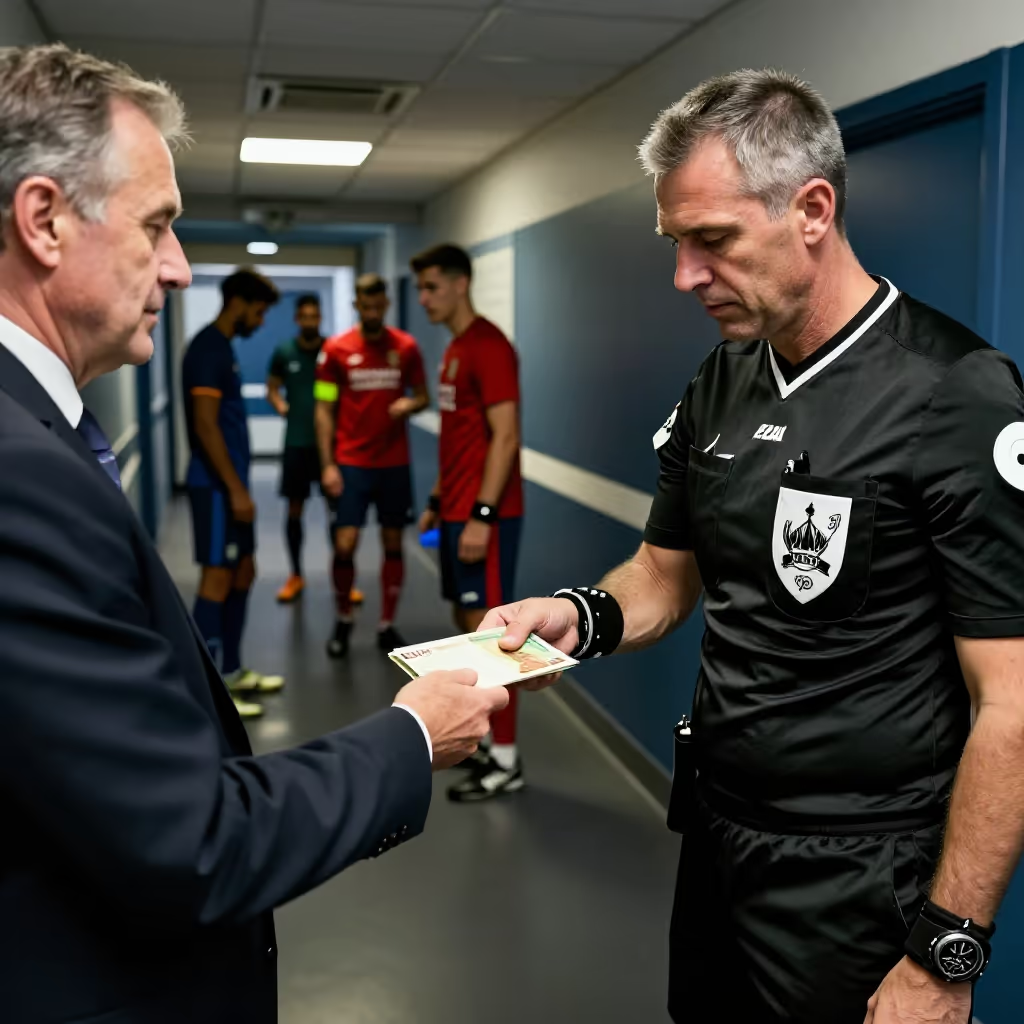
Der Politiker wirkt bezahlt, weil er für diese Aussage von der Firma angeheuert wurde.
The politician seems paid because the company hired him to make that statement.
Viele Leser halten den Politiker für gekauft, weil er seine Meinung nach einer Geldzahlung änderte.
Many readers consider the politician bought because he changed his opinion after receiving a payment.