

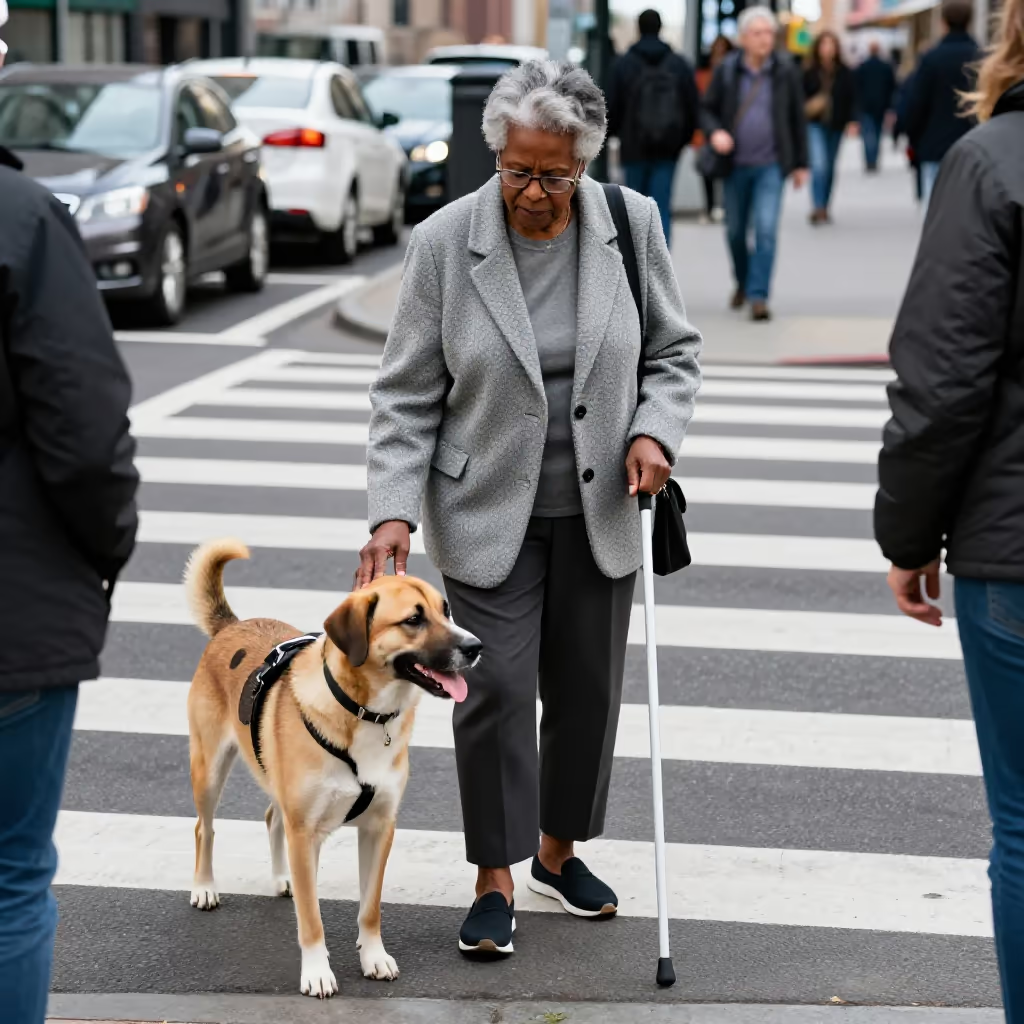
blind
The inability to see; without sight.
EXAMPLE
Seit einem Unfall ist er auf dem rechten Auge blind.
Since an accident, he has been blind in his right eye.
Loading your saved state.
The inability to see; without sight.
Seit einem Unfall ist er auf dem rechten Auge blind.
Since an accident, he has been blind in his right eye.

Figuratively, used for someone who does not perceive something obvious or does not want to recognize it, often for emotional reasons or out of conviction.
Sie war blind vor Liebe und sah seine Fehler nicht.
She was blind with love and didn't see his flaws.

Expresses that something happens without examination or criticism, for example blind trust or blind obedience.
Blinder Glaube an Autoritäten kann gefährlich sein.
Blind faith in authorities can be dangerous.

Describes an action performed without sight or visual control, for example when typing or during a tasting.
Er kann das Zehnfingersystem und tippt blind auf der Tastatur.
He knows touch typing and types blind on the keyboard.

clouded / dull
Describes a surface that has become opaque or dull and no longer reflects or lets light pass through.
Der alte Spiegel im Bad war schon ganz blind geworden.
The old mirror in the bathroom had become completely clouded.
false alarm
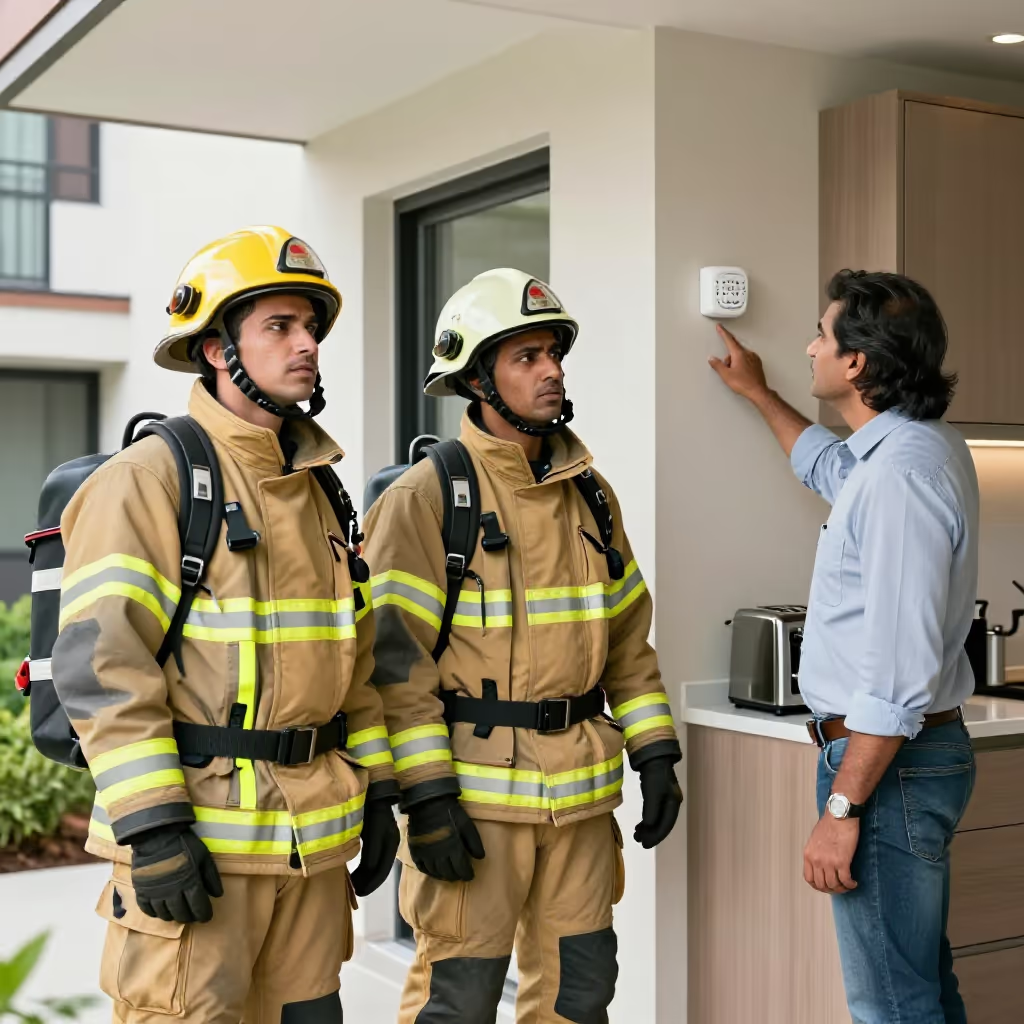
An alarm that is triggered without there being any actual danger.
Die Feuerwehr rückte aus, aber es war zum Glück nur ein blinder Alarm.
The fire department went out, but luckily it was only a false alarm.
In the literal meaning, 'blind' (blind) is often used with prepositions to specify the situation. Typical constructions are 'blind auf einem Auge' (blind in one eye) or 'von Geburt an blind' (blind from birth).
Mein Großvater ist auf dem linken Auge blind.
My grandfather is blind in his left eye.
To express that someone does not see something obvious because of a strong emotion, German uses the construction 'blind vor' + dative. Typical examples are 'blind vor Liebe' (blind with love), 'blind vor Wut' (blind with rage), or 'blind vor Eifersucht' (blind with jealousy).
Er war blind vor Wut und schrie alle an.
He was blind with rage and shouted at everyone.
In the figurative meaning 'unkritisch' (uncritical), 'blind' (blind) appears as an adjective before abstract nouns. Common combinations are 'blindes Vertrauen' (blind trust), 'blinder Gehorsam' (blind obedience), or 'blinder Aktionismus' (blind activism).
Du solltest ihm kein blindes Vertrauen schenken.
You shouldn't place blind trust in him.
When 'blind' (blind) describes an action performed without looking, it functions like an adverb. It then remains unchanged after the verb.
Ein guter Koch kann die Zutaten für eine Soße blind herausschmecken.
A good cook can identify the ingredients for a sauce blind.
When a reflective or transparent surface becomes dull, you can say it 'wird blind' (becomes clouded/dull). This is often used for mirrors, glass, or metal.
Die Fensterscheiben im alten Haus sind über die Jahre blind geworden.
The windowpanes in the old house have become clouded over the years.
The expression 'blinder Alarm' (false alarm) is a fixed expression. It refers to an alarm that was triggered even though there was no danger.
Der Rauchmelder ging an, aber es war zum Glück nur ein blinder Alarm.
The smoke detector went off, but luckily it was only a false alarm.