

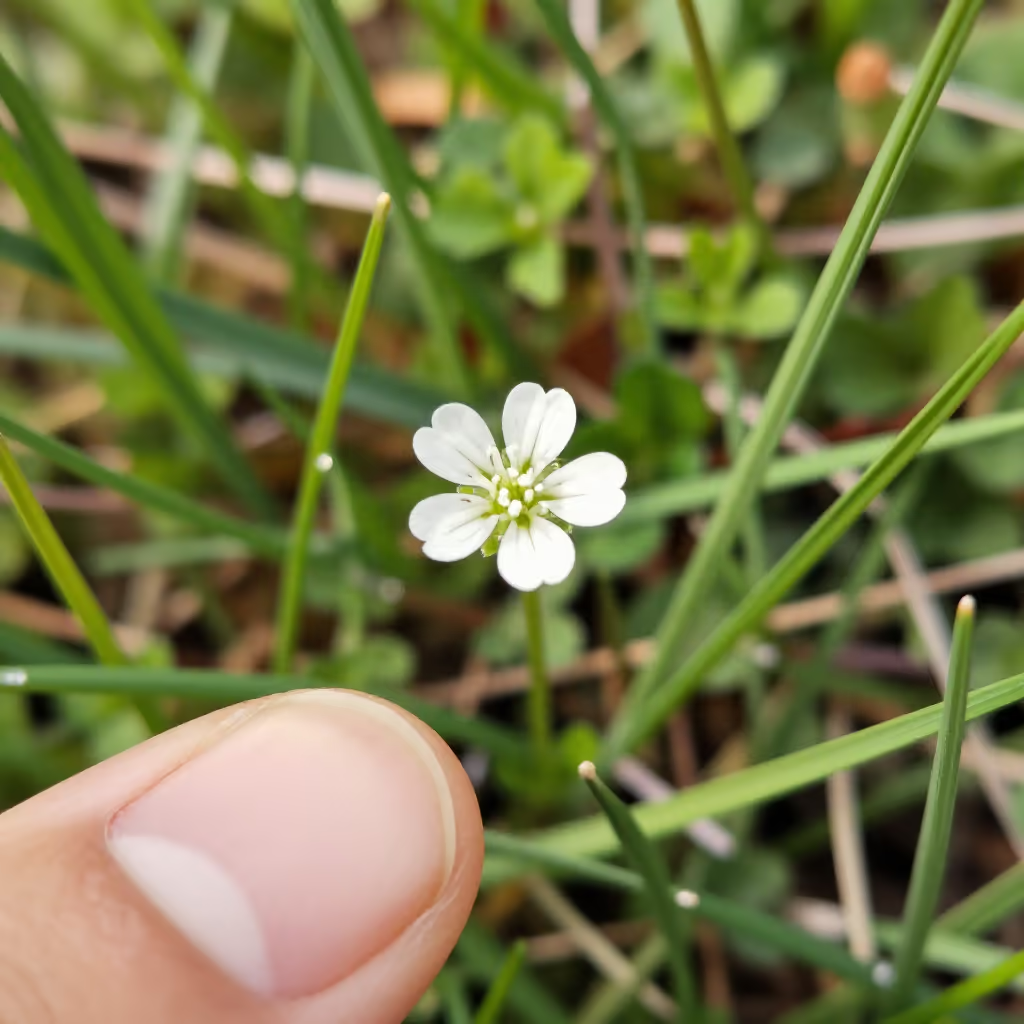
das Blümchen
little flower
A small flower; the diminutive form of 'die Blume' (flower).
EXAMPLE
Das kleine Mädchen pflückte ein Blümchen am Wegesrand.
The little girl picked a little flower by the side of the path.
little flower / floral pattern
Loading your saved state.
little flower
A small flower; the diminutive form of 'die Blume' (flower).
Das kleine Mädchen pflückte ein Blümchen am Wegesrand.
The little girl picked a little flower by the side of the path.
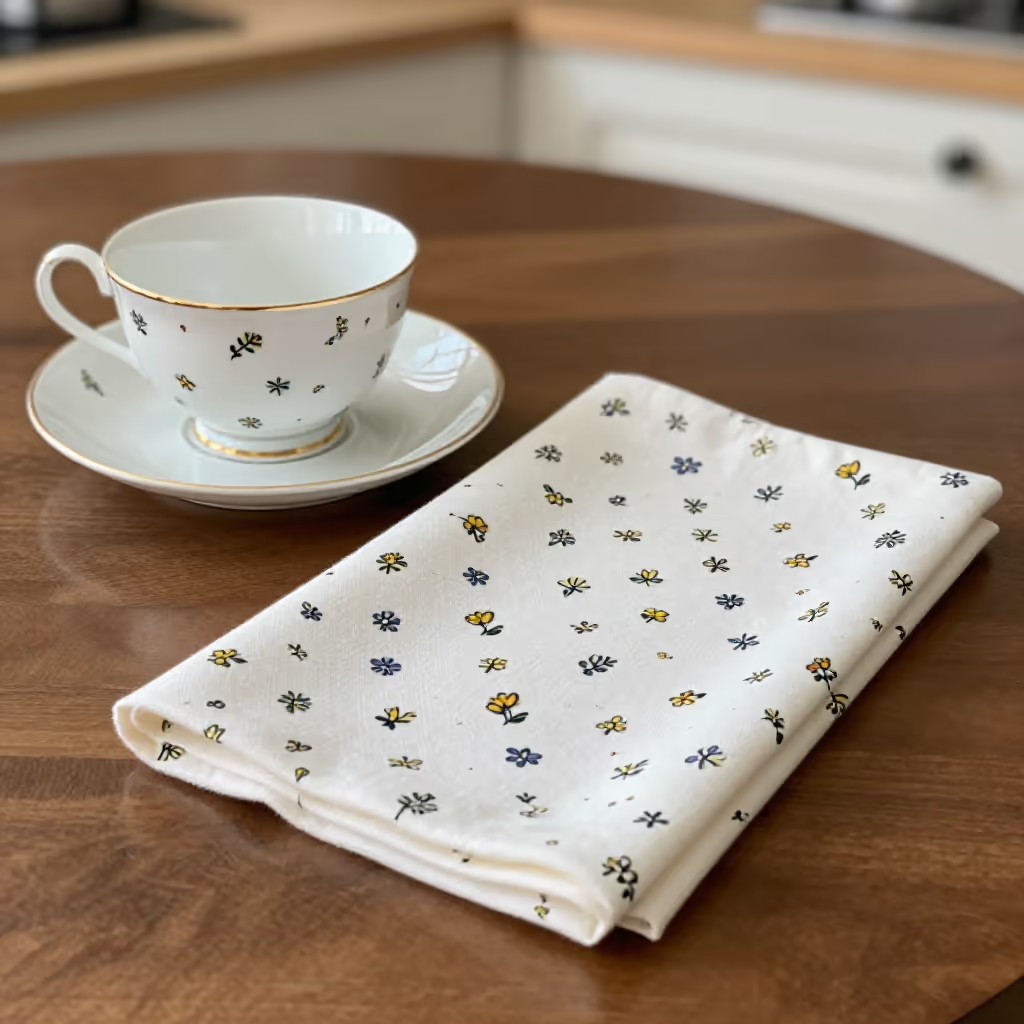
floral pattern
A pattern made of small, stylized flowers, often used on fabrics, wallpaper, or porcelain.
Sie trug ein Sommerkleid mit Blümchen.
She wore a summer dress with a floral pattern.
'Blümchen' is the diminutive form of 'die Blume' (flower). The ending '-chen' causes two things: the article always becomes 'das', and the vowel of the base word often gets an umlaut (here u → ü).
Auf der Wiese wachsen viele kleine, bunte Blümchen.
Many small, colorful little flowers grow in the meadow.
The ending '-chen' not only expresses that something is small, but also gives the word an affectionate, cute, or endearing tone. It is often used when you find something sweet or charming.
„Was für ein hübsches Blümchen!“, sagte sie zu dem Kind.
'What a pretty little flower!' she said to the child.
When 'Blümchen' describes a pattern, it often appears in compound words like 'Blümchenkleid' (floral dress) or 'Blümchentapete' (floral wallpaper). It can also be used in the plural with the preposition 'mit' (with).
Ihre Bettwäsche hat ein Muster mit kleinen Blümchen.
Her bed linen has a pattern with little flowers.