


an Bord
on board
To be in a vehicle, especially on an airplane, ship, or train.
EXAMPLE
Willkommen an Bord dieses Fluges nach Lissabon.
Welcome aboard this flight to Lisbon.
board
Loading your saved state.
on board
To be in a vehicle, especially on an airplane, ship, or train.
Willkommen an Bord dieses Fluges nach Lissabon.
Welcome aboard this flight to Lisbon.

overboard
Over the side of a ship into the water. Often used in the phrases 'über Bord fallen/werfen' (to fall/throw overboard).
Bei dem starken Sturm fiel ein Teil der Ladung über Bord.
During the strong storm, part of the cargo fell overboard.
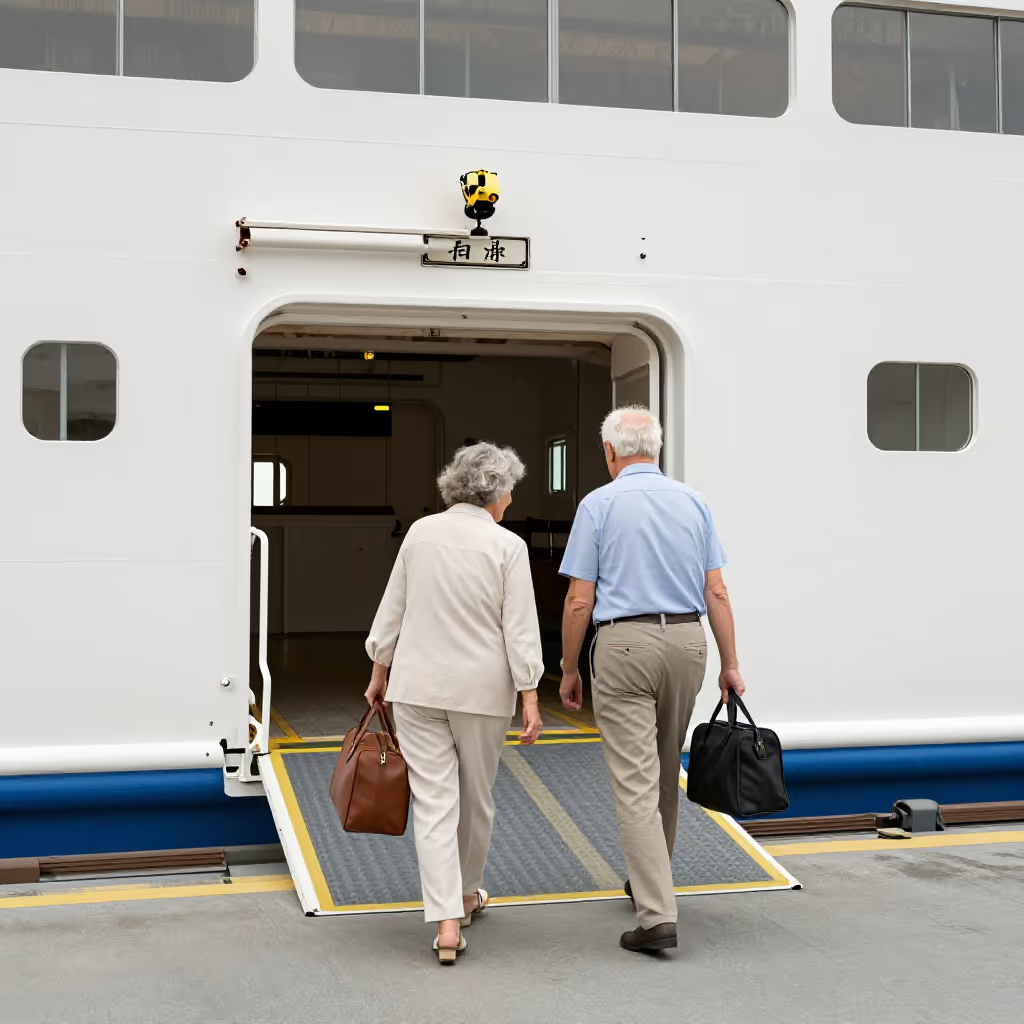
to disembark
To leave a ship, airplane, or other means of transport.
Nach der sicheren Landung durften die Passagiere von Bord gehen.
After the safe landing, the passengers were allowed to disembark.
The noun 'Bord' is used almost exclusively in fixed expressions with prepositions. It is rarely used on its own with an article like 'das Bord'.
Alle Passagiere müssen jetzt an Bord kommen.
All passengers must now come on board.
The preposition indicates the direction: 'an Bord' (to be on the vehicle or to get onto it), 'von Bord' (to leave the vehicle), and 'über Bord' (from the vehicle into the water).
Die Crew ist schon an Bord des Schiffes.
The crew is already on board the ship.
The phrase 'etwas über Bord werfen' (to throw something overboard) is often used figuratively. It then means to give up or discard a plan, an idea, or principles.
Wegen der neuen Situation mussten wir unsere alten Pläne über Bord werfen.
Because of the new situation, we had to throw our old plans overboard.