

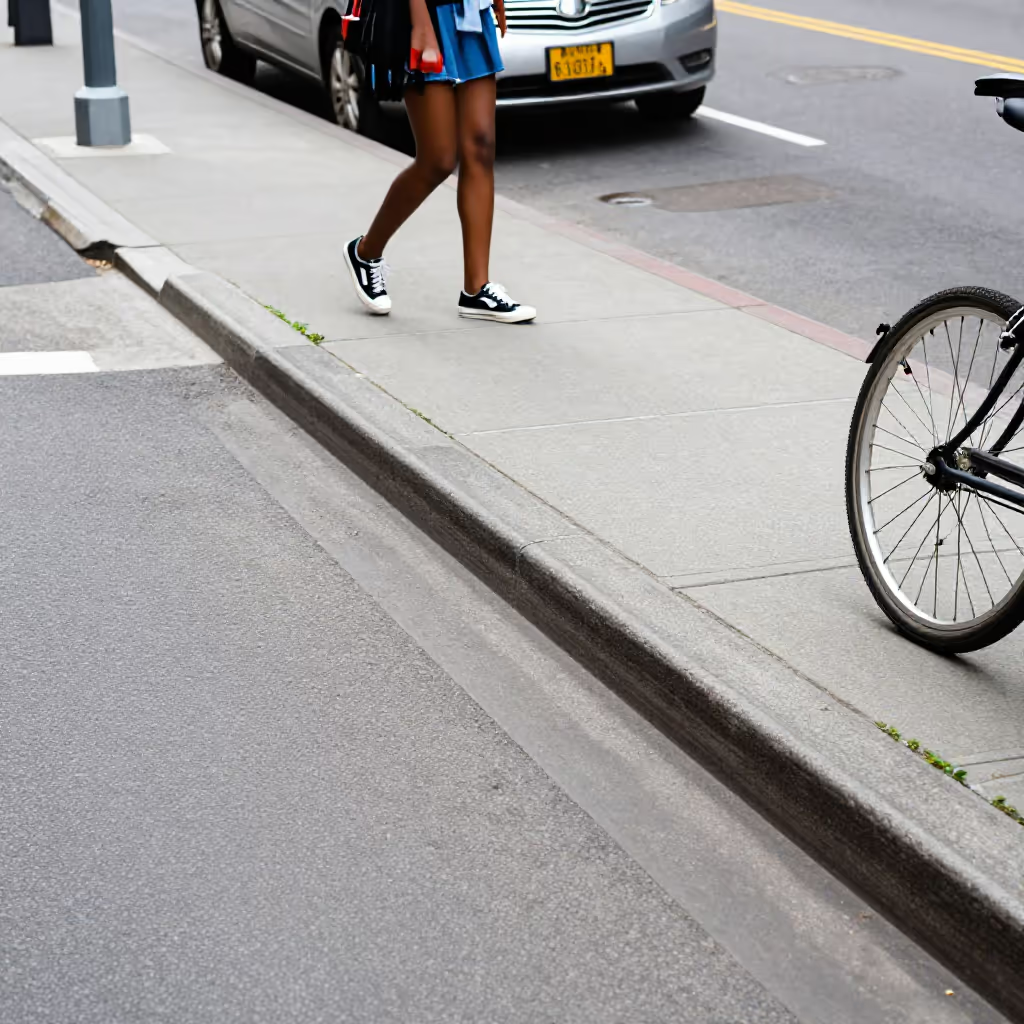
der Bordstein
curb
The raised edge made of stone or concrete that separates the sidewalk from the roadway.
EXAMPLE
Pass auf, dass du mit dem Reifen nicht gegen den Bordstein fährst.
Be careful not to drive the tire against the curb.
curb
Loading your saved state.
curb
The raised edge made of stone or concrete that separates the sidewalk from the roadway.
Pass auf, dass du mit dem Reifen nicht gegen den Bordstein fährst.
Be careful not to drive the tire against the curb.
The word 'Bordstein' (curb) is made up of 'Bord' (edge, border) and 'Stein' (stone). So it literally describes the stone that forms an edge.
Der Bordstein trennt den Gehweg von der Straße.
The curb separates the sidewalk from the street.
Pay attention to the preposition and case: you drive 'gegen den Bordstein' (against the curb; accusative), park 'am Bordstein' (at the curb; dative), or step down 'vom Bordstein' (from the curb; dative).
Vorsicht, fahr nicht zu nah an den Bordstein!
Careful, don't drive too close to the curb!
Common combinations are 'ein hoher/niedriger Bordstein' (a high/low curb) or 'ein abgesenkter Bordstein' (a lowered curb) for wheelchairs and strollers. A typical verb is 'stolpern über' (to trip over).
An der Kreuzung gibt es einen abgesenkten Bordstein für Kinderwagen.
At the intersection, there is a lowered curb for strollers.
sidewalk
The Gehweg is the walkable area for pedestrians beside the road. The Bordstein, by contrast, is only the raised edge that separates this area from the roadway. Anyone walking along it is using the Gehweg; anyone waiting at the edge is standing at the Bordstein.
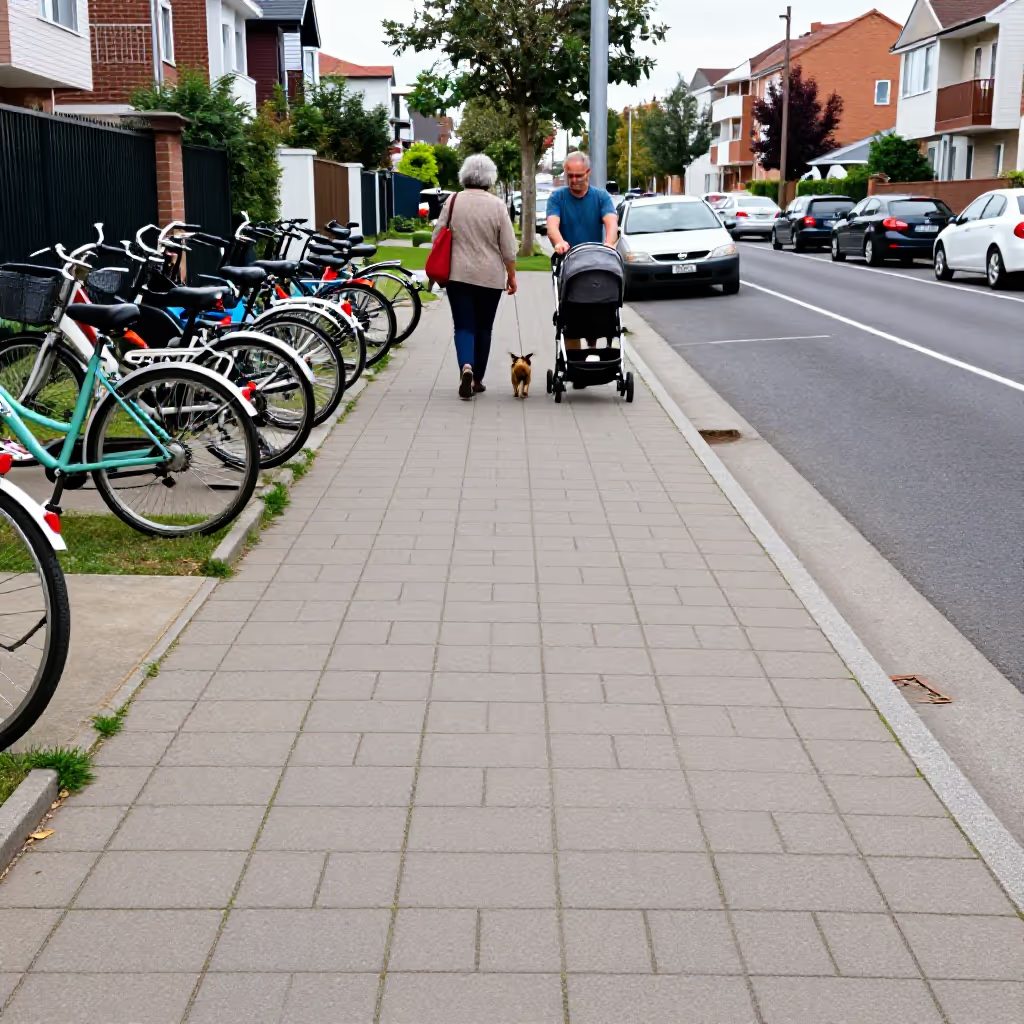
Das Kind hält mit seinem Roller am Bordstein an.
The child stops their scooter at the curb.
Das Kind fährt mit seinem Roller auf dem Gehweg.
The child is riding their scooter on the sidewalk.