

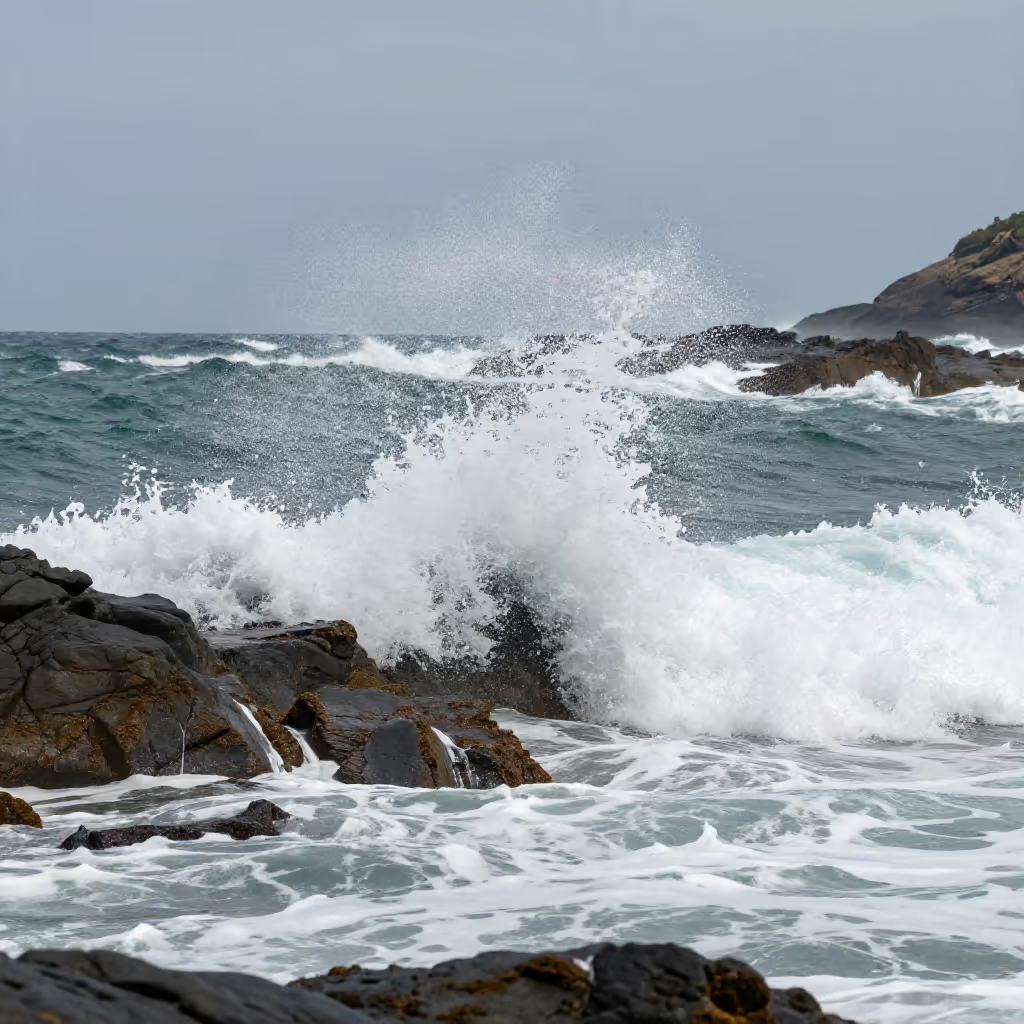
The breaking of ocean waves on the coast, on rocks, or on a sandbank, often accompanied by a loud rushing sound.
example
Wir saßen am Abend am Strand und lauschten dem beruhigenden Geräusch der Brandung.
In the evening, we sat on the beach and listened to the soothing sound of the surf.
Usage tips
Word family
The noun 'die Brandung' (surf) is closely related to the verb 'branden' (to break, of waves). When waves 'branden' (break), they crash powerfully against the coast. Die Brandung (the surf) is therefore the result of this process.
EXAMPLE
Die Wellen brandeten gegen die Felsen.
The waves crashed against the rocks.
Typical collocations
You very often hear the combination 'das Rauschen der Brandung' (the sound of the surf). People also speak of a 'starke' (strong) or 'heftige' (rough) Brandung (surf) when the waves are high.
EXAMPLE
Das laute Rauschen der Brandung übertönte unsere Stimmen.
The loud sound of the surf drowned out our voices.
Usage
'Brandung' (surf) is usually used as an uncountable noun in the singular. It describes the phenomenon of waves breaking as a whole, not individual waves.
EXAMPLE
Die Kinder spielten fröhlich in der seichten Brandung.
The children played happily in the shallow surf.
Compare with
near_synonym · confusable
Brandung vs Welle
wave
'Welle' and 'Brandung' both have to do with the sea. A 'Welle' is a moving mass of water on the surface, including far out at sea or on a lake. 'Brandung' refers to waves when they break on the coast, on rocks, or on a sandbank. You often hear a strong rushing sound. The words can be confused because surf consists of waves. 'Welle' is the more general word; 'Brandung' fits especially at the shore, when the waves are breaking.
Brandung
Wir hörten die Brandung, bevor wir den Strand sehen konnten.