

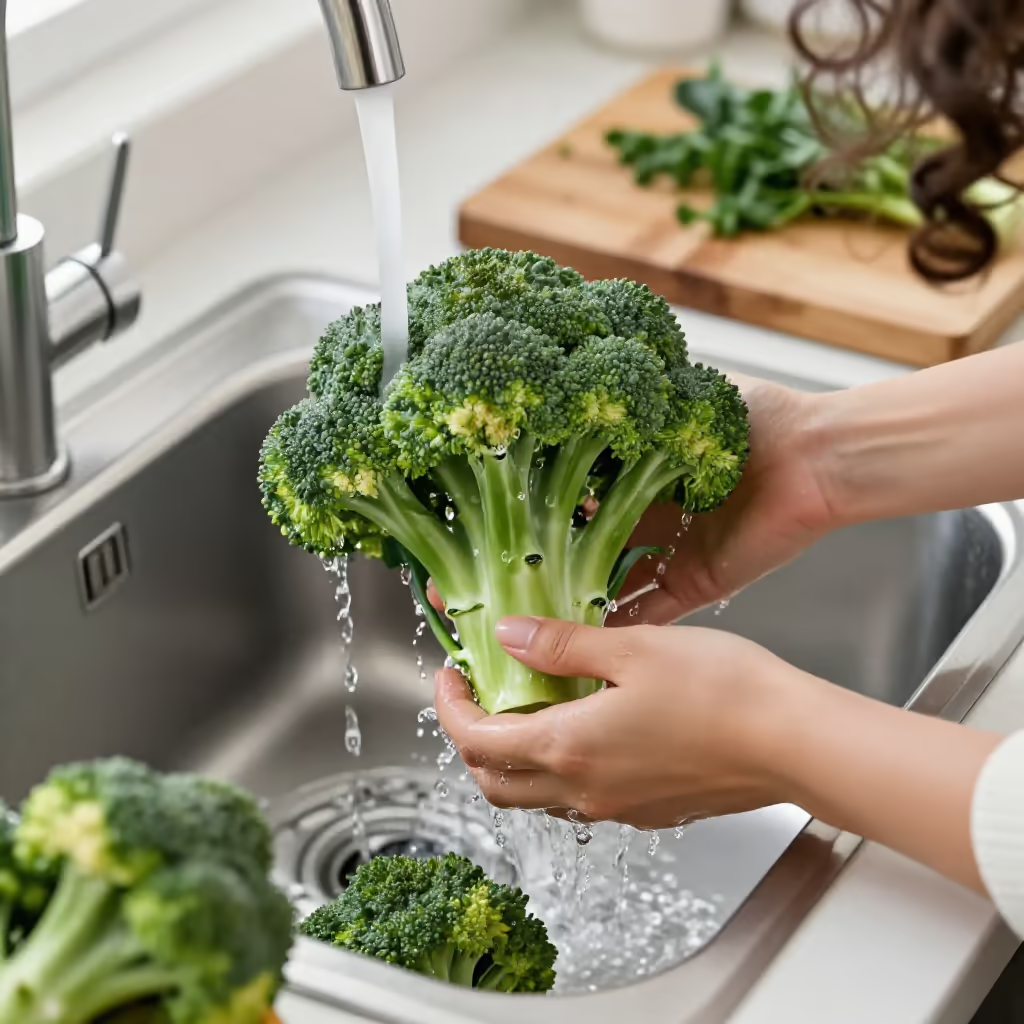
der Brokkoli
broccoli
A type of vegetable with green or purple florets that is closely related to cauliflower.
EXAMPLE
Als Beilage gibt es heute in Butter geschwenkten Brokkoli.
As a side dish today, there is broccoli tossed in butter.
broccoli
Loading your saved state.
broccoli
A type of vegetable with green or purple florets that is closely related to cauliflower.
Als Beilage gibt es heute in Butter geschwenkten Brokkoli.
As a side dish today, there is broccoli tossed in butter.
The word 'Brokkoli' (broccoli) is often used as the first part of compound nouns to name dishes.
Heute Abend koche ich einen leckeren Brokkoliauflauf.
Tonight I'm making a delicious broccoli casserole.
'Brokkoli' (broccoli) can be used both as an uncountable noun for the vegetable in general and as a countable noun for a whole head. The plural is then usually identical to the singular.
Kinder essen nicht immer gerne Brokkoli.
Children don't always like eating broccoli.
In the context of cooking, broccoli is often combined with verbs such as 'dünsten' (to steam), 'kochen' (to boil/cook), or 'braten' (to fry/roast).
Den Brokkoli bitte nur kurz in Salzwasser kochen.
Please boil the broccoli only briefly in salted water.