

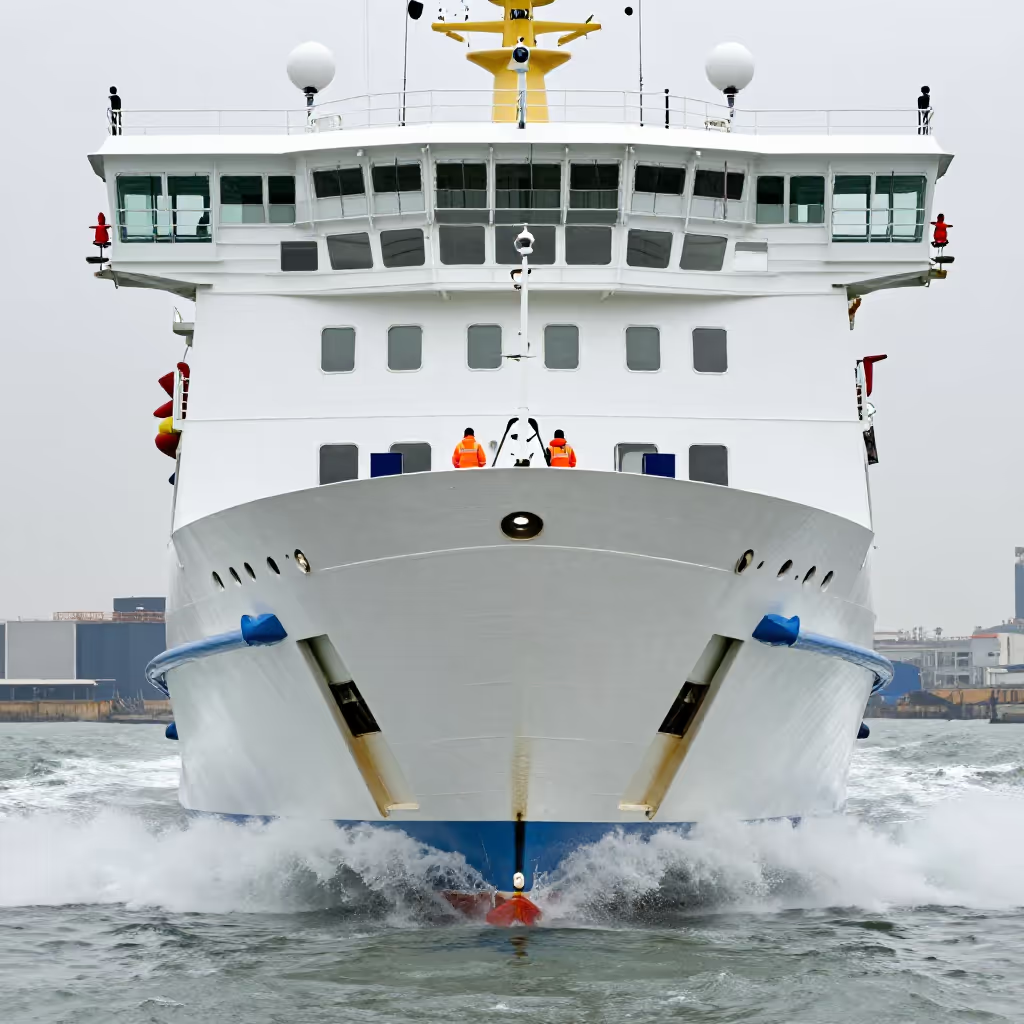
der Bug
bow
The very front part of a ship, boat, or aircraft.
EXAMPLE
Die Wellen brachen sich am Bug des großen Containerschiffes.
The waves broke against the bow of the large container ship.
bow / crease
Loading your saved state.
bow
The very front part of a ship, boat, or aircraft.
Die Wellen brachen sich am Bug des großen Containerschiffes.
The waves broke against the bow of the large container ship.

crease
A fold or bend in paper, fabric, or another flat material.
Pass auf, dass du keinen Bug in das Foto machst!
Be careful not to make a crease in the photo!
'Der Bug' sounds like the English word 'bug', but it has a completely different meaning. A 'bug' (insect or software error) is 'der Käfer' or 'der Softwarefehler' in German.
Der Kapitän stand am Bug und blickte auf das Meer.
The captain stood at the bow and looked out at the sea.
You can easily recognize the meaning from the context. If people are talking about ships, boats, or aircraft, it means the front part. If it is about paper, fabric, or photos, it means an unwanted crease.
Die Kinder saßen ganz vorne am Bug des Ausflugsbootes.
The children sat right at the front, at the bow of the excursion boat.
In a maritime context, typical phrases are 'am Bug stehen' (to stand at the bow), 'vor dem Bug' (in front of the bow / in front of the ship), or simply 'der Bug des Schiffes' (the bow of the ship).
Ein Delfin schwamm direkt vor dem Bug.
A dolphin swam directly in front of the bow.
snout / mouth
When referring to an airplane, both words can describe the very front part. Schnauze is an informal, figurative term based on the shape, while Bug is the factual term used in technical and standard language. Bug is the more appropriate choice in technical or neutral texts.

Der Bug des Flugzeugs wurde bei der Landung beschädigt.
The nose of the airplane was damaged during landing.
Die Schnauze des alten Flugzeugs ist ungewöhnlich kurz.
The nose of the old airplane is unusually short.