

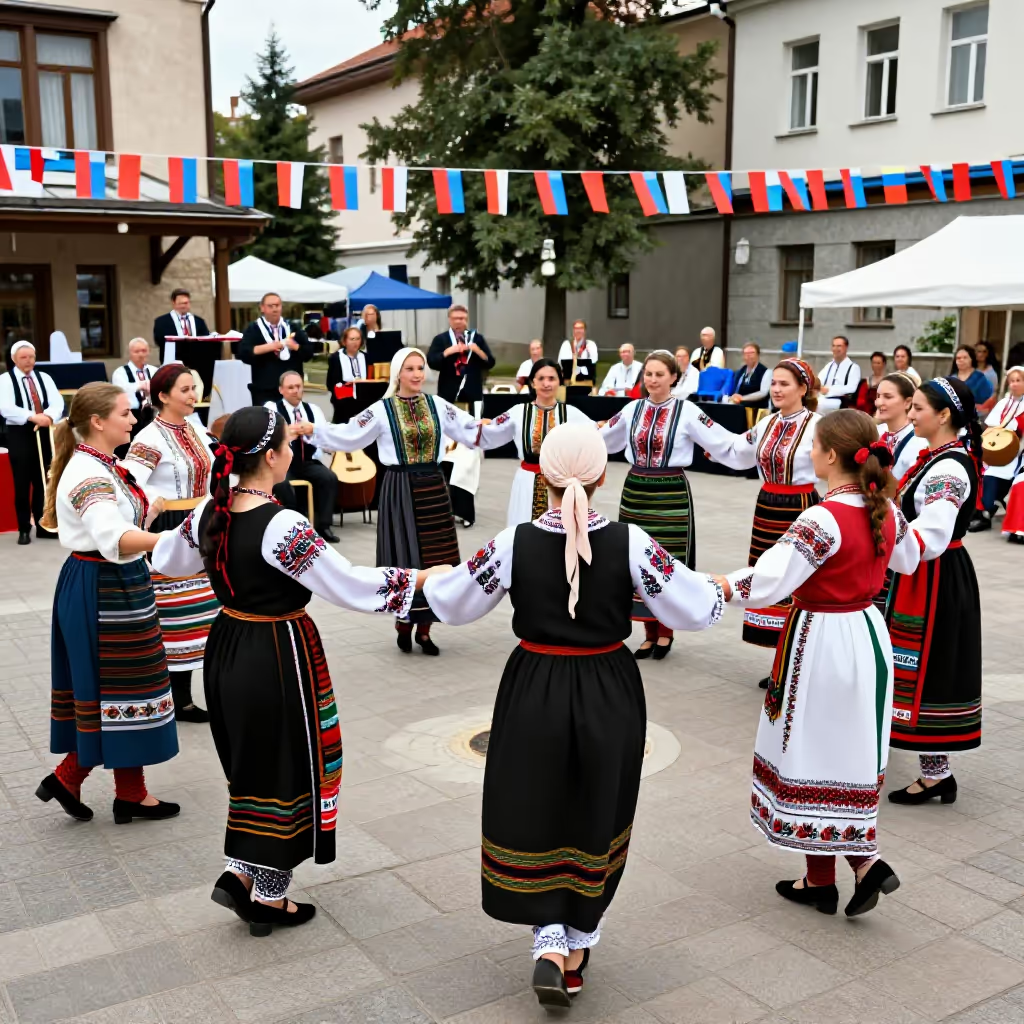
bulgarisch
Bulgarian
Relating to the country Bulgaria, its inhabitants, its culture, or its language.
EXAMPLE
Wir haben in einem bulgarischen Restaurant zu Abend gegessen.
We had dinner at a Bulgarian restaurant.
Bulgarian
Loading your saved state.
Bulgarian
Relating to the country Bulgaria, its inhabitants, its culture, or its language.
Wir haben in einem bulgarischen Restaurant zu Abend gegessen.
We had dinner at a Bulgarian restaurant.
Adjectives for countries or regions in German are often formed with the ending '-isch'. So the country 'Bulgarien' (Bulgaria) becomes the adjective 'bulgarisch' (Bulgarian).
Die bulgarische Schwarzmeerküste ist ein beliebtes Urlaubsziel.
The Bulgarian Black Sea coast is a popular vacation destination.
Adjectives derived from country names are written in lowercase in German. However, if you mean the language as a noun, you write it with a capital letter.
Er lernt die bulgarische Sprache.
He is learning the Bulgarian language.
The adjective 'bulgarisch' (Bulgarian) is often used to describe things that are typical of the country, such as 'die bulgarische Küche' (Bulgarian cuisine), 'bulgarische Musik' (Bulgarian music), or 'bulgarische Traditionen' (Bulgarian traditions).
Ich mag die bulgarische Küche sehr, besonders den Schopska-Salat.
I really like Bulgarian cuisine, especially Shopska salad.