Colloquial for building up a large supply of something, especially food or other goods, often out of concern about a shortage.
example
Vor dem langen Wochenende haben viele Leute im Supermarkt Nudeln und Toilettenpapier gebunkert.
Before the long weekend, many people stockpiled pasta and toilet paper at the supermarket.

Usage tips
Word family
The verb 'bunkern' is derived from the noun 'der Bunker' (bunker). A bunker is a safe, often underground shelter. This basic idea of storing things away or entrenching oneself appears in all meanings.
EXAMPLE
Aus Angst vor dem Sturm haben die Anwohner Wasser und Lebensmittel gebunkert.
Out of fear of the storm, the residents stockpiled water and food.
Context clues
You can easily recognize the meaning of 'bunkern' from context. If people are talking about shopping or crises, it is about stockpiling supplies. At a port or airport, it is about fuel. In a sports report, it means playing extremely defensively.
EXAMPLE
Wir sollten vor den Feiertagen noch Getränke bunkern.
We should stockpile some drinks before the holidays.
Register
In the meaning 'Vorräte anlegen' (to stockpile supplies), 'bunkern' is a colloquial word. It is used in everyday speech, but rather rarely in formal texts.
EXAMPLE
Mein Nachbar hat seinen ganzen Keller mit Konservendosen gebunkert.
My neighbor stockpiled his entire basement with canned food.
Technical language
When it is about fueling ships or airplanes, 'bunkern' is a technical term. In this context, it is used normally and is not colloquial.
EXAMPLE
Der Tanker muss Öl bunkern, bevor er den Hafen verlässt.
The tanker has to bunker oil before it leaves the port.
Sports jargon
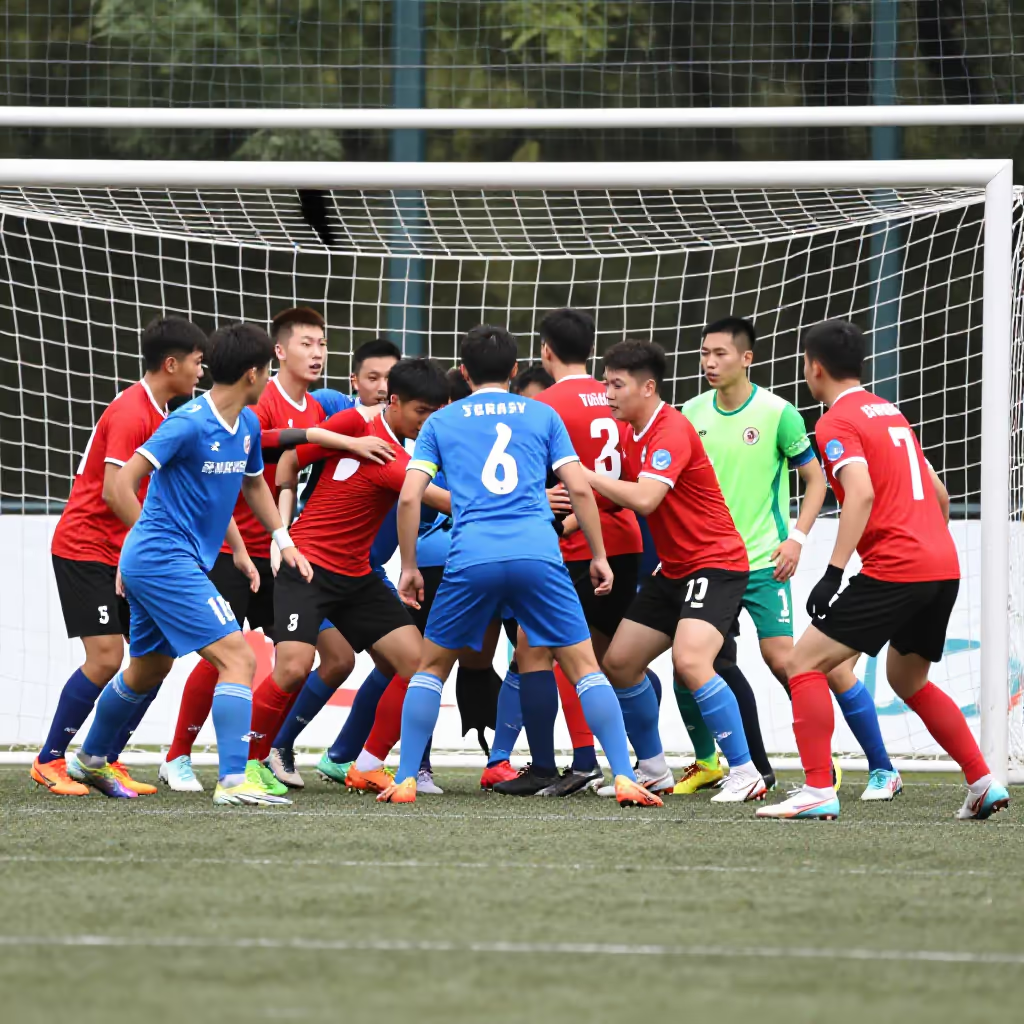
In a sports context, especially in football/soccer, 'bunkern' is a common jargon term. It describes a very defensive tactic in which a team heavily defends its own goal.
EXAMPLE
Die Heimmannschaft war klar unterlegen und hat von Anfang an gebunkert.
The home team was clearly outmatched and parked the bus from the start.
Compare with
antonym
bunkern vs angreifen
to attack
'angreifen' and 'bunkern' are opposites in sports, especially in football/soccer. 'angreifen' means that a team plays forward and wants to score a goal or a point. 'bunkern' colloquially means that a team plays very defensively and almost only protects the area in front of its own goal. So the difference is: when attacking, you look for chances going forward; when 'bunkern', the main goal is not to concede.
bunkern
In den letzten Minuten bunkerte das Team vor dem eigenen Tor.
In the final minutes, the team parked the bus in front of its own goal.
angreifen
Nach der Pause griff die Mannschaft mutiger an und kam zu mehreren Chancen.
After the break, the team attacked more boldly and created several chances.