

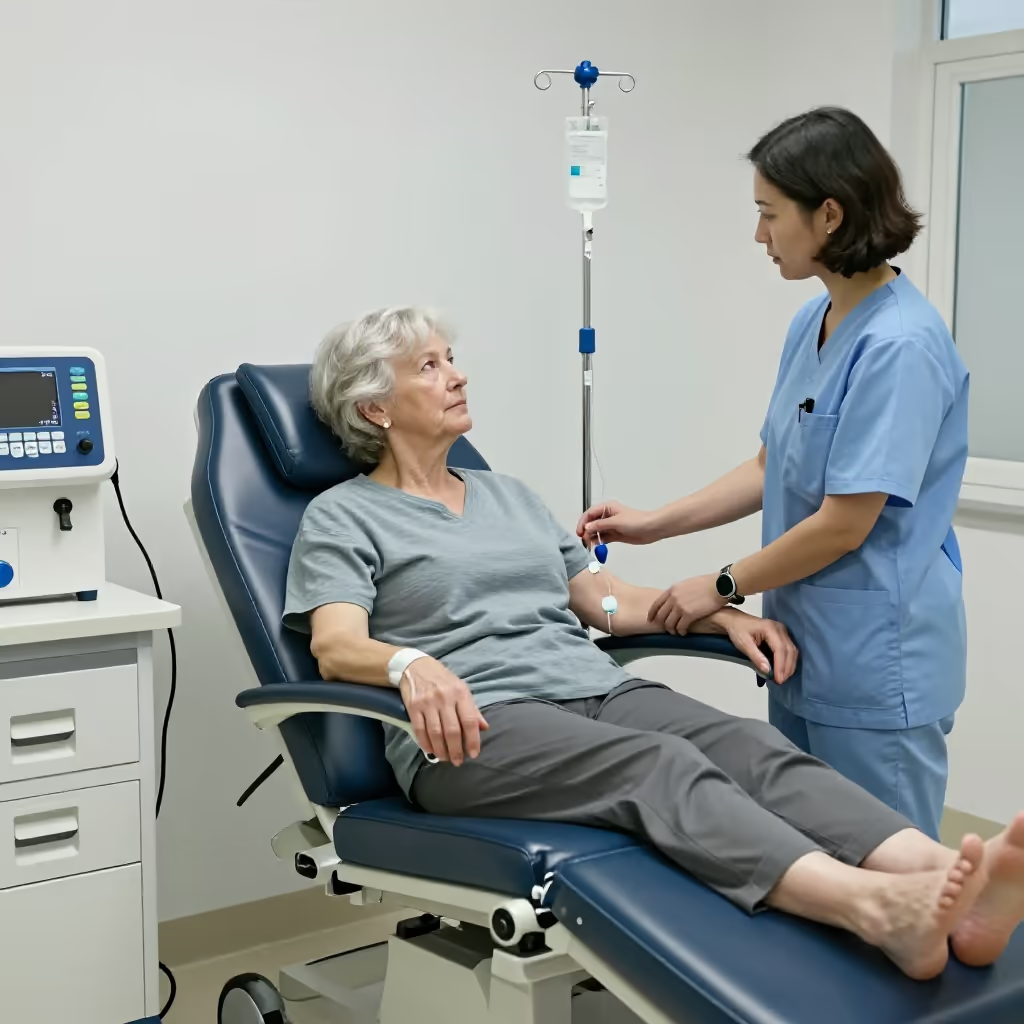
A colloquial short form for chemotherapy. This is a medical treatment in which chemical substances (cytostatic drugs) are used to destroy cancer cells or inhibit their growth.
example
Nach der Operation musste sie noch eine Chemo machen.
After the operation, she still had to do chemo.
Usage tips
Short form
'Chemo' (chemo) is a typical German abbreviation. The full, formal word is 'die Chemotherapie' (chemotherapy).
EXAMPLE
Der Arzt erklärte dem Patienten den Plan für die Chemotherapie.
The doctor explained the chemotherapy plan to the patient.
Colloquial style
The word 'Chemo' (chemo) is mainly used in spoken language and in informal contexts. In medical reports or specialist discussions, the long form 'Chemotherapie' (chemotherapy) is usually used.
EXAMPLE
Meine Tante erzählt, dass die Chemo sehr anstrengend ist.
My aunt says that chemo is very exhausting.
Typical verbs
In everyday language, 'Chemo' (chemo) is very often combined with the verb 'machen' (to do). Other common verbs are 'bekommen' (to get/receive) or 'beginnen' (to begin).
EXAMPLE
Er muss nächste Woche mit der Chemo anfangen.
He has to start chemo next week.
Compare with
near_synonym · confusable
Chemo vs Chemotherapie
chemotherapy
'Chemotherapie' and 'Chemo' refer to the same medical treatment, especially for cancer. The difference is mainly one of style. 'Chemotherapie' is the full and factual form, as used in conversations with doctors, letters, or informational materials. 'Chemo' is the short colloquial form and sounds more personal or everyday. Learners may confuse the words because both refer to the same treatment. In formal situations, 'Chemotherapie' is usually more appropriate; in conversations with family or friends, you often hear 'Chemo'.
Chemo
Nach der Chemo ist meine Tante oft sehr müde.
After chemo, my aunt is often very tired.
Chemotherapie
Die Ärztin erklärt dem Patienten, wie die Chemotherapie ablaufen wird.
The doctor explains to the patient how the chemotherapy will proceed.