

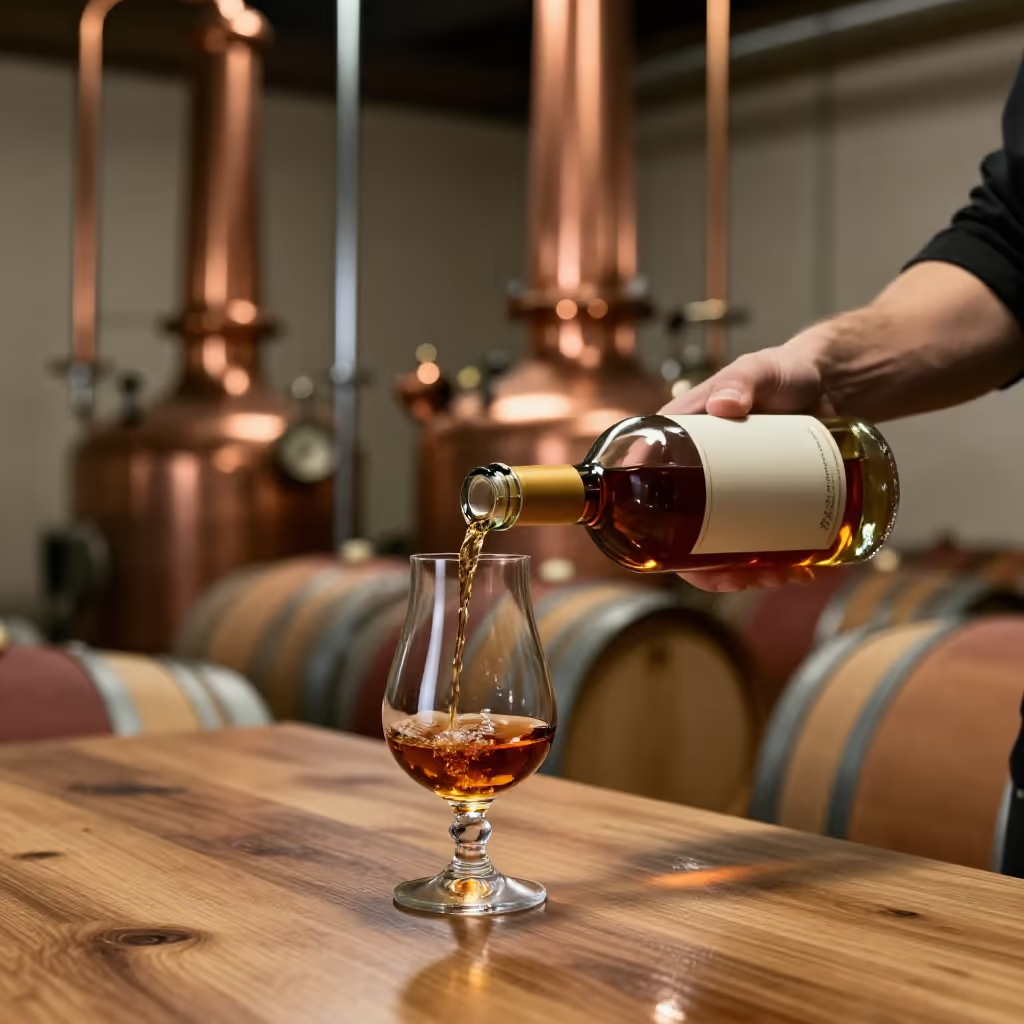
A high-quality brandy made from white wines from the French town of Cognac and its surrounding area. The name is a protected designation of origin.
example
Nach dem Essen trank er einen alten Cognac am Kamin.
After the meal, he drank an old cognac by the fireplace.
Usage tips
Origin of the name
The name 'Cognac' comes from the French town of Cognac. In German, the word is masculine, so it is 'der Cognac' (the cognac).
EXAMPLE
Dieser besondere Cognac kommt direkt aus Frankreich.
This special cognac comes directly from France.
Use with an article
When referring to a specific serving, you use an article. When speaking generally about the type of drink, the article can often be left out.
EXAMPLE
Ich hätte gerne einen Cognac, bitte.
I would like a cognac, please.
Typical collocations
Common verbs used in connection with cognac are 'genießen' (to enjoy), 'schwenken' (to swirl), and 'einschenken' (to pour). It is often served in a special 'Cognacschwenker' (cognac snifter).
EXAMPLE
Er schwenkte den Cognac im Glas, um das Aroma freizusetzen.
He swirled the cognac in the glass to release the aroma.
Compare with
confusable
Cognac vs Whiskey
whiskey
'Whiskey' and 'Cognac' are both strong alcoholic drinks and are often drunk from small glasses. Still, they are not the same thing. 'Whiskey' is made from grain and aged in wooden barrels. 'Cognac' is a special brandy from a specific region in France and is made from wine. Learners may confuse the words because both seem refined and are served in similar ways. When production or origin matters, you need to distinguish them carefully.
Cognac
Nach dem Essen bestellte der Gast einen kleinen Cognac.
After the meal, the guest ordered a small cognac.
Whiskey
Zum Geburtstag bekam Paul eine Flasche irischen Whiskey.
For his birthday, Paul received a bottle of Irish whiskey.