

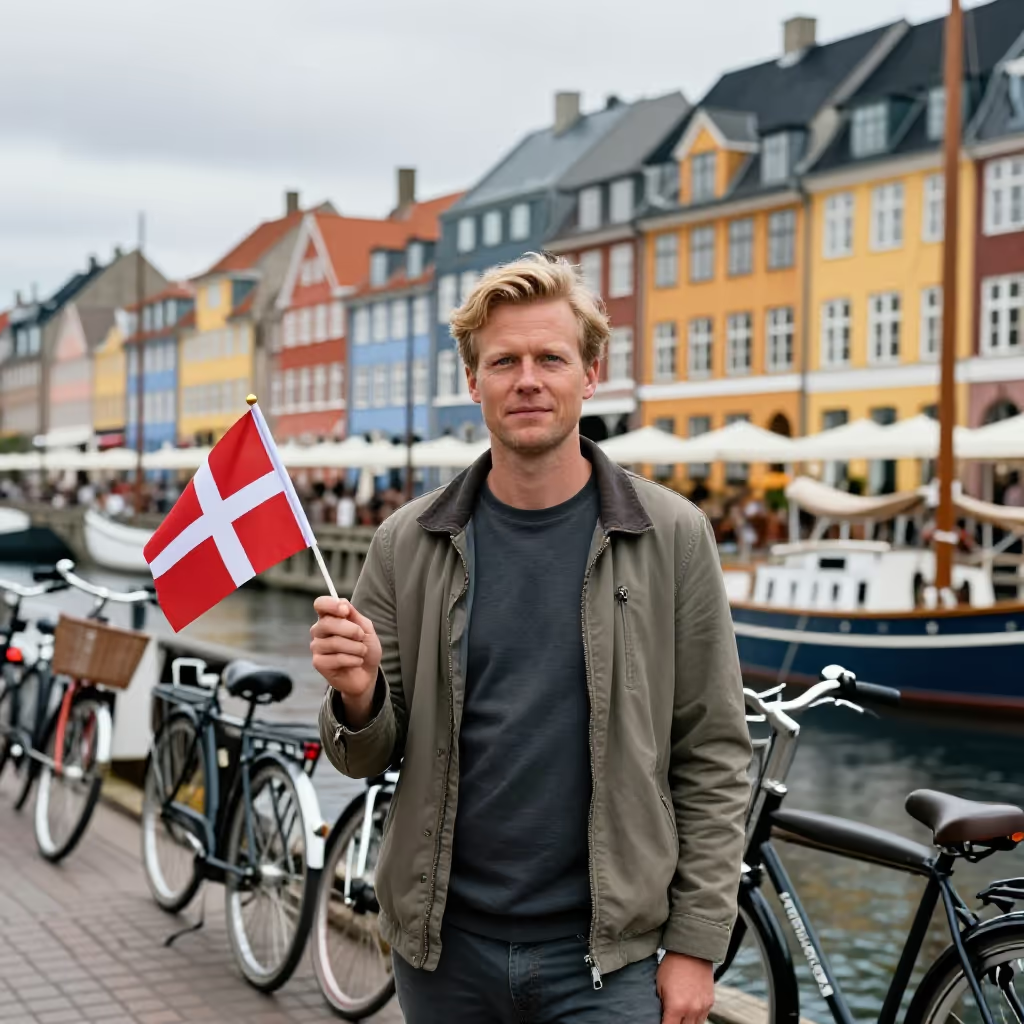
der Däne
Dane
A male citizen of Denmark or a male person who comes from Denmark.
EXAMPLE
Mein neuer Kollege ist ein Däne und kommt aus Kopenhagen.
My new colleague is a Dane and comes from Copenhagen.
Dane
Loading your saved state.
Dane
A male citizen of Denmark or a male person who comes from Denmark.
Mein neuer Kollege ist ein Däne und kommt aus Kopenhagen.
My new colleague is a Dane and comes from Copenhagen.
'Der Däne' (the Dane) belongs to the N-declension. This means that the word takes the ending '-n' in all cases except the nominative singular. This is an important rule for many masculine nouns that refer to living beings.
Ich habe gestern mit dem Dänen gesprochen.
I spoke with the Dane yesterday.
The word 'Däne' (Dane) is part of a word family. It is derived from the country 'Dänemark' (Denmark) and is related to the adjective 'dänisch' (Danish).
Die dänische Flagge ist rot und weiß.
The Danish flag is red and white.
When you state a person's nationality like a profession or characteristic, you can leave out the article. The subject then stands with the verb 'sein' (to be).
Mein Nachbar ist Däne.
My neighbor is Danish.