


daheim
at home
At the place where one lives; at home. Often with an emotional, cozy meaning.
EXAMPLE
Nach einer langen Reise ist es am schönsten, wieder daheim zu sein.
After a long trip, the nicest thing is to be back home again.
at home
Loading your saved state.
at home
At the place where one lives; at home. Often with an emotional, cozy meaning.
Nach einer langen Reise ist es am schönsten, wieder daheim zu sein.
After a long trip, the nicest thing is to be back home again.

back home
In one's homeland or region of origin.
Daheim in Bayern schmeckt das Bier einfach am besten.
Back home in Bavaria, the beer simply tastes best.
The word is made up of 'da' (there/here) and 'heim' (home). It literally means 'here at home' and emphasizes the place where one feels safe and secure.
Endlich wieder daheim! Hier fühle ich mich am wohlsten.
Finally back home! This is where I feel most comfortable.
'Daheim' (at home) is often used to express a feeling of coziness and security. It sounds more personal and warmer than the neutral 'zu Hause' (at home).
An kalten Winterabenden bleibe ich am liebsten daheim.
On cold winter evenings, I prefer to stay at home.
The word 'daheim' (at home) is especially common in southern Germany, Austria, and Switzerland. In other regions, it is used less often.
Wenn ich meine Familie in den Alpen besuche, fühle ich mich sofort wieder daheim.
When I visit my family in the Alps, I immediately feel at home again.
at home
Zuhause and daheim can both refer to the place where you live. In present-day standard German, zuhause is usually more neutral, while daheim can sound regional or convey a warm, cozy feeling. Use zuhause for a factual statement; daheim emphasizes a sense of familiarity instead.
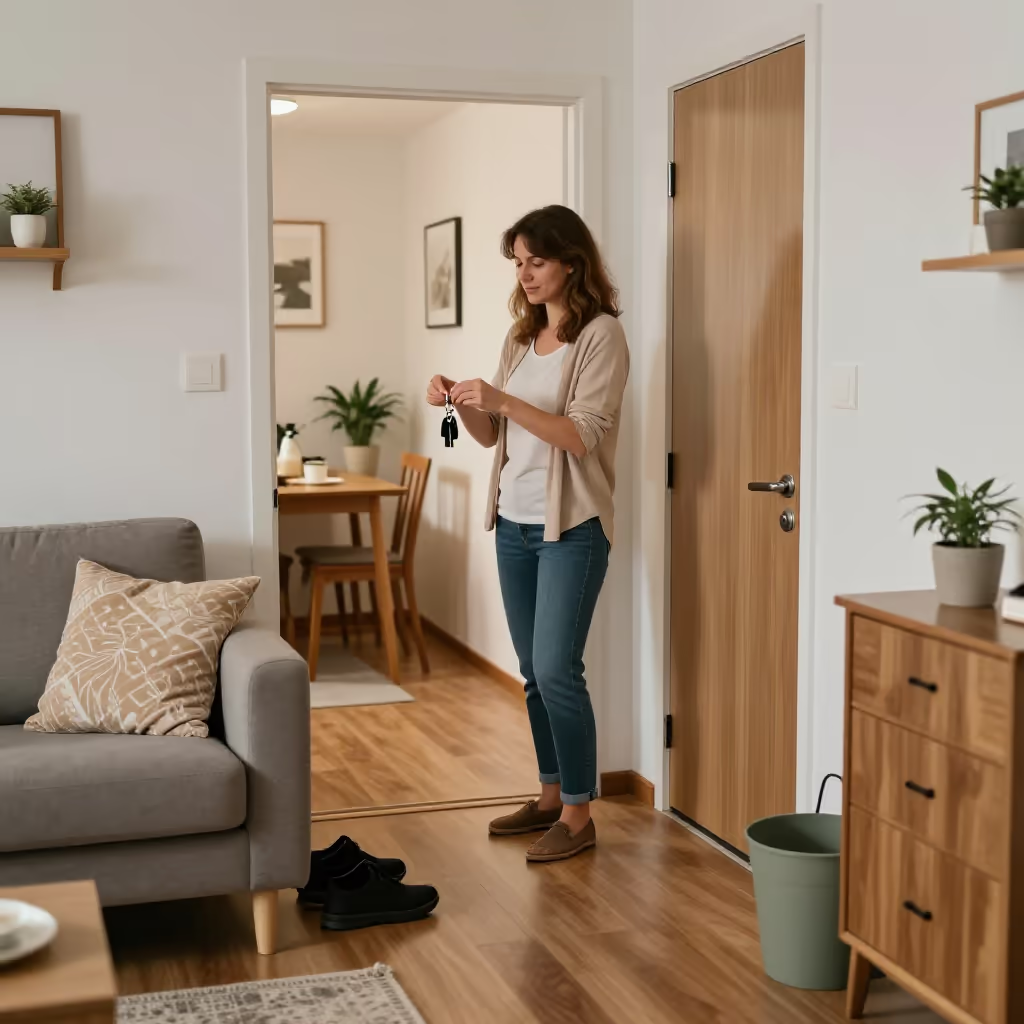
Heute bleibe ich daheim und lese ein Buch.
Today I’m staying at home and reading a book.
Heute bleibe ich zuhause und lese ein Buch.
Today I’m staying at home and reading a book.