

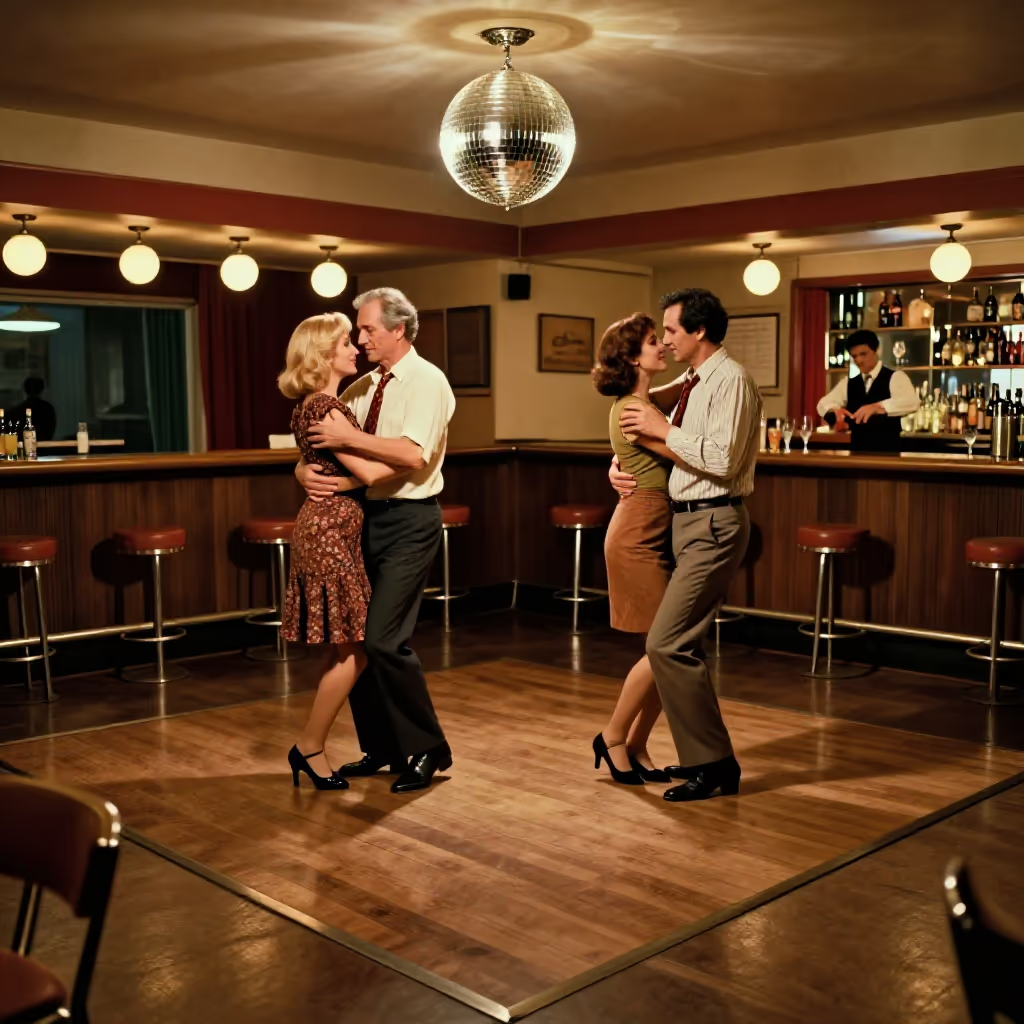
A venue or event where people can dance; a dance bar or dance hall. The term is somewhat outdated and is often associated with earlier decades.
example
Am Samstagabend gingen unsere Großeltern früher immer ins Dancing.
On Saturday evenings, our grandparents used to always go to the dance hall.
Usage tips
Register and style
This word is outdated and is hardly used today. It creates a nostalgic atmosphere and calls to mind the 1950s to 1970s.
EXAMPLE
Meine Oma erzählt oft, wie sie früher mit ihren Freundinnen ins Dancing gegangen ist.
My grandma often tells stories about how she used to go to the dance hall with her friends.
Origin and meaning
'Dancing' comes from the English word for 'tanzen' (to dance), but in German it does not refer to the activity, but to a place: a dance hall.
EXAMPLE
In unserer kleinen Stadt gab es früher ein beliebtes Dancing am See.
There used to be a popular dance hall by the lake in our small town.
Typical usage
The most common, and almost the only commonly used, expression with this word is 'ins Dancing gehen' (to go to the dance hall).
EXAMPLE
Jeden Samstagabend haben sie sich schick gemacht, um ins Dancing zu gehen.
Every Saturday evening, they dressed up nicely to go to the dance hall.
Compare with
near_synonym · confusable
Dancing vs Disco
disco
'die Disco' and 'das Dancing' both mean a place or event where you can dance. 'Disco' sounds much more natural today and is especially suitable for a venue with pop music, loud music, and lighting effects. 'Dancing' is understandable, but it sounds rather old-fashioned and often brings to mind dance venues from earlier times. Learners may confuse the words because both are about dancing. In everyday language today, 'Disco' is usually the safer choice.
Dancing
Im Urlaub spielte in einem alten Dancing jeden Abend eine kleine Band.
On vacation, a small band played every evening in an old dance hall.
Disco
Am Samstag gehen wir mit Freunden in die Disco.
On Saturday, we're going to the disco with friends.