

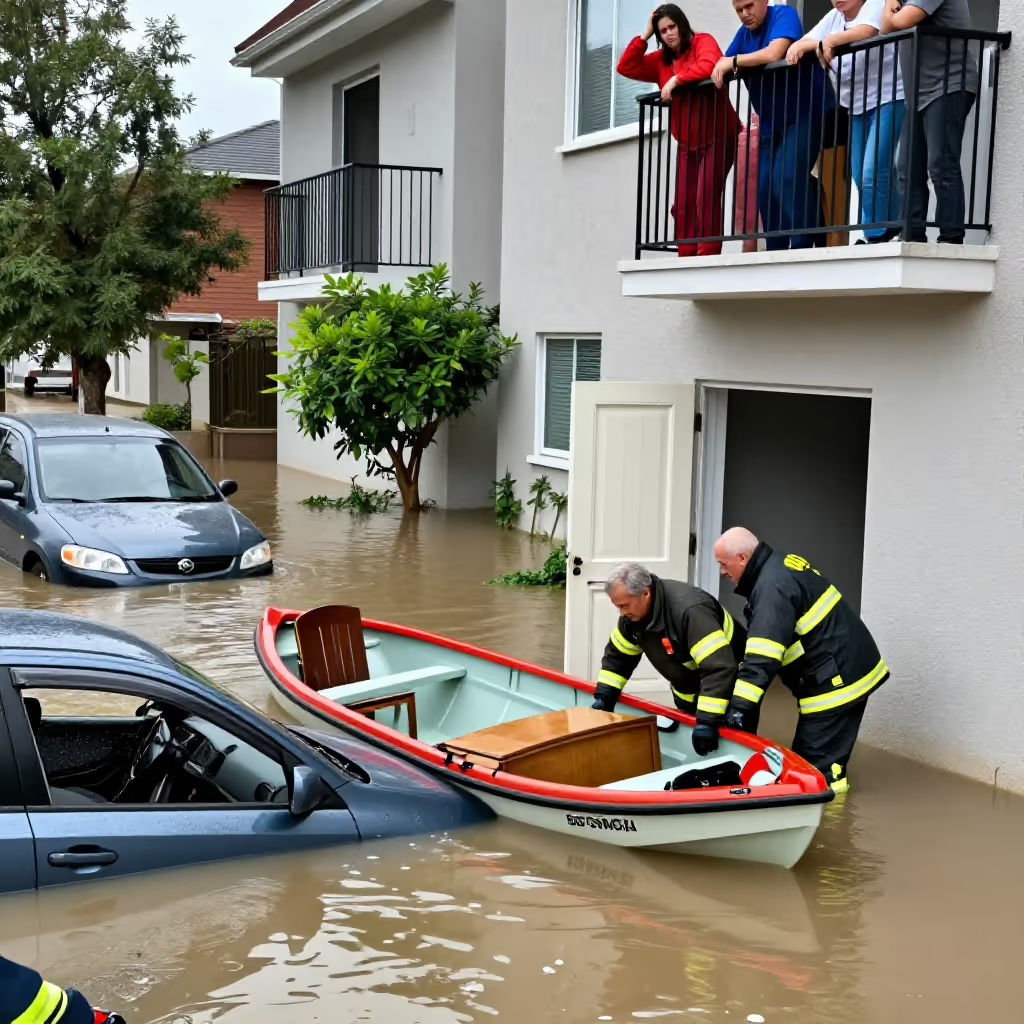
das Desaster
disaster
An event with catastrophic, devastating effects; a major misfortune or a complete failure.
EXAMPLE
Die Organisation der Konferenz war ein einziges Desaster.
The organization of the conference was an absolute disaster.
disaster
Loading your saved state.
disaster
An event with catastrophic, devastating effects; a major misfortune or a complete failure.
Die Organisation der Konferenz war ein einziges Desaster.
The organization of the conference was an absolute disaster.
The word comes from Latin 'dis-' (bad) and 'astrum' (star). A 'Desaster' (disaster) was therefore originally a misfortune caused by a bad star or unfavorable fate.
Die Reise stand von Anfang an unter einem schlechten Stern.
The trip was ill-fated from the very beginning.
'Desaster' (disaster) can describe both a real, major misfortune (e.g. a natural catastrophe) and, exaggeratingly, a total failure in everyday life.
Die Party war ein Desaster, weil die Musik ausgefallen ist.
The party was a disaster because the music cut out.
Common combinations are 'ein finanzielles/ökologisches Desaster' (a financial/ecological disaster), 'in einem Desaster enden' (to end in disaster), or the intensifying phrase 'ein einziges Desaster' (an absolute disaster).
Der Börsencrash führte für viele Anleger zu einem finanziellen Desaster.
The stock market crash led to a financial disaster for many investors.
catastrophe
Katastrophe and Desaster can both describe a completely unsuccessful process or an event with serious consequences. Katastrophe often sounds like an emotional judgment about a failed performance, while Desaster more strongly identifies the specific complete failure. Both words are possible in such sentences, but the nuance is different.

Die völlig misslungene Präsentation war für das Team ein Desaster.
The completely unsuccessful presentation was a disaster for the team.
Die völlig misslungene Präsentation war für das Team eine Katastrophe.
The completely unsuccessful presentation was a catastrophe for the team.