

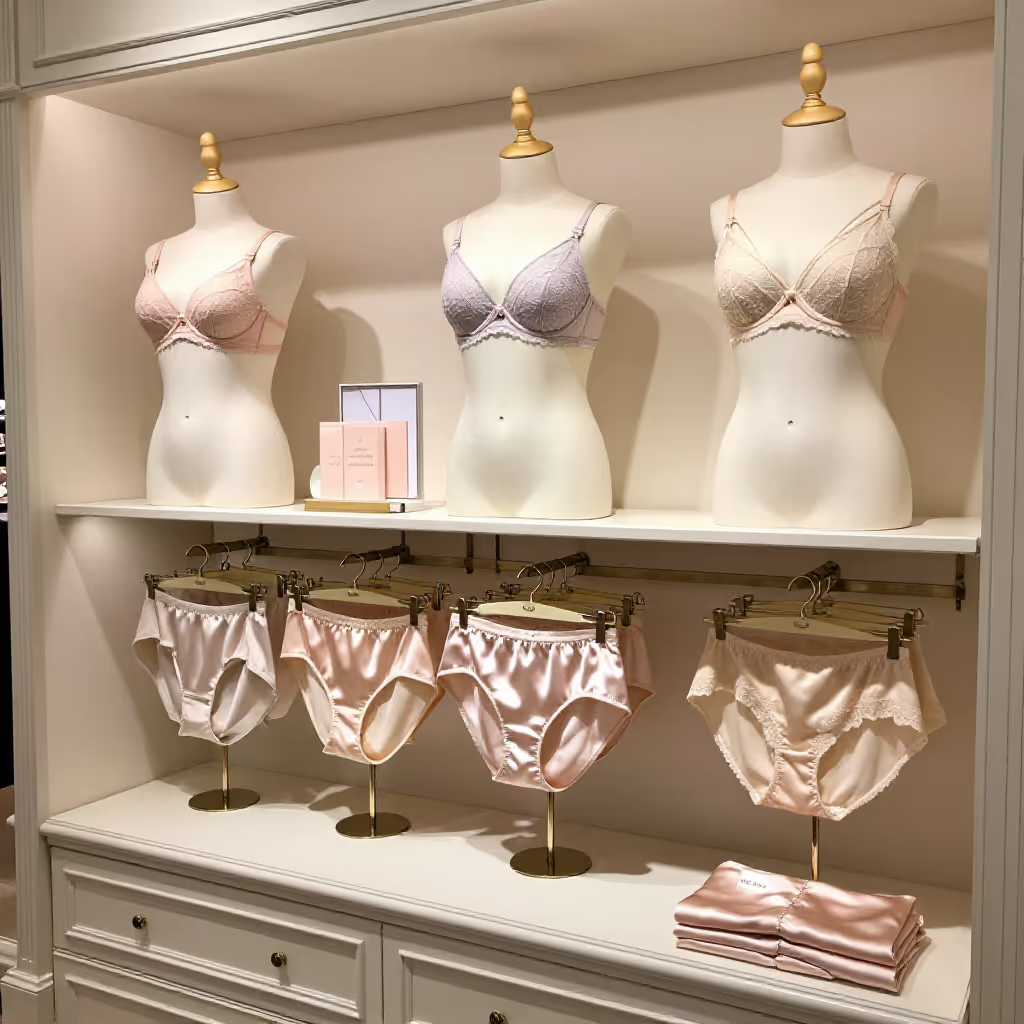
A term for especially fine, fashionable, or seductive women's underwear. In German, the word is used almost exclusively in the plural.
example
Im Schaufenster wurden elegante Dessous aus Seide und Spitze gezeigt.
Elegant lingerie made of silk and lace was displayed in the shop window.
Usage tips
French loanword
'Dessous' is a word from French and literally means 'underneath' there. In German, it is used specifically for elegant women's underwear that is worn 'underneath'.
EXAMPLE
Sie kaufte sich für einen besonderen Anlass neue Dessous.
She bought herself new lingerie for a special occasion.
Use in the plural
The word 'Dessous' (lingerie) is almost always used as a plural word in German, even when speaking about just one set. So you say 'die Dessous sind schön' (the lingerie is beautiful) and not 'das Dessous ist schön'.
EXAMPLE
Ihre neuen Dessous waren in einer eleganten Schachtel verpackt.
Her new lingerie was packaged in an elegant box.
Stylistic meaning
The term 'Dessous' (lingerie) is not used for every kind of underwear. It specifically describes fine, fashionable, or seductive underwear, often made from materials such as lace or silk.
EXAMPLE
Das Geschäft ist auf hochwertige Dessous spezialisiert.
The shop specializes in high-quality lingerie.
Compare with
near_synonym · confusable
Dessous vs Wäsche
laundry
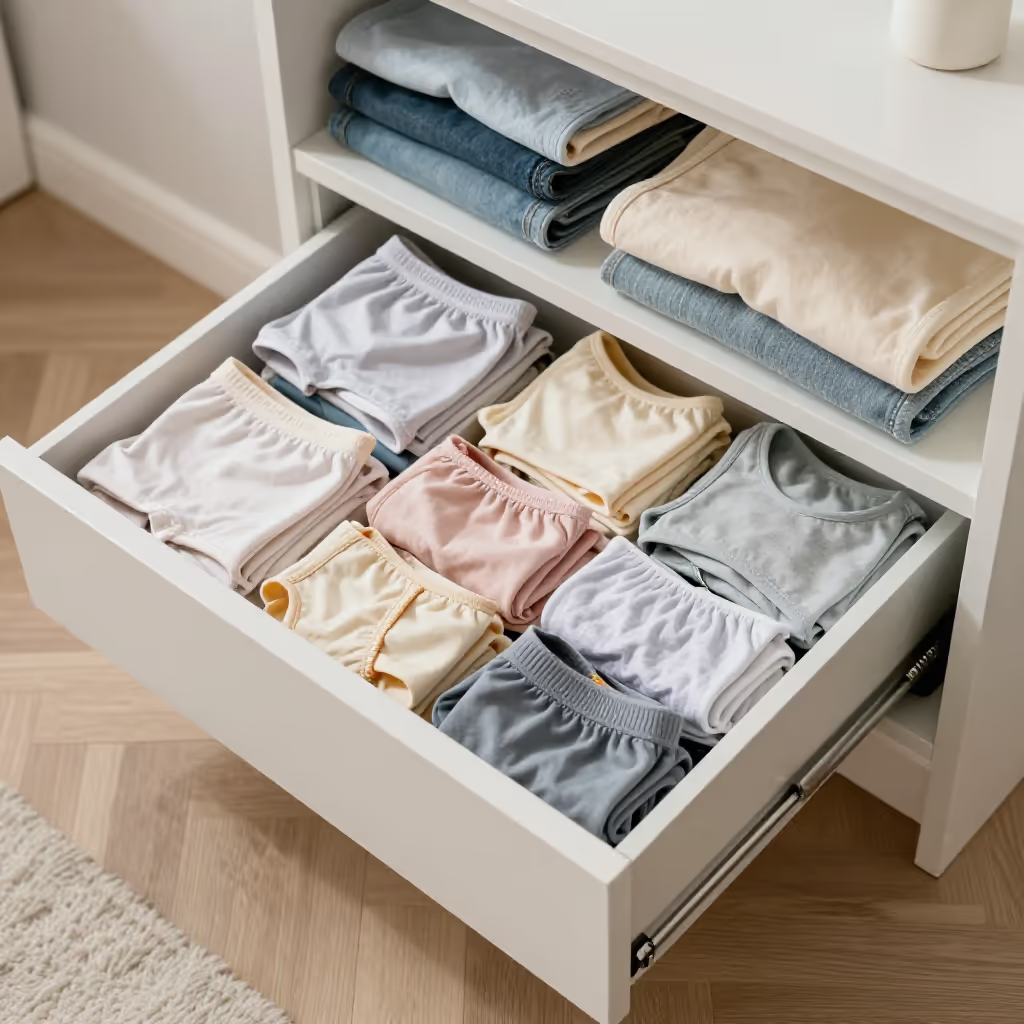
'die Wäsche' and 'die Dessous' can both mean underwear. Here, 'Wäsche' is the more general and neutral term, especially for underwear or nightwear. 'Dessous' refers especially to fine, fashionable, or seductive women's underwear and is almost always used in the plural. Learners may confuse the words because both appear in shops or when talking about underwear. If you want to speak neutrally, 'Wäsche' is more suitable. If you are talking about elegant women's underwear, people are more likely to say 'Dessous'.
Dessous
Im Schaufenster lagen schwarze Dessous aus Spitze.
Black lace lingerie was displayed in the shop window.