


die Diät
diet
A special way of eating that aims to reduce body weight or that is followed for medical reasons.
EXAMPLE
Nach den Feiertagen fangen viele Menschen eine Diät an.
After the holidays, many people start a diet.
diet / allowance
Loading your saved state.
diet
A special way of eating that aims to reduce body weight or that is followed for medical reasons.
Nach den Feiertagen fangen viele Menschen eine Diät an.
After the holidays, many people start a diet.

diet
The general way of eating of a person or group; the type of food that is usually consumed. In this meaning, German more often uses the word 'Ernährung' (nutrition/diet).
Die mediterrane Diät mit viel Gemüse und Fisch gilt als besonders gesund.
The Mediterranean diet, with lots of vegetables and fish, is considered especially healthy.
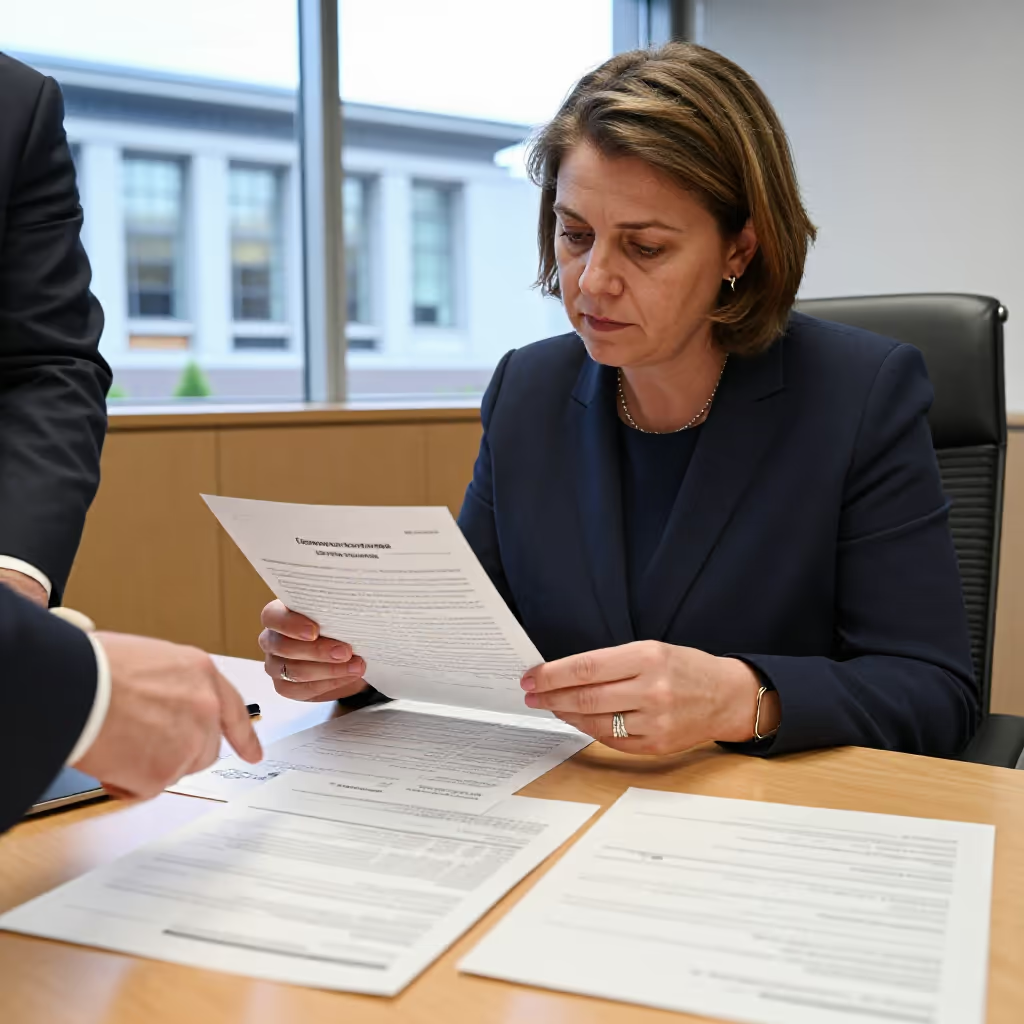
parliamentary allowance
The official compensation, consisting of salary and expense allowance, that members of parliament receive for their work. It is used almost exclusively in the plural, 'die Diäten' (parliamentary allowances).
Die Abgeordneten stimmten über eine Erhöhung ihrer Diäten ab.
The members of parliament voted on an increase in their parliamentary allowances.
In German, 'Diät' is strongly associated with the intention of losing weight. The neutral English meaning 'diet' (general way of eating) is usually expressed in German with 'die Ernährung' (nutrition/diet).
Ich mache gerade eine Diät, um ein paar Kilo abzunehmen.
I'm currently on a diet to lose a few kilos.
The meanings are clearly separate. In the singular, 'Diät' almost always refers to nutrition or dieting. The plural form 'Diäten' refers almost exclusively to politicians' salaries or allowances.
Wegen seiner Allergie muss er eine strenge Diät einhalten.
Because of his allergy, he has to follow a strict diet.
The most common verbs related to a weight-loss diet are 'eine Diät machen' (to go on a diet), 'auf Diät sein' (to be on a diet), or 'eine Diät beginnen' (to start a diet).
Seit Januar ist er auf Diät und hat schon fünf Kilo verloren.
He has been on a diet since January and has already lost five kilos.
In the meaning 'Abgeordnetenbezüge' (parliamentary compensation), this word is used almost exclusively in the plural, 'die Diäten' (parliamentary allowances). The singular form 'die Diät' is unusual in this context.
Die Höhe der Diäten ist gesetzlich festgelegt.
The amount of the parliamentary allowances is set by law.
nutrition / diet
Both words can describe the way someone eats. „Ernährung“ is the general term for eating habits, while „Diät“ usually refers to a deliberately regulated or restricted way of eating, for example to lose weight or for medical reasons. „Diät“ is therefore the appropriate word for a specific dietary requirement.

Nach der Untersuchung begann sie eine salzarme Diät.
After the examination, she started a low-salt diet.
Nach der Untersuchung änderte sie ihre Ernährung und aß regelmäßiger Gemüse.
After the examination, she changed her diet and ate vegetables more regularly.