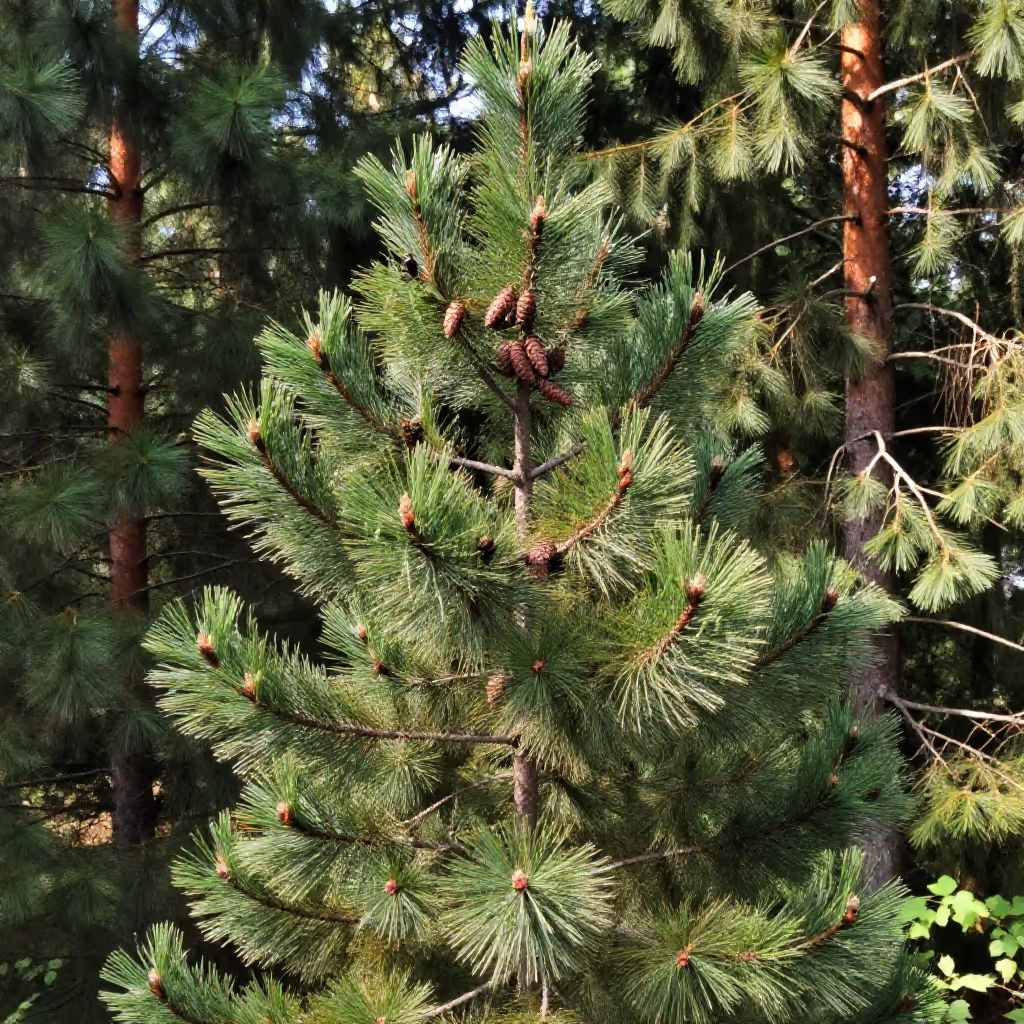
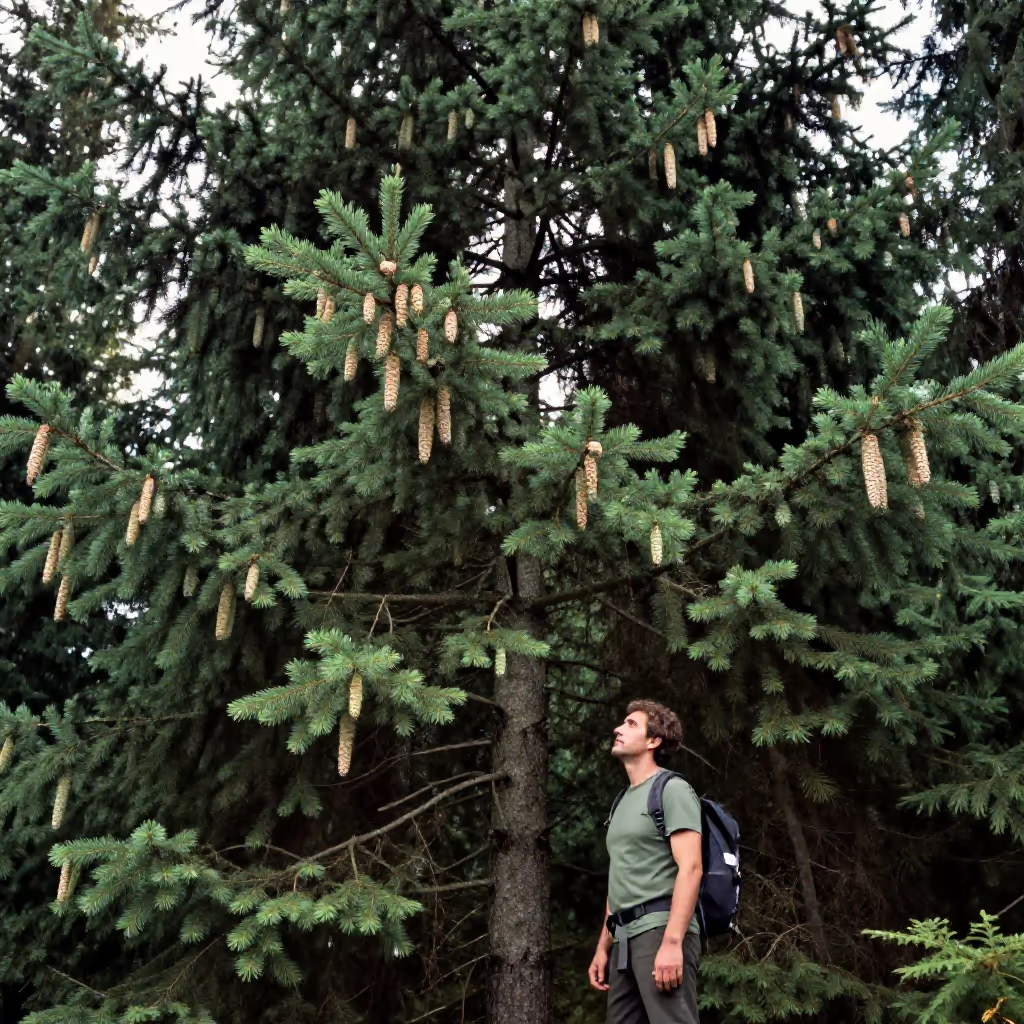
A coniferous tree that typically has long needles in pairs or clusters and cones as its fruits. Pines are widespread in Europe and Asia.
example
Im Herbst sammelten wir die Zapfen, die von der großen Kiefer im Garten gefallen waren.
In autumn, we collected the cones that had fallen from the large pine in the garden.
Usage tips
Context clues
You can recognize this meaning of 'Kiefer' (pine) from the context. If the text mentions 'Wald' (forest), 'Nadeln' (needles), 'Zapfen' (cones), or 'Holz' (wood), it always means the tree.
EXAMPLE
Der ganze Wald duftete nach den Nadeln der Kiefern.
The whole forest smelled of the needles of the pines.
Word family
'Kiefer' (pine) is the basis for many compound words that refer to the tree. Examples are 'Kiefernholz' (pine wood), 'Kiefernnadel' (pine needle), and 'Kiefernzapfen' (pine cone).
EXAMPLE
Möbel aus Kiefernholz sind sehr beliebt.
Furniture made of pine wood is very popular.
Typical collocations
Common adjectives used with this tree are 'hohe Kiefer' (tall pine) or 'alte Kiefer' (old pine). People also speak of the 'Schatten einer Kiefer' (shade of a pine).
EXAMPLE
Hinter dem Haus stand eine einzelne, sehr alte Kiefer.
Behind the house stood a single, very old pine.
Compare with
confusable
Kiefer vs Fichte
spruce
'die Kiefer' (pine) and 'die Fichte' (spruce) are both coniferous trees and can therefore easily be confused, especially in the forest. A pine often has long needles that grow in pairs or small clusters. A spruce tends to have short, pointed needles and hanging cones. If you are only speaking generally about a conifer, the exact name is often not important. If you want to describe the tree species, you should pay attention to the needles and cones.
Kiefer
Am Weg steht eine alte Kiefer mit langen Nadeln und rauer Rinde.
There is an old pine by the path with long needles and rough bark.
Fichte
Nach dem Sturm lag eine Fichte quer über dem kleinen Waldweg.
After the storm, a spruce was lying across the small forest path.